Set against the forested slopes of Austria’s Hohe Tauern mountains, Bad Gastein looks as though it has been lifted from a period film. Grand Belle Époque hotels cling to steep hillsides, pastel-coloured facades are punctuated by ornate balconies, and church spires rise above winding streets. At the heart of it all, a powerful waterfall cascades through the town, dividing its historic centre into two. Often called the Monte Carlo of the Alps, this Salzburg-region spa town has long attracted royalty, aristocrats, writers, and artists. Today, its architectural heritage and contemporary creative scene lend it a distinctive character, where old-world European elegance meets a more youthful, cosmopolitan sensibility.
Bad Gastein: Inside Austria’s Belle Époque Spa Town And 5 Stays To Experience It
Discover Bad Gastein, Austria’s Belle Époque spa town, known for its thermal springs, mountain scenery, historic hotels, and wellness retreats

Advertisement
Bad Gastein’s appeal, however, goes beyond its cinematic architecture. Its reputation as a wellness destination stretches back centuries, when visitors travelled to the Gastein Valley to experience its naturally heated mineral-rich thermal waters. Seventeen thermal springs release around five million litres of water daily, with temperatures ranging between 44 and 47 degrees Celsius. The water, which filters through mountain rock over thousands of years, became the foundation of the town’s spa culture. Historical accounts trace the area's association with thermal bathing to the medieval period, with European royalty, including members of the Habsburg dynasty, among its notable visitors. The town also has a history of gold mining, particularly around Böckstein, where miners once worked the mineral-rich mountainsides.

The town's spa culture dates back centuries, attracting European royalty, aristocrats, writers, and artists seeking the restorative properties of its thermal waters Unsplash
The decline of traditional spa tourism in the mid-20th century left several of Bad Gastein’s grand hotels and historic buildings underused. However, the town has since found renewed appeal through a combination of heritage restoration, contemporary hospitality, and wellness-led travel. Former sanatoriums and Belle Époque properties have been repurposed as design hotels, while established establishments continue to incorporate the region’s thermal waters into their offerings. Beyond the spas, visitors can explore the Hohe Tauern National Park, take cable cars to Stubnerkogel for panoramic mountain views, walk across its suspension bridge, or follow hiking trails towards glacial lakes such as Bockhartsee. In winter, the surrounding Gastein Valley becomes part of the Ski amadé network, making Bad Gastein a destination for both skiing and restorative holidays. Here are five stays that reflect the town’s evolving spa culture.
Advertisement
A-ROSA Straubinger Grand Hotel Bad Gastein
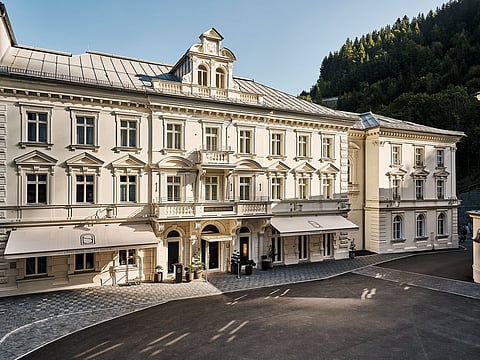
A restored Belle Époque landmark overlooking Bad Gastein’s famous waterfall A-ROSA Straubinger Grand Hotel Bad Gastein
Few properties capture Bad Gastein’s architectural legacy as distinctly as the Straubinger Grand Hotel. Positioned beside the town’s famous waterfall, this historic establishment has been restored to bring its Belle Époque character back into the hospitality landscape. Its grand architecture, elegant interiors, and views of the surrounding Alpine scenery make it an important part of the town’s heritage-led revival. Now operating under the A-ROSA brand, the hotel combines its historical setting with contemporary comforts, including an exclusive wellness area and dining experiences. Its spa facilities offer guests an opportunity to experience Bad Gastein’s long-standing association with restorative holidays while enjoying the property's mountain-facing setting. The hotel follows an adults-only policy, welcoming guests aged 14 and above.
The Information
Address: Straubingerpl. 2, 5640 Bad Gastein, Austria
Tariff: On request. Rates vary according to room category and season.
Contact: +43 6434 30490500
Website: https://arosahotels.co.uk/hotels/bad-gastein.html
Urban Nature Hotel At The Bad Gastein Spa Palace
Advertisement
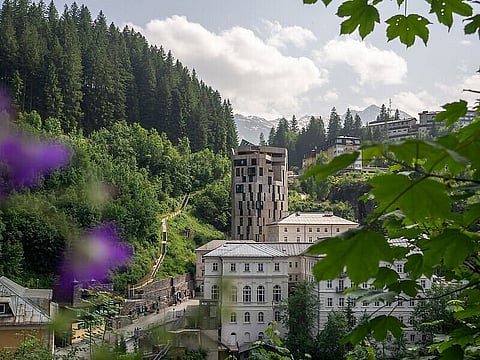
A heritage bathhouse and contemporary design come together in this Alpine spa retreat Urban Nature Hotel
Bringing together historical architecture and contemporary hospitality, the Urban Nature Hotel at the Bad Gastein Spa Palace offers a different perspective on the town’s traditional spa experience. The property draws on the character of its historic bathhouse while incorporating a newer building, creating a setting that balances heritage features with modern design. Its approach to hospitality reflects Bad Gastein’s changing identity, attracting travellers interested in design, culture, and wellness alongside conventional spa treatments. The hotel's emphasis on community and individual expression gives it a contemporary personality, while its connection to the historic bathing culture keeps it rooted in the destination. It is an option for travellers who want to experience Bad Gastein's established spa traditions in a more modern setting.
The Information
Address: Straubingerpl. 4, 5640 Bad Gastein, Austria
Tariff: On request. Rates vary according to room category and season.
Contact: +49 40 300322566
Website: https://un-hotels.com/hotels/bad-gastein.html
Haus Hirt
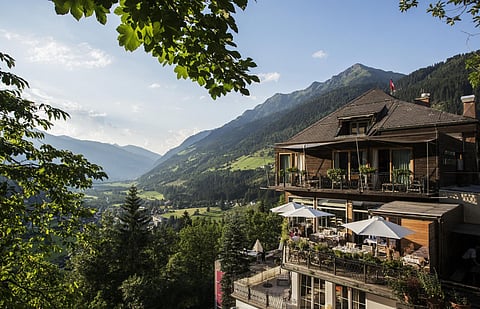
An Alpine lodge blending contemporary design, family hospitality, and thermal wellness experiences Haus Hirt
Set amid the Alpine landscape, Haus Hirt brings a more intimate approach to hospitality in Bad Gastein. The property combines the character of a traditional mountain lodge with contemporary design influences, using art, architectural elements, and carefully selected furnishings to shape its interiors. Its relaxed atmosphere makes it particularly suited to families and travellers seeking a slower-paced mountain holiday. Wellness is central to the experience, with spa facilities incorporating the region's thermal waters. Guests can also make the most of its natural surroundings through outdoor activities, including hiking and yoga. The hotel's location, surrounded by trees and mountain views, adds to its appeal as a base for exploring the Gastein Valley. Its combination of personal hospitality, design, and wellness makes it an established part of Bad Gastein's contemporary hotel scene.
Advertisement
The Information
Address: Kaiserhofstraße 14, 5640 Bad Gastein, Austria
Tariff: On request. Rates vary according to room category and season.
Contact: +43 6434 27970
Website: https://www.haus-hirt.com/en/the-house/
Thermal Resort Hotel Elisabethpark
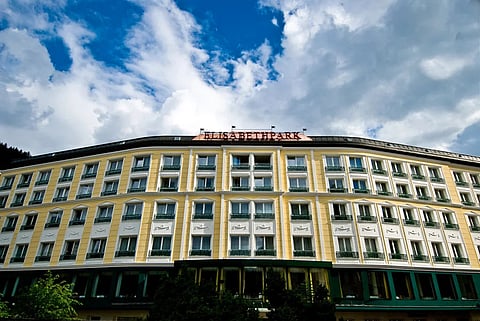
A historic spa hotel with roots dating back to the 19th-century wellness boom Hotel Elisabethpark
The story of Hotel Elisabethpark is closely tied to the development of Bad Gastein as a spa destination. The site dates back to at least 1218, when a property known as Wildbachhäusl stood here. It subsequently became associated with visitors seeking the therapeutic properties of the valley's thermal waters. In 1882, Aloys Windischbauer established the bath and spa hotel that would eventually become Elisabethpark, with the private park behind the building lending the property its name. Its wellness facilities evolved alongside the town's hospitality industry. A thermal swimming pool was introduced between 1965 and 1967, followed by saunas and inhalation facilities. The property also reflects the distinction between ordinary thermal bathing and prescribed radon treatments: its swimming pools use thermal water without radon, while radon baths require medical supervision. With more than a century of spa history attached to its address, Elisabethpark remains an important reference point in understanding Bad Gastein's wellness heritage.
Advertisement
The Information
Address: Kaiser Franz Josef-Straße 5, 5640 Bad Gastein, Austria
Tariff: On request. Rates vary according to room category and season.
Contact: +43 6434 2551 115 or reservierung@elisabethpark.at
Website: https://elisabethpark.at/en
The cōmodo
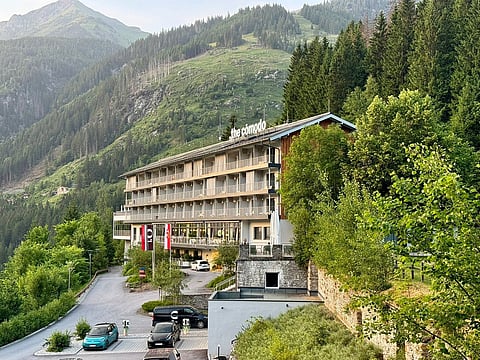
A former sanatorium reimagined as a mid-century-inspired design and wellness hotel Daniel
A former clinic reinvented as a design-led wellness hotel, the cōmodo represents the newer generation of hospitality shaping Bad Gastein. The building underwent an extensive renovation in 2022, emerging with a mid-century-inspired aesthetic that combines contemporary design with its Alpine surroundings. Art is an important part of the property's identity, with interiors featuring a curated collection of works and pieces created through collaborations with established and emerging European artisans. Its spa programme draws on the region's wellness traditions, offering individually tailored treatments that incorporate Gastein thermal water and Saint Charles products. The hotel's approach places equal emphasis on creative surroundings and restorative experiences, making it an appealing choice for travellers looking for something beyond the conventional Alpine spa hotel. Its transformation from a medical facility into a contemporary retreat also reflects the wider architectural revival taking place across Bad Gastein.
Advertisement
The Information
Address: Kaiserhofstraße 18, 5640 Bad Gastein, Austria
Tariff: On request. Rates vary according to room category and season.
Contact: +43 6434 30432
Website: https://www.thecomodo.com/
FAQs
1. Where is Bad Gastein located?
Bad Gastein is a historic spa town in Austria's Salzburg region, situated in the Hohe Tauern Alps.
2. What is Bad Gastein famous for?
Bad Gastein is known for its Belle Époque architecture, natural thermal springs, cascading waterfall, and historic spa culture.
3. Why is Bad Gastein considered a spa destination?
The town has 17 natural thermal springs supplying mineral-rich water, which has attracted wellness travellers for centuries.
4. What are the best hotels to stay at in Bad Gastein?
Notable stays include A-ROSA Straubinger Grand Hotel, Urban Nature Hotel, Haus Hirt, Thermal Resort Hotel Elisabethpark, and the cōmodo.
5. What can you do in Bad Gastein besides visiting its spas?
Visitors can hike in the Hohe Tauern National Park, explore Alpine lakes, ride the Stubnerkogel cable car, walk its suspension bridge, and ski in the Gastein Valley.
Advertisement
Published At: