“Thak thak, loom ki awaaz aapko Bhujodi mein aate hi har ghar se sunayi degi,” (The moment you arrive in Bhujodi, you're greeted by the "thak thak" of looms from every home) says Vankar Chetan, an eleventh-generation handloom weaver. Situated eight kilometers south east to Bhuj in Gujarat, Bhujodi is a crafts heritage village where tourists visit to experience handloom weaving, natural dyeing, and traditional artisan lifestyles.
Inside Bhujodi: Gujarat's Handloom Village Keeping Kachchh's Weaving Heritage Alive
Explore Bhujodi in Kachchh, Gujarat, a village where 300-year-old handloom weaving, pit loom techniques, and natural indigo dyeing traditions are kept alive by artisan families and open to travellers.

Advertisement
Here, every household holds a minimum of two to three looms, and three consecutive generations of the same family often sit together at them. What they practise is an extra-weft weaving technique, traditionally worked on pit looms, in which supplementary threads are inserted into the ground weave to create intricate motifs.

The cloth they produce — shawls, sarees, blankets — is instantly recognisable: bold geometric patterns raised off a plain-woven surface, each motif built thread by thread from within the fabric itself. Vankar Chetan
Bhujodi weaving is practised by the Marwar and Rabari communities, and Vankar Chetan’s family has been passing down this traditional craft for eleven generations now. Chetan carries this 300-year-old craft legacy, guided by his grandfather, Shilp Guru Vankar Premji, working alongside eight family members and twenty artisans — many of them from Dalit and artisan communities in rural Kachchh (or Kutch), groups that have historically sat at the margins of both craft recognition and economic opportunity.
The Village Experience
It is not the craft alone that will complete your visit to Bhujodi. On visiting Chetan’s house to witness the weaving, you will first be greeted with Bajre Ka Rotla, Ghee Kod, Gehun ke Rotli, Lahsan Ki Chutney and Sabji. This is the traditional lunch of the weaver’s community. Later in the evening, you will also get to taste Kheechdi and Bajia.
Advertisement
Apart from this, every day for forty-five minutes, everyone gathers and sits together in the evening. Various musical instruments are played along with Bhajans. “Agar logon ko gaon ki sukoon bhari jeevan chahiye toh unhe sheher ke metro se dur, Bhujodi aana chahiye.” (Travellers from all across the globe should come to Bhujodi if they are seeking the peace of village life, far away from the metros.)
Keeping The Craft Alive And Evolving
Through his home studio, he also mentors young weavers and hosts weaving and natural dyeing workshops for design students and travellers. Travellers are welcome to go behind the scenes, meet the artisans, sit at the loom and try weaving themselves. Researchers come to document. Design students come to learn, and all of them are welcome to stay.
"Agar hum logon ko apne kaam ke baare mein nahi bataenge, toh unko kaise pata chalega?" (If we don't share our work with people, how will they know about it?) says Chetan.
Advertisement
That question carries more weight than it seems. For years, the pull of cheap, chemically dyed textiles has drawn consumers away from the slow labour of natural dyeing — and sellers, knowingly or not, have looked the other way on the environmental cost. Because of this, the process of natural indigo dyeing and the extra weft technique, which is a symbol of Kachchh, were among the many components of Bhujodi weaving that were at risk of disappearing first.
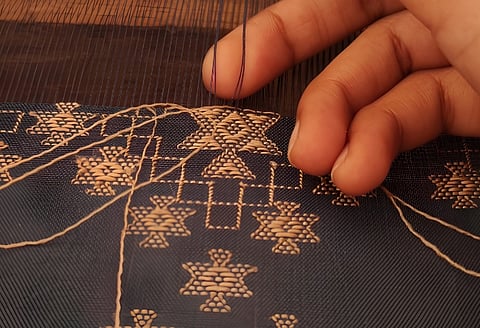
In extra-weft weaving, traditionally worked on pit looms, supplementary threads are inserted into the ground weave to create intricate decorative motifs and patterns. Vankar Chetan
Talking about the other side of the coin, Chetan mentions the urgent need for artisans to evolve in their work. He recalls his first exhibition at Dilli Haat in 2009 where he and his father sold shawls and sarees. Years later, he says, many artisans across the region are still selling the same shawls and sarees, in the same styles. In this manner, over time, the consumers will get bored. Thus, artisans need to evolve and learn about upcoming trends and study the market.
Advertisement
Despite working with contemporary materials, designers, and students, he remains rooted in traditional weaving techniques. He states that the extra weft and loom technique will never change, but the motifs and threads shall evolve, taking inspiration, especially from tourism.
What's Next For Bhujodi
Within the next five years, Chetan plans to open a small homestay in Bhujodi. It will be a residency where two or three students at a time will live with the craft completely, researching, documenting, and developing new designs alongside the artisans, following the product from loom to sale.
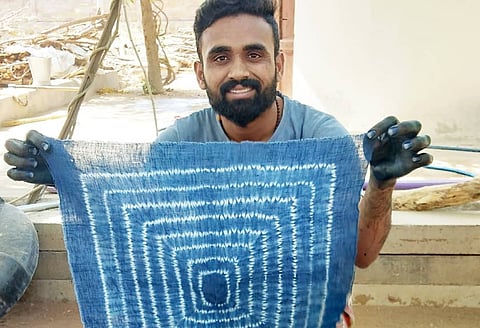
Vankar Chetan has been experimenting with designs, including the fusion of Bhujodi weaving with prints like Bandhani. Vankar Chetan
As a tourist, visiting Bhujodi will make you witness the rhythm of the loom, experience the warmth of village life, and understand the stories woven into every fabric. With the likes of Vankar Chetan, you get to see a sight where craft, community and tourism come together to keep the heritage of Kachchh alive.
FAQs
1. Where is Bhujodi located?
Advertisement
Bhujodi is a traditional weaving village located about 8 km from Bhuj in the Kachchh (Kutch) district of Gujarat.
2. What is Bhujodi famous for?
Bhujodi is renowned for its handloom weaving traditions, extra-weft weaving techniques, natural dyeing practices, and handcrafted shawls, stoles, blankets and textiles.
3. Can tourists visit artisan homes in Bhujodi?
Yes. Many artisan families welcome visitors to their workshops, offering demonstrations of weaving, natural dyeing and traditional textile-making processes.
4. What is the extra-weft weaving technique?
Extra-weft weaving involves inserting supplementary threads into the base fabric to create intricate motifs and raised geometric patterns unique to Kachchh textiles.
5. Why should travellers visit Bhujodi?
Bhujodi offers an authentic cultural experience where visitors can interact with artisans, learn about centuries-old weaving traditions, enjoy local cuisine and support sustainable craft tourism.

Published At: