Sukhna Wetland’s designation as a Ramsar site on October 15, 2026, has placed Chandigarh’s urban wetland on the international conservation map. Spread across approximately 199.51 hectares at the foothills of the Outer Himalayas, the human-made, rain-fed freshwater wetland supports resident and migratory birds and forms part of a wider landscape shaped by the Shivalik catchment.
Beyond The Ramsar Tag: The Conservation Story Of Chandigarh’s Sukhna Wetland
Named a Ramsar site in October 2026, Sukhna Wetland is part of a wider ecological landscape shaped by the Shivaliks, migratory birds and the continuing work of wetland conservation

Advertisement
The global recognition also brought renewed attention to its larger story: how a lake created for a planned city has been shaped by sedimentation, catchment restoration and successive efforts to protect its ecological value. The designation, therefore, is a useful starting point for examining what sustains Sukhna, what poses a threat to it and the efficacy of the current conservation efforts. Its future depends not simply on protecting the water body, but on managing the surrounding landscape and monitoring the species that depend on it.
Following The Silt Back To The Hills

Sukhna Lake was created in 1958 by damming Sukhna Choe Incredible India
Sukhna Lake was created in 1958 by damming the seasonal Sukhna Choe, a rain-fed stream coming down the Shivalik hills. Its catchment extends across Chandigarh and neighbouring parts of Punjab and Haryana, carrying rainwater and sediment towards the lake. This makes upstream soil conservation and land management important to the wetland’s health. Chandigarh’s administration documents historical erosion problems and interventions introduced to address them, including plantation, restrictions on grazing, check dams and silt detention structures. These measures helped control soil erosion and sediment inflow, demonstrating the importance of managing the catchment alongside the lake itself.
Advertisement
The wider landscape nevertheless remains central to Sukhna’s future. The Master Plan 2031 also highlights the need to regulate development in the lower catchment, where urbanisation can increase the risk of sediment and polluted runoff reaching the lake. Sedimentation is a particularly significant concern for a reservoir: as material accumulates, it can reduce the space available for water storage. Managing the movement of soil and water through the catchment is therefore an ongoing part of protecting Sukhna’s ecological and hydrological functions.
Beyond The Water, A Web Of Life

Sukhna Wildlife Sanctuary Incredible India
Sukhna’s significance extends beyond its role as a city reservoir. Its mix of open water, vegetation, scrub and surrounding forest provides different habitats for wildlife. The wetland is also important for birds migrating along the Central Asian Flyway, offering feeding, breeding, roosting and wintering habitat. The Ramsar Information Sheet identifies several rare species and threatened ecological communities, including the endangered Pallas’s fish eagle (Haliaeetus leucoryphus) and black pond turtle (Geoclemys hamiltonii), alongside the vulnerable common pochard (Aythya ferina). Other rare species listed in the site documentation include the Egyptian Vulture, Indian Skimmer and Steppe Eagle. Their presence underlines the importance of conserving habitat conditions, rather than measuring the wetland’s health solely through water levels or the appearance of its shoreline.
Advertisement
The Ramsar Information Sheet identifies invasive species as another challenge for Sukhna. Invasive aquatic vegetation can alter habitat conditions and affect ecological balance, making regular monitoring and appropriate control measures important to wetland management. According to media reports, Chandigarh's forest authorities recognise invasive weeds and sediment flow as key concerns.
The Long Work Of Keeping A Wetland Alive
According to the same Ramsar Information Sheet, Sukhna already has an Integrated Management Plan, and falls under India’s Wetlands (Conservation and Management) Rules, 2017. Its Ramsar designation thus builds on an existing conservation framework rather than marking the beginning of protection. The next step is to translate that framework into coordinated, measurable action across the wetland and its catchment.
That means keeping track of more than one indicator. Water quality, sediment accumulation, vegetation, seasonal water levels and wildlife populations can together provide a clearer picture of ecological conditions. Consistent records also make it easier to assess whether conservation measures are working and to identify emerging pressures. Given that Sukhna’s catchment extends across administrative boundaries, coordination between the relevant agencies is important to managing the flow of water and sediment into the lake.
Advertisement
A City’s Lake, A Wetland’s Needs
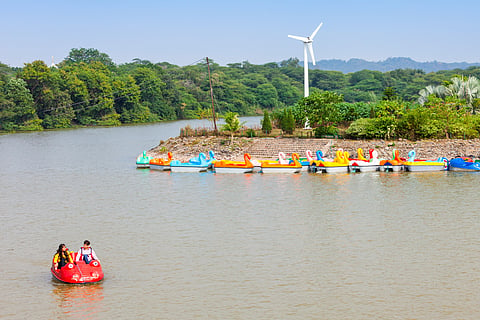
Sukhna Lake in Chandigarh is located at the foothills of the Himalayas, the Shivalik Hills Shutterstock
Sukhna is also a public recreational space, bringing the needs of visitors into the conservation equation. The Ramsar Convention’s principle of wise use recognises that wetlands can provide benefits to people while their ecological character is maintained. The designation does not prohibit tourism, but it does reinforce the importance of managing human activity in ways that support conservation. Clear visitor information, nature education and guidance on avoiding disturbance to wildlife could help people understand Sukhna beyond its familiar waterfront. Any such initiatives would need to reflect habitat sensitivities and the wetland’s management objectives.
Sukhna’s Ramsar designation is a significant recognition of the wetland’s value and the landscape that sustains it. The conservation story now continues through the less visible work behind this recognition. Sustained catchment management, effective control of invasive species and transparent monitoring will be central to that effort. The Ramsar tag puts Sukhna on the international conservation map. Ensuring that its ecological value endures is the work that follows.
Advertisement
FAQs
1. When was Sukhna Wetland designated a Ramsar site?
Sukhna Wetland in Chandigarh was added to the Ramsar List of Wetlands of International Importance on October 15, 2026, recognising its ecological significance.
2. Where is Sukhna Wetland located?
Sukhna Wetland is located in Chandigarh, at the foothills of the Outer Himalayas. The human-made, rain-fed freshwater wetland is connected to the wider Shivalik catchment.
3. Why is Sukhna Wetland important for biodiversity?
Sukhna supports resident and migratory waterbirds along the Central Asian Flyway. Its documented wildlife includes threatened species such as the Pallas’s fish eagle, black pond turtle and common pochard.
4. What are the main conservation challenges facing Sukhna Wetland?
Key concerns include sediment entering from the Shivalik catchment, invasive aquatic vegetation and the potential effects of urban development and polluted runoff. Catchment management and regular ecological monitoring are important to addressing these pressures.
5. What conservation measures are important for Sukhna Wetland’s long-term protection?
Key measures include managing sediment inflow from the Shivalik catchment, controlling invasive species, monitoring water quality and wildlife populations, and protecting habitats across the wetland and its surrounding landscape.
Advertisement

Published At: