Aditya Dhar’s ‘Dhurandhar’ (2025) has become one of the year’s most talked-about films, with stars like Ranveer Singh and Akshaye Khanna at the centre of discussion. For film and travel enthusiasts alike, Dhurandhar’s shooting locations reveal how geography plays a crucial role in shaping the film’s scale and realism. The film has emerged as a clear box office success, crossing INR 351 crore in India within just 10 days of release. Its second weekend proved especially decisive, with a massive INR 144 crore haul, the highest ever for an Indian film, strengthening the films momentum. Beyond the action and tightly constructed narrative, the film’s visual scale has become part of the conversation, with locations that actively shape its atmosphere and storytelling. From rugged landscapes to moody urban settings, these backdrops help define the story. Here are the exact filming locations of Ranveer Singh’s latest box office success.
Where Was Dhurandhar Filmed? Ranveer Singh’s Film Locations Explained
Discover the filming locations of ‘Dhurandhar,’ from Bangkok and Ladakh to Mumbai and Punjab, and how they shape the film’s narrative

Bangkok, Thailand: Dhurandhar’s International Action Hub
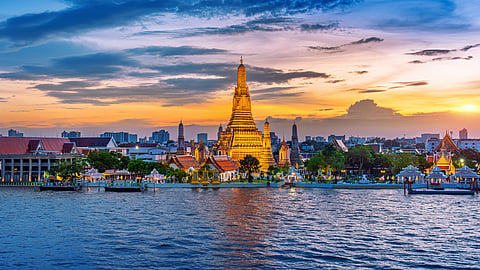
At its core, Dhurandhar is a high-stakes action thriller driven by secrecy, pursuit, and moral ambiguity, with Ranveer Singh portraying a man hardened by conflict and consequence. The story moves through covert operations and shifting loyalties, gradually expanding beyond familiar borders. Bangkok, Thailand, becomes central during the film’s international surveillance and chase sequences, not as a scenic backdrop but as an active setting that heightens tension. According to reports, the production began here in July 2024, with large portions of these sequences designed to recreate locations in Pakistan. The city’s dense streets, shadowed alleys, riverfront zones, and modern high-rises frame covert exchanges and pursuit scenes, giving the narrative a global edge and reinforcing how the conflict unfolds across geographies rather than remaining tied to a single location.
Amritsar, Punjab: Golden Temple Sequences In Dhurandhar

In November 2024, Dhurandhar briefly shifted to Amritsar for sequences filmed in and around the Golden Temple. The location adds weight to the film’s more reflective moments and is used with clear restraint. Rather than leaning on visual scale, the setting supports the narrative through atmosphere alone. Filming in an active pilgrimage zone required detailed planning, with local authorities and production teams coordinating closely to ensure the shoot remained low-impact and respectful of daily religious activity.
Filmistan Studios, Mumbai: Interior Scenes And Set Pieces
Mumbai serves as the film’s logistical base, with Filmistan Studios playing a central role in production. In February 2025, the team shot key interior sequences and complex set pieces here. Working within a controlled studio environment allowed the filmmakers to focus on performance, pacing, and technical precision without the variables that come with live locations.
Madh Island, Mumbai: Coastal Locations Used In Dhurandhar

Following the studio schedule, the production moved to Madh Island, completing outdoor shoots by late April. Known for its varied terrain, Madh offers coastal areas that feel removed from the city while still retaining an urban edge. This made it a practical choice for scenes requiring isolation without the need for extensive location travel or set modification.
Dombivli-Mankoli Bridge
The Dombivli–Mankoli Bridge appears in sequences built around movement and transition. Its long spans and industrial surroundings provide a functional backdrop that supports chase and travel scenes without drawing attention to itself. The location is used as-is, reinforcing the film’s grounded visual approach.
Khera Village, Ludhiana
Khera village near Ludhiana is used as a functional contrast to the film’s urban and international settings. Portions of the village were adapted to recreate locations in Pakistan, which led to visible local reactions when Pakistani flags were put up during the shoot. In the film, the village features in emotionally driven scenes tied to memory and personal history. The location was used with minimal modification, allowing it to retain its natural character while serving the narrative without visual emphasis.
Ladakh: High-Altitude Landscapes In Dhurandhar
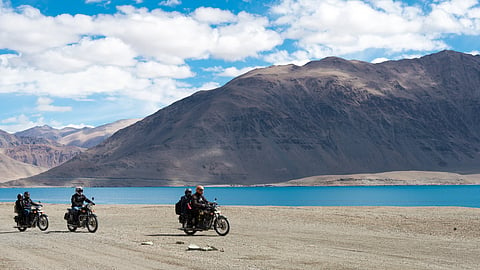
Ladakh features in some portions of Dhurandhar, offering stark terrain and high-altitude landscapes that heighten the film’s sense of isolation and endurance. Reportedly shot around Patthar Sahib in Leh, these sequences place characters in physically and mentally demanding surroundings, using the environment to support the narrative rather than showcase scale. Filming in the region began in August 2025 and came with logistical challenges typical of high-altitude shoots. Midway through the schedule, several crew members suffered from food poisoning, briefly halting production. Shooting resumed after medical clearance, and Ranveer Singh completed his portions by October 2025.
Golden Tobacco Factory, Vile Parle, Mumbai
By July 2025, the production returned to Mumbai to film a large-scale dance sequence at the Golden Tobacco Factory in Vile Parle. The location introduces a rare moment of heightened colour and energy in the film. Its industrial setting provides a strong visual contrast while staying consistent with Dhurandhar’s overall tone.
FAQs
1. Where was Dhurandhar filmed?
Dhurandhar was filmed across India and abroad, including Bangkok, Mumbai, Punjab, and Ladakh.
2. Was Dhurandhar shot outside India?
Yes, key portions of the film were shot in Bangkok, Thailand.
3. Which Mumbai locations were used in Dhurandhar?
Filmistan Studios, Madh Island, the Dombivli–Mankoli Bridge, and the Golden Tobacco Factory were among the Mumbai locations.
4. Were scenes of Dhurandhar filmed in Punjab?
Yes, parts of the film were shot in Amritsar and Khera village near Ludhiana.
5. Why was Ladakh chosen as a filming location?
Ladakh’s stark terrain was used to heighten the film’s sense of isolation and intensity.
6. Who directed Dhurandhar?
Dhurandhar is directed by Aditya Dhar.