Croatia’s Adriatic coast stretches across more than 6,000 km of deeply indented shoreline and 1,246 islands, forming a striking landscape where ancient stone towns, pebble coves and crystal-clear waters sit side by side. Beyond its well-known hotspots, the coast reveals a quieter, more secluded character, with serene islands alongside hidden bays. Travellers can discover tranquil, car-free islands, historic yet uncrowded coastal settlements, and untouched natural scenery, all combining to create an authentic Mediterranean escape defined by clarity of water and a rich local heritage.
Offbeat Croatia: Discover Secret Beaches Along The Adriatic Coast
Croatia’s Adriatic coast is home to hidden beaches, secret coves, and quiet islands where turquoise water meets dramatic cliffs. From Krk to Vis and Brač, these secluded spots offer peaceful escapes far from the usual tourist crowds

Advertisement
Oprna Bay, Krk
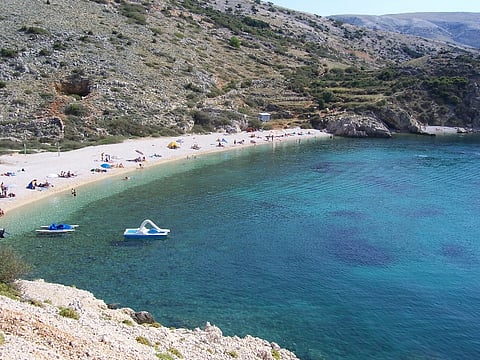
Stara Baška beach on the island of Krk Zavijavah/Wiki Commons
Located near the small coastal village of Stara Baška on Krk Island, Oprna Bay is one of Croatia’s quieter Adriatic gems. It is a stunning shingle-and-sand beach ideal for visiting by boat or a short, steep walk. Framed by rugged limestone hills and a steep coastline, it opens into a small crescent of fine pebbles and striking turquoise water. Reaching it requires a 15–40 minute descent along a rocky, unpaved trail, which helps preserve its secluded and tranquil atmosphere.
Beach Experience
Swimming is the main highlight at Oprna Bay, as the calm, crystal-clear water makes it ideal for long, relaxed dips.
Snorkelling is highly recommended because the visibility is excellent and the rocky seabed supports plenty of marine life close to shore.
Visitors can rent sun loungers and umbrellas if they prefer a more comfortable beach setup while still enjoying the natural surroundings.
A small kiosk is available on-site, offering cold drinks and light refreshments for those spending several hours at the beach.
Try local seafood and explore the island's many churches and monasteries.
Traveller Tips
Wear proper footwear for the descent as the trail is steep and uneven. And it can become slippery in places, especially on the return climb.
Arrive before 10 AM, as the beach is small and tends to fill up quickly during peak hours.
Sun loungers and umbrella sets typically cost around EUR 20 – EUR 30, so carrying some cash is advisable.
The island is best enjoyed during the warmer months, allowing for beach activities and outdoor exploration.
Look for accommodation in towns like Baska, Punat, or Malinska for easy access to beaches and amenities
Advertisement
Stiniva Beach, Vis
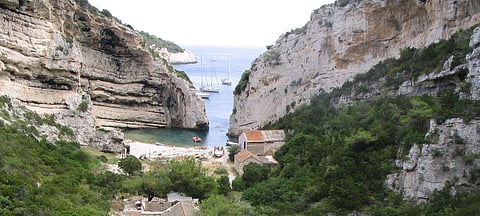
Bay of Stiniva, island of Vis, Croatia Ante Perkovic/Instagram
Located on the southern side of Vis Island near the hamlet of Žužec and the village of Rukavac, Stiniva Beach is one of Croatia’s most visually striking coastal spots. Hidden between towering limestone cliffs, the bay opens through a narrow 10-metre sea gateway into a sheltered pebble cove with vivid turquoise water. Formed by the collapse of an ancient cave roof, it has a natural amphitheatre-like shape and was named “Best Beach in Europe” in 2016, reflecting its global reputation as a unique geological and scenic landmark.
Beach Experience
The enclosed bay creates exceptionally calm water conditions that are ideal for a quiet, unhurried dip in a dramatic setting.
Snorkelling offers excellent visibility, with rocky formations and marine life easily visible just a short distance from shore.
The towering cliffs and narrow sea entrance make it one of the most photographed beaches in Croatia, especially in early morning or late afternoon light.
Small beach bars provide basic drinks and refreshments, offering a pause point.
Traveller Tips
Arriving by boat is the most convenient option, as it avoids a steep and demanding 20–25 minute hike down a rocky trail.
If hiking, proper footwear is essential because the path is uneven, exposed, and can be slippery in parts.
Visiting early in the morning or late afternoon is strongly recommended, as midday hours can become crowded with excursion boats.
It is wise to bring water, snacks, and sun protection, since facilities are limited and the beach bar is small and basic.
Water shoes are useful due to rocky shallows and occasional sea urchins close to the shore.
Advertisement
Pasjača Beach, Konavle
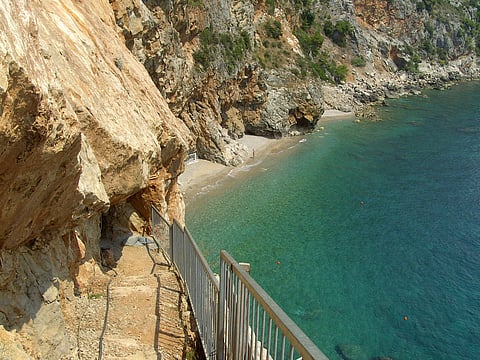
Pasjača Beach is carved into the base of towering limestone cliffs Martin Brož/Wiki Commons
Located in the Konavle region near the village of Popovići, about 30 km south of Dubrovnik, Pasjača Beach is one of Croatia’s most striking hidden coastal spots. Carved into the base of towering limestone cliffs that rise up to 250 metres, this small stretch of sand and fine gravel sits far below the road and feels completely removed from the world above. Although it appears entirely natural, the beach is actually man-made, formed in 1955 when excavated stone from a nearby tunnel was dumped at the cliff base and gradually shaped by the sea into its present form.
Beach Experience
The unusually clear, turquoise water creates a striking setting for a refreshing swim in a quiet and uncrowded environment.
Snorkelling is well-suited to the area, with clear visibility and rocky formations close to shore that reveal small marine life.
The dramatic cliff backdrop makes it a highly photogenic location, especially when light shifts across the rock face during the day.
The surrounding sea conditions can vary, offering a more adventurous feel compared to sheltered coves elsewhere.
Traveller Tips
Access requires parking in Popovići and descending a steep 20–30 minute path and stairway system carved into the cliffs, which is physically demanding on the return.
Sturdy footwear is essential, as the trail is narrow, uneven, and can become slippery, while water shoes are useful for entering the sea safely.
Bring enough water, food, and sun protection for the entire visit.
Visiting before 10 AM is recommended in summer, as parking is limited and the beach can become crowded later in the day.
The beach is not suitable for those with mobility issues, young children, or anyone uncomfortable with steep climbs.
Advertisement
Vučine Bay, Pelješac Peninsula
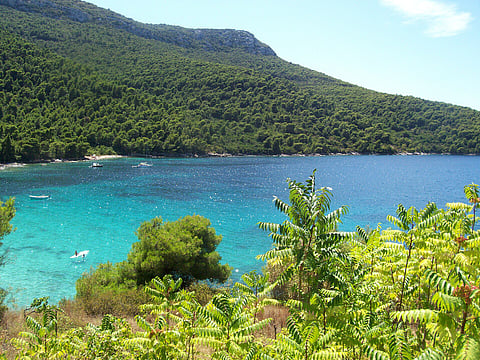
Vučine Bay is a quiet, pine-fringed stretch of shoreline Draceane/Instagram
Located near the village of Žuljana on the southern coast of the Pelješac Peninsula, Vučine Bay is a quiet, pine-fringed stretch of shoreline known for its clear turquoise water and soft pebble beaches. The bay is backed by dense pine forest that provides natural shade. Small, secluded coves can be reached along wooded paths. This gives the area a more intimate and less developed feel than many of Croatia’s better-known coastal spots. Despite its peaceful character, it remains one of the most scenic parts of southern Dalmatia, combining sheltered swimming conditions with a distinctly natural landscape.
Beach Experience
The main beach area features shallow, calm waters that make it especially inviting for relaxed, unhurried swimming in a sheltered setting.
Snorkelling is rewarding along the rocky edges of the bay, where underwater caves and varied seabed formations add interest beneath the surface.
The surrounding pine forest creates extensive natural shade, making it comfortable to spend long stretches of the day by the water even in peak summer heat.
Small walking paths through the trees lead to more secluded coves, offering quieter spots away from the main beach area.
The wider coastline around Žuljana is also suitable for gentle kayaking, allowing visitors to explore neighbouring inlets at an easy pace.
Traveller Tips
Access to the beach is via a short drive followed by a walking path with steps leading down from the road, so comfortable footwear is recommended.
It is advisable to bring water, snacks, and sun protection, as facilities are limited despite the presence of a small restaurant and bar nearby.
Arriving earlier in the day helps secure a good shaded spot, especially during the busier summer months.
The bay is generally less crowded than the more famous Croatian beaches, but weekends can still see increased visitor numbers.
Žuljana provides the nearest basic services, making it a convenient base for food and supplies before heading down to the bay.
Advertisement
Murvica Beach, Brač Island
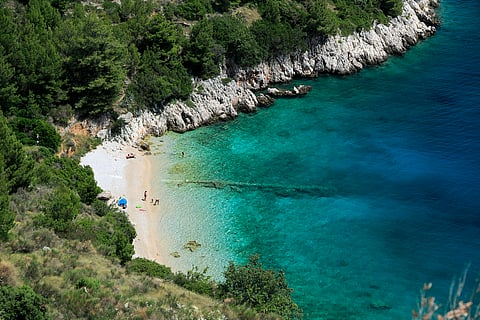
An aerial view of Murvica Falk2/Wiki Commons
Located on the southern coast of Brač near the small village of Murvica, a short drive from Bol, Murvica Beach sits in a quiet cove backed by steep limestone cliffs and patches of vineyards and coastal greenery. The shore is made up of small white pebbles and smooth stones, with clear turquoise water that contrasts strongly against the rocky landscape. Because getting down to it involves a steep walk from the village, it tends to stay relatively quiet and feels more untouched than many of the better-known beaches nearby.
Beach Experience
The calm, transparent water creates excellent conditions for relaxed swimming in a naturally sheltered bay.
Snorkelling along the rocky edges reveals clear visibility and a varied seabed that is typical of this part of Brač’s coastline.
The surrounding cliffs and vegetation provide a dramatic setting, with sections of natural shade depending on the time of day.
A short walk from the beach leads towards nearby geological and cultural highlights, including the famous Dragon’s Cave.
The nearby Dračeva luka cove offers historic monastic remains from the 15th century.
Traveller Tips
The descent from the village of Murvica is steep. Sturdy footwear is recommended for both the walk down and the return climb.
Carry sufficient water, snacks, and sun protection as facilities are minimal and not consistently available.
Parking is located higher up in the village. You should be prepared for a short but demanding walk to reach the shoreline.
The beach is not suitable for wheelchair users or those with limited mobility due to the steep terrain.
Visiting early in the day helps ensure a quieter experience, particularly during the peak summer season when demand for secluded beaches increases.
Advertisement
FAQs
When is the best time to visit Croatia’s hidden beaches?
Late spring to early autumn, particularly June and September, offers warm water and fewer crowds compared to peak July and August.
Are these beaches easy to access?
Most of them require some effort, including steep walks, rocky paths, or boat access. That effort is often what keeps them quieter and more natural.
Do I need to bring supplies?
Yes. Many of these beaches have limited or no facilities, so it is best to carry water, snacks, sun protection, and cash where needed.
Are these beaches suitable for families?
Some, like sheltered bays with shallow water, can work for families, but many require steep descents and are better suited to active travellers.
Is swimming safe at these beaches?
Generally yes in calm conditions, but some locations are open to deeper sea currents. It is always important to be cautious and check local conditions.
Can I find shade at these spots?
A few beaches offer natural shade from cliffs or pine trees, but many are exposed, so shade should not be relied upon.
Advertisement
Are these beaches very crowded?
They are usually less crowded than Croatia’s main tourist beaches, but popular spots can still get busy in peak summer hours, especially mid-day.
Published At:
Tags