There was a time when we were all building travel itineraries around massive checklists: the biggest cathedral, the busiest square, the museum everyone else was visiting. While checking off a destination’s most revered landmarks remains just as attractive, today we’re looking to something different—something rather slow, experiential, and rounded. And when we think about a destination like Spain, all that really comes to mind is sitting back and letting the country’s many towns' stories slowly work their magic.
Medieval Towns And Rustic Feasts: A Slow Travel Guide Through Spain
From towns renowned solely for art history and architecture to others that bring magic to real life, these are some of Spain’s go-to destinations for those seeking slow, relaxed, and laid-back travel

Advertisement
Modern travellers are increasingly trading packed sightseeing schedules for slower, more immersive journeys that prioritise local culture, regional food, and an understanding of the rhythm of everyday life in each country they visit. Experiential travel has surged by a whopping 86 per cent, as tourists, particularly Millennials and Gen Zs, pivot from passive sightseeing to immersive, authentic experiences.
Food, perhaps more than anything else, has become one of the most significant gateways to such experiences. Culinary tourism is now one of the fastest-growing segments of global travel, with more than 65 per cent of travellers considering food an essential part of their trip and many even choosing destinations specifically for their cuisine. And what better place to start this affiliation for the slow life than in Europe!
In Europe, and especially in Spain, this slower way of travelling is best found in the country’s smaller towns and villages. Bigger cities like Barcelona and Madrid remain magnets for many, but the real magic—the taste of the authentic—lies in the country’s quieter places. Places where medieval squares host vibrant, weekly markets, centuries-old art comes to life, and local recipes have remained unchanged for generations. These destinations invite you to slow down, wander through the night, and savour the taste of food that tells the story of history—one bite at a time.
Advertisement
Brihuega, Castilla–La Mancha
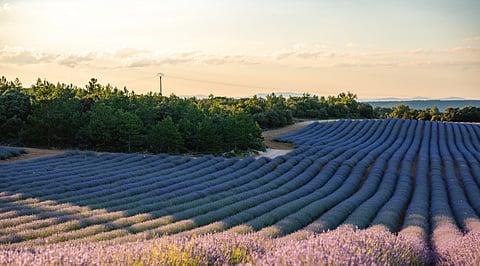
Brihuega Shutterstock
Widely renowned as the Spanish Provence, Brihuega is among the most enchanting slow-travel destinations in central Spain. Earlier this year, the town was awarded the title of “Magical Town of the Year” by Pueblos Mágicos de España.
The medieval town is full of ancient walls and cobbled streets, with landmarks such as the Castillo de Piedra Bermeja, the 13th-century church of Santa María de la Peña, and remnants of Moorish gates that once guarded the settlement. The historic centre has even been designated a Historic-Artistic Site, illustrating its architectural significance.
However, Brihuega’s biggest draw is the bloom. Every summer, approximately 1,000 hectares of lavender fields bloom across the countryside, painting the region in serene, transcendent shades of violet. The bloom peaks in July and is even celebrated with the town’s Lavender Festival. Meanwhile, restaurants in the area draw on traditional Alcarria cuisine, featuring roasted meats, stews, and locally produced lavender honey. This is often paired with wines from the nearby La Mancha vineyards.
Advertisement
Santillana del Mar, Cantabria
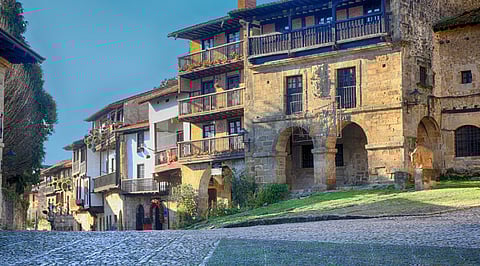
Santillana del Mar, Cantabria Turespaña
Often described as the town of ‘three lies’—neither a saint (santa), nor flat (llana), nor by the sea (del mar)—Santillana del Mar is one of Cantabria’s most beautifully preserved medieval towns, located on the northern route of the Camino de Santiago.
Here, cobbled streets wind through honey-coloured stone houses, their wooden balconies spilling over with flora and fauna, and time seems to move slowly, almost unhurried. Just a short drive from the coast, this historic village rose to prominence around the Collegiate Church of Santa Juliana, a Romanesque structure dating back to the 12th century. Its cloisters, adorned with intricate carvings, are among the finest examples of Romanesque architecture in the region.
But Santillana’s goes back even further in time. On its outskirts lie the Altamira Caves, home to some of the world’s most important prehistoric cave paintings, often referred to as the ‘Sistine Chapel of Palaeolithic Art.’
Advertisement
Beyond its landmarks, Santillana thrives in its many tinier, quainter details—artisan shops, quiet courtyards, and its lack of modernity.
Santillana del Mar maintains Cantabrian culinary traditions, with a strong emphasis on dairy products, including fresh milk, butter, and cheeses. Traditional sweets, such as sobaos and quesada pasiega, are popular and are often served with strong coffee. Proximity to the sea ensures that seafood, such as grilled hake, anchovies, and marmitako de bonito (a tuna and potato stew), features prominently in local cuisine.
Albarracín, Aragón

Albarracín, Aragón Shutterstock
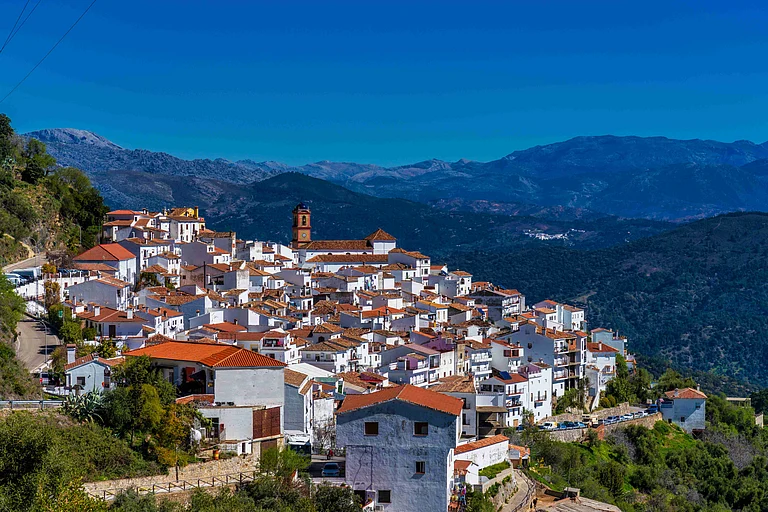
Perched high above a bend of the Guadalaviar River, Albarracín is commonly described as one of Spain’s most beautiful villages. Once you arrive, it’s easy to see why.
Surrounded by dense, rugged hills and crowned with medieval fortifications, the town feels like a moment frozen in time. Narrow lanes twist through clusters of pink-hued stone houses, wooden balconies jut out above the streets, and the skyline is watched over by remnants of the ancient Moorish walls and the Alcázar of Albarracín. Recognised as a Historic-Artistic Site and frequently listed among Spain’s most picturesque towns, Albarracín invites visitors to wander—to take in history at its most genuine, and experience the stories of Spain at their most alive.
Advertisement
Albarracín’s culinary traditions are just as sought-after. In Teruel, a mountainous province, dishes like grilled lamb, game meats, and stews dominate palates. A particular regional highlight is Jamón de Teruel, a Spanish dry-cured ham (Serrano) with Protected Designation of Origin (PDO) status. It’s made from white pigs and aged for at least 14 months, and is widely celebrated across Aragón.
Hondarribia, Gipuzkoa
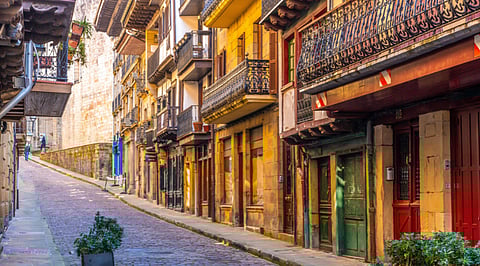
Hondarribia, Gipuzkoa Shutterstock
Perched along Spain’s northern coast, at the edge of the French border, Hondarribia overlooks the Bidasoa River. Enclosed by fortified walls, the town is marked by constant reminders of its role in centuries of conflict. Inside, narrow cobbled streets lead visitors past stone houses, the Castle of Charles V, the Fort of Gaudalupe, and the Gothic Church of Santa María de la Asunción.
Meanwhile, just beyond, the Marina district offers a completely different way of life, with rows of brightly painted Basque houses, flower-filled balconies, and an unmistakably picturesque atmosphere.
Advertisement
Hondarribia’s location makes it as much a cultural crossroads as it is a coastal retreat. With France just across the water, there’s a subtle mixture of influences, though the town remains deeply rooted in its Basque identity. Its proximity to San Sebastián also places it firmly within one of Spain’s most celebrated culinary regions. San Sebastián cheesecake—the eponymous dessert with roots in Spain—remains one of the most sought-after delicacies, enjoyed plain or with toppings such as melted chocolate, fruit compotes, and syrups.
Hondarribia is also known for its pintxo bars, especially along Calle San Pedro, where small, meticulously prepared bites line the counters. Being by the sea, fish also takes centre stage, with dishes like grilled turbot and hake, often prepared simply to let the quality of the fresh catch shine. The food pairs best with a glass of txakoli, the region’s slightly sparkling white wine.
Cudillero, Asturias
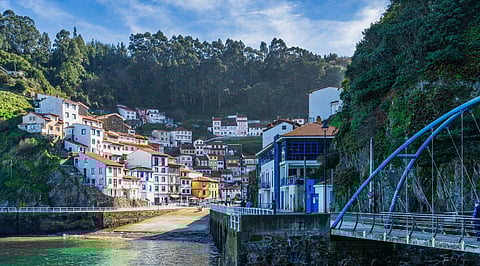
Cudillero, Asturias Shutterstock
Clinging to a steep hillside along Spain’s northern coast, Cudillero is one of the most picturesque fishing villages in the region of Asturias. The town’s beautifully painted houses cascade down toward a small harbour in an amphitheatre-like formation, creating a postcard-perfect view that has become iconic of the Cantabrian coast.
Advertisement
Historically a fishing community of Spain, Cudillero carries that maritime spirit to this day. Boats line the harbour, seafood restaurants overlook the water, and staircases connect hidden viewpoints scattered across the hillside. A great attraction of the town is the little activities that make it what it is: climbing up to scenic miradores, admiring the central Plaza de la Marina, and watching everyday life unfold by the sea.
Asturias is also famous for its seafood, and kitchens celebrate this with dishes like grilled hake, spider crab, and fresh shellfish straight from the sea. Pixín, which is Asturian for Monkfish, is a must-try regional favourite, often prepared only to highlight the freshness of the catch. Another staple is Fabada Asturiana, a rich and hearty stew of white beans, chorizo, and pork, full of comforting flavours of northern Spanish cuisine.
Asturian cider—traditionally poured from a height to aerate it—is also among the top culinary offerings from the region.
Advertisement
For more information, visit Spain Tourism's website
FAQs
1. What is slow travel in Spain?
Slow travel in Spain focuses on spending more time in fewer places, exploring local culture, food, and everyday life instead of rushing through major tourist attractions.
2. Which are the best towns in Spain for slow travel?
Some of the best towns include Brihuega, Santillana del Mar, Albarracín, Hondarribia, and Cudillero, each offering history, architecture, and regional cuisine.
3. When is the best time for slow travel in Spain?
Spring (April–June) and autumn (September–October) are ideal, with pleasant weather, fewer crowds, and local festivals enhancing the experience.
4. What food should you try in rural Spain?
Try regional dishes like Jamón de Teruel, Fabada Asturiana, pintxos in the Basque region, fresh seafood, and local cheeses and wines.
5. How do you plan a slow travel itinerary in Spain?
Choose a region, stay in one or two towns, walk instead of rushing, explore local markets, eat regional food, and allow time for spontaneous experiences.
Advertisement
Published At: