Norway is known for its fjords, glaciers, and mountains. Yet tucked among these landscapes are its book towns, which are clusters of bookshops specialising in second-hand, rare, and antiquarian titles that promote a distinct literary tradition. By merging literary tourism with local culture, reuse, and slow travel, Norwegian book towns foster a slow, thoughtful travel experience, offering visitors a unique cultural experience.
Inside Norway’s Book Towns: Where Literature Shapes Travel
Discover all about the Norwegian book towns, where second-hand books shape slow, sustainable travel experiences

Advertisement
The idea began in Hay-on-Wye, Wales, in the early 1960s, when second-hand bookseller Richard Booth turned abandoned buildings into bookstores. It soon gained international attention and spread across Europe, especially in rural towns seeking sustainable alternatives to mass tourism. Norway adopted the model in the 1990s, adapting it to its geography and small-town scale. Today, the country has two officially recognised book towns.
Fjaerland: Norway's First Book Town
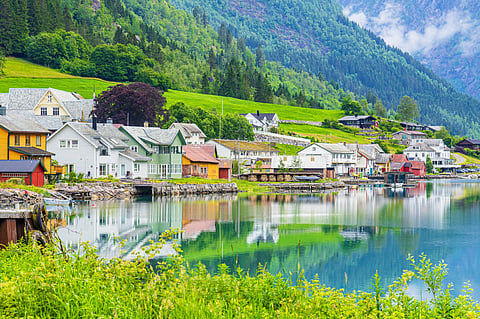
Buildings along the Fjærlandsfjord, Norway Shutterstock
Fjærland is the most well-known book town, or Bokbyen, in Norway. It is located at the inner end of the Sognefjord on Norway’s west coast. Officially designated as a book town in 1995, Fjaerland transformed the village of Mundal into a literary landscape spread across everyday spaces.
Rather than building new commercial spaces, residents converted ferry waiting rooms, barns, stables, banks, the post office, and stores into bookshops. The village now holds several kilometres of mostly second-hand books.
Tusund og ei natt, a striking new structure, is a large barn built for books. Sjølvplukk is an open-air shelf where visitors take a book and leave money in a box. Books can be found everywhere, from piers and bus stops to parking lots and outside homes.
Advertisement
Building on this literary atmosphere, Fjærland operates primarily from May to September and hosts an annual book festival in June, known as the Solstice Book Fair (Solstad-bokmessa). Outside the season, many bookstores continue to sell online.
Tvedestrand: Book Culture On Norway's Southern Coast

An open book among shelves in a quiet reading space Shutterstock
Often described as a “gold mine for bookworms,” Tvedestrand integrates bookshops into its urban fabric. The town hosts literary events, guided book tours, and cultural festivals year-round, making books part of everyday urban life.
Tvedestrand also hosts Norway’s first book hotel, Bokhotellet Lyngørporten, in nearby Gjeving. Its appeal extends to islands, galleries, museums, and the car-free Lyngør.
Why Book Towns Work In Norway
Norwegian book towns are successful because they showcase broader travel and cultural values. Their focus on reuse supports environmental priorities and low-impact tourism. They also help extend visitor seasons in regions otherwise reliant on summer traffic.
Advertisement
Book towns invite travellers to embrace a slower, more mindful pace. There are no set routes or major attractions. Visitors wander, browse, pause, and discover at their own pace. The experience centres on discovery over consumption.
In addition to this focus on discovery, language variety is also a draw. While Norwegian books dominate, both towns offer titles in English, German, and other languages to attract international visitors.
More Than Books: Culture Meets Landscape
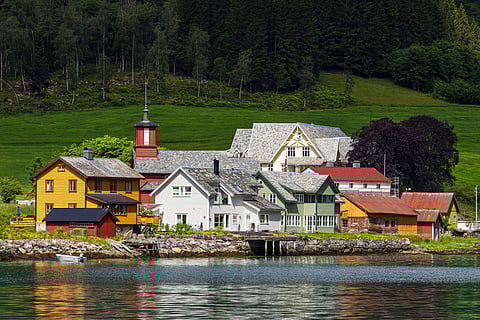
Church and houses in Fjærland, Norway Shutterstock
Norwegian book towns offer more than just books. For instance, in Fjaerland, visitors can explore nearby glaciers and fjord trails, visit the Norwegian Glacier Museum, or enjoy kayaking and hiking. Tvedestrand fuses literature with coastal culture, galleries, and maritime heritage.
This dynamic mix of culture and nature helps define the unique appeal of Norwegian book towns, making them ideal for travellers seeking places where intellect and immersion in nature go hand in hand.
FAQs
1. What is a book town?
A book town is a small town with a high concentration of bookshops, often focused on second-hand and antiquarian books.
Advertisement
2. How many book towns are there in Norway?
Norway has two officially recognised book towns: Fjærland and Tvedestrand.
3. Where is Fjærland located?
Fjærland is located at the inner end of the Sognefjord on Norway’s west coast.
4. What makes Tvedestrand different from Fjærland?
Tvedestrand integrates bookshops into an urban coastal setting, unlike Fjærland’s rural, dispersed model.
5. When is the best time to visit Norway’s book towns?
Late spring to early autumn is ideal, especially May to September.
Published At:
Tags