If you’re inclined to explore an offbeat destination brimming with history and spiritual significance, Dehu, a quaint town near Pune in Maharashtra, is a must-visit. Renowned as a key pilgrimage site for the Warkari sect of Hinduism, Dehu is famously associated with the 17th-century Marathi poet and saint, Sant Tukaram. Despite its small size, this town offers visitors a deep dive into devotion, culture, and the serene rhythms of traditional Maharashtrian life.
Discovering Dehu: A Spiritual Haven In Maharashtra
Dehu is ideal for those seeking an offbeat journey into Maharashtra’s spiritual and cultural heritage. With its combination of sacred sites, poetic history, and the beauty of the Indrayani River, the town offers a unique pilgrimage experience

Advertisement
Located on the banks of the Indrayani River, Dehu is a charming town in Maharashtra’s Pune district. It is revered as the birthplace of the 17th-century Bhakti saint, Sant Tukaram, and has become a prominent pilgrimage site for devotees of the Warkari sect. Known for his heartfelt Abhangas dedicated to Lord Vithoba, Tukaram’s life and teachings continue to inspire millions, drawing visitors to Dehu who seek spiritual solace.
Birthplace Of Sant Tukaram
Dehu, a quaint town in Maharashtra’s Pune district, is best known as the birthplace of Sant Tukaram Maharaj, the revered 17th-century Bhakti saint. Born around 1608 as Tukaram Bolhoba Ambile, he inherited his family’s devotion to Lord Vithoba and went on to become one of the most celebrated figures of the Bhakti movement. His soul-stirring Abhangas—devotional poems infused with love, humility, and philosophical insight—remain central to Maharashtrian culture and are often called the ‘Vaishnava Veda’.
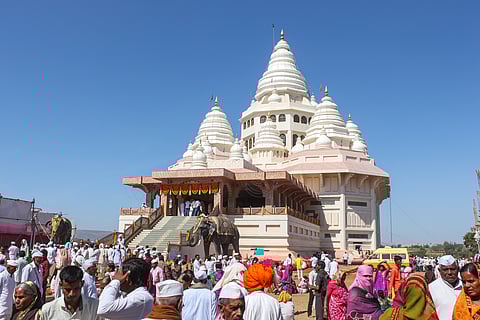
The Gatha Mandir, Marble Temple, Dehu Wirestock Creators/Shutterstock
The Town Of Alandi
Advertisement
A short distance from Dehu lies Alandi, the revered town where Sant Dnyaneshwar Maharaj, the 13th-century saint-philosopher, attained Samadhi. His iconic work, the Dnyaneshwari—a Marathi commentary on the Bhagavad Gita—brought profound spiritual wisdom within reach of ordinary people, seamlessly blending philosophy with everyday devotion. The journey between Dehu and Alandi holds deep symbolic significance for pilgrims, embodying a spiritual connection between Sant Tukaram and Sant Dnyaneshwar.
Spiritual Landmarks
The town’s spiritual heart is the Gatha Mandir (Sant Tukaram Maharaj Temple), a modern temple complex that honours the saint’s literary legacy. Inside its octagonal hall, over 4,000 Abhangas are beautifully inscribed on marble, surrounding a striking statue of Tukaram. Nearby, the Tukaram Maharaj Samadhi marks the site where the saint attained Samadhi, a place imbued with profound spiritual energy. The Vithoba Temple, dedicated to Lord Pandurang, also draws countless devotees, reinforcing Dehu’s status as a tirthakshetra—a sacred site for faith and reflection.
Advertisement
Things To Do
The temple complexes of Dehu offer a fascinating glimpse into Maharashtra’s deep-rooted Bhakti tradition, centred on Sant Tukaram, one of the most revered saints of the Varkari movement. You can visit the humble yet sacred site marking his birthplace and feel the quiet reverence that draws devotees from across the state.
At the Tukaram Maharaj Samadhi Mandir, you can listen to the daily recitations of Tukaram’s Abhangas, their soulful verses echoing through the halls and offering a moment of reflection and peace.
If you plan your visit during Maghi Utsav, you can take part in vibrant bhajans, spiritual discourses, and celebrations of the saint’s life.
Along the banks of the Indrayani River, you can join thousands of pilgrims at the ghats for a holy dip, believed to bring spiritual purification, or simply stroll along the river and soak in the serene, devotional atmosphere that makes Dehu so special.
Advertisement
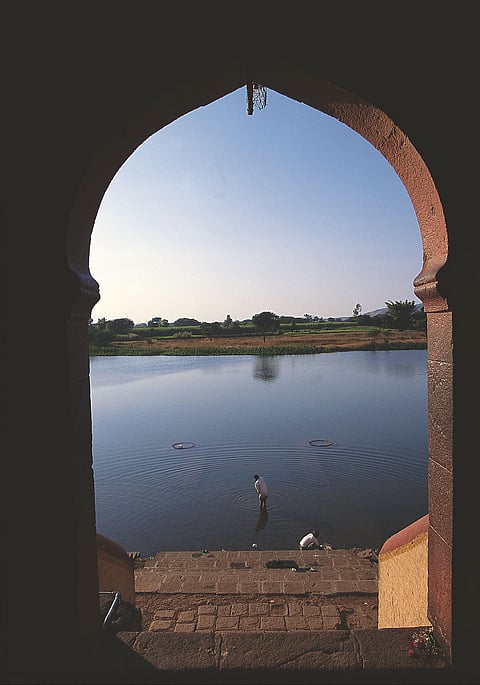
Pond in Dehu Punit Paranjpe
Festivals And Cultural Significance
Dehu comes alive every year during the Palakhi Festival, an elaborate procession in which Tukaram’s idol is carried from Dehu to Pandharpur. Taking place in the month of Ashadh (June–July), the festival attracts thousands of devotees who walk in devotion along the route, celebrating Tukaram’s life of humility and spiritual dedication.
Beyond festivals, the Abhangas themselves remain a living tradition, sung and recited in homes and temples across Maharashtra, connecting past and present through devotion.
Today, a visit to Dehu is far more than a historical excursion; it is a journey into the soul of Maharashtrian spirituality.
Along the gentle banks of the Indrayani River, the town’s temples, sacred spots, and echoing verses of Tukaram’s Abhangas create an immersive experience where history, poetry, and devotion flow together, inviting every visitor to pause, reflect, and connect with centuries of Bhakti tradition.
Nearby Attractions
There is plenty to see around Dehu for nature lovers, history buffs, and adventure seekers. You can relax at Pawna Lake, enjoy boating, or camp under the stars, or visit Mulshi Agro Farms to experience rural life and fresh local produce. Begdewadi Waterfall is perfect for a refreshing visit, while Durga Tekdi Lake offers a serene spot for a morning walk.
Advertisement
For history and trekking, you can explore Lohagad Fort and Visapur Fort, both offering panoramic views of the Western Ghats. Nearby Pune’s Aga Khan Palace is also worth a visit for its historical significance.
Best Time To Visit
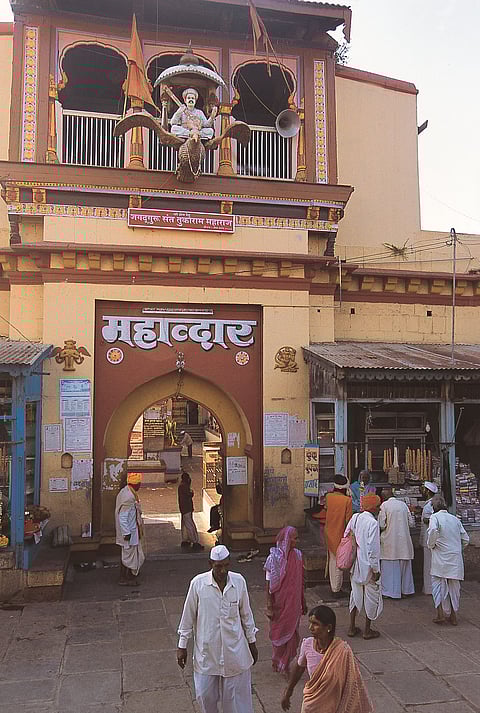
Scenes from Dehu Punit Paranjpe
You can visit Dehu any time of the year, but the town truly comes alive during Ashadhi Ekadashi (June–July) or the Pandharpur Wari and Kartik Ekadashi (October–November). For a quieter, more comfortable pilgrimage, you can explore during the cool winter months from October to February.
Getting There
You can reach Dehu from Pune and other major cities in Maharashtra. Pune International Airport, about 35 km away, offers taxis and buses to the towns. By train, Pune Junction connects to Mumbai, Delhi, Bengaluru, and beyond, with local buses or cabs available for the short onward journey.
FAQs
What makes Dehu a pilgrimage destination?
Dehu is considered to be the birthplace of Sant Tukaram Maharaj, the 17th-century Bhakti saint and poet of the Warkari sect. His devotional Abhangas dedicated to Lord Vithoba form a cornerstone of Maharashtrian spiritual and cultural life.
Advertisement
What spiritual attractions are there in Dehu?
They include the Gatha Mandir (Sant Tukaram Maharaj Temple), where over 4,000 Abhangas are inscribed on marble, the Tukaram Maharaj Samadhi, the saint’s birthplace, and the Vithoba Temple dedicated to Lord Pandurang. You can also visit the ghats along the Indrayani River.
What festivals are celebrated in Dehu?
The most prominent festival is the Palakhi Festival during Ashadh (June–July), when Sant Tukaram’s palanquin is carried from Dehu to Pandharpur. Maghi Utsav is another important event.
When is the best time to visit Dehu?
Dehu can be visited year-round. The festivals to mark on your calendar are Ashadhi Ekadashi and Kartik Ekadashi. The winter months from October to February have great weather.
Published At:
Tags