Concerns over overcrowding and poor visitor conduct are increasingly shaping tourism policy around the world, as destinations struggle to balance popularity with public order. In the latest incident, Japan has cancelled a well-known cherry blossom festival near Mount Fuji after authorities raised alarms about excessive tourist numbers.
Japan Cancels Cherry Blossom Festival Near Mount Fuji Amid Tourist Misconduct
Japan has cancelled a popular cherry blossom festival near Mount Fuji after officials cited overtourism and disruptive tourist behaviour, highlighting growing pressure on major destinations during the peak spring travel season

Advertisement
Local officials pointed to a surge in disruptive behaviour as a driving reason behind the decision. The city of Fujiyoshida announced on Tuesday that it would not stage this year’s cherry blossom celebrations at Arakurayama Sengen Park, ending a tradition that has run for more than ten years. “Behind [Mount Fuji’s] beautiful landscape is the reality that the quiet lives of citizens are threatened. We have a strong sense of crisis,” said Fujiyoshida mayor Shigeru Horiuchi in a statement. “To protect the dignity and living environment of our citizens, we have decided to bring the curtain down on the 10-year-old festival.”
Residents Raise Concerns
Local authorities say a pattern of inappropriate conduct by visitors has increasingly disrupted daily life in the city, located west of Tokyo. Officials reported incidents ranging from unauthorised entry into private homes to use toilets, to widespread littering and repeated cases of trespassing.
According to local news reports, more serious complaints have also been logged. The bad behaviour includes tourists relieving themselves in residents’ gardens and reacting aggressively when challenged. According to city officials, parents have also expressed growing fears for children travelling to and from school, with pavements becoming dangerously congested as visitors gather along popular routes, and children being pushed around.
Advertisement
A Victim Of Overtourism
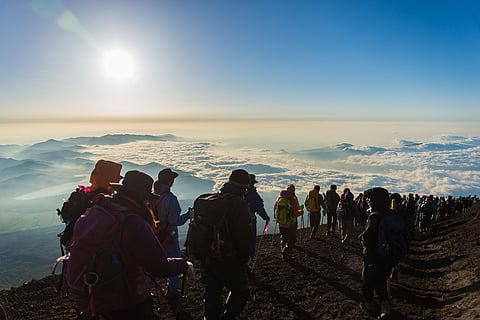
Hikers gather during sunrise on the Mt. Fuji summit FocusStocker/Shutterstock
The cancellation of the festival is unlikely to ease pressure on the area, with large crowds still expected at Arakurayama Sengen Park in April due to its panoramic views of Mount Fuji. Visitors frequently queue for hours at the site. In fact, like many other popular destinations for tourists, Mount Fuji has become a flashpoint for overtourism, as a sharp and unsustainable rise in visitor numbers has strained infrastructure, damaged the environment and disrupted local communities.
Fuelled largely by social media exposure, the surge has led to littering, trespassing and hazardous overcrowding on climbing routes. Authorities have responded with strict measures, by installing barriers, limiting access and introducing stricter controls, including daily hiker caps and mandatory entry fees. In Fujikawaguchiko, officials have even erected a mesh screen to block a popular roadside view in an effort to curb unsafe tourist behaviour.
About The Cherry Blossom Season In Japan
Advertisement
Japan’s cherry blossom season is one of the country’s most celebrated cultural events. It marks the arrival of spring. The season unfolds between March and May, moving gradually from the south of Japan to the north. At the heart of the celebrations is hanami, a long-standing tradition that centres on coming together to appreciate the fleeting beauty of the blossoms. Families, friends and colleagues gather in parks for picnics, food and drink, while many remain into the evening to enjoy illuminated trees, a practice known as yozakura.

The ritual of watching cherry blossoms in early spring is called hanami Shutterstock
The custom has its roots in Japan’s early history, dating back more than a thousand years to the Nara period. Initially, seasonal flower viewing was focused on plum blossoms and was largely reserved for the imperial court and aristocracy. Over time, cherry blossoms came to symbolise renewal and the impermanence of life, becoming the central focus of spring celebrations for people across all levels of society.
Advertisement
FAQs
Why was the cherry blossom festival cancelled?
Officials said the decision was driven by overtourism and repeated incidents of disruptive and unsafe behaviour by visitors.
Which festival has been cancelled?
The Arakurayama Sengen Park cherry blossom festival in Fujiyoshida, near Mount Fuji.
How popular was the festival?
The event typically attracted around 200,000 visitors each year and ran for several weeks during peak blossom season.
What problems have residents reported?
Complaints include trespassing, littering, unsafe crowding and behaviour that disrupted daily life and school routes.
What steps are authorities taking instead?
Officials plan to increase security, add temporary parking and install portable toilets to manage visitor numbers.
Published At: