For the whole of the month of November, Delhi's Air Quality Index (AQI) remained consistently red on the scale causing much concern within its residents. Even though the months prior to November made a strong case for having the cleanest air in 8 years, the decline in quality of the past month goaded people out on the streets to demand their basic right to breathe in fresh air. Even as December brings relief with a shift in air quality, from "Very Poor" to "Poor," the haze continues. For residents, this familiar haze often means sealed windows, humming air purifiers, altered routines, and the quiet acceptance of a seasonal reality.
Delhi’s Winter Smog Crisis: Are Air Purifiers Now Carry‑On Essentials For Travellers?
As Delhi's AQI remains in the ‘very poor' category, doctors explain health risks for travellers and whether portable air purifiers and masks truly offer protection

Advertisement
For travellers, however, the rising pollution poses a different challenge. Business visitors, tourists, and transit passengers now find themselves navigating a city where even short-term exposure can trigger discomfort. As a result, a new question has emerged in the urban travel conversation: Are portable air purifiers becoming carry-on essentials for people flying into Delhi?
With experts reporting growing health risks for even brief exposure and a rising number of travellers packing purifiers alongside chargers and toiletries, we decode what’s driving this shift and whether these devices truly make a difference.
How Harmful Is Short Term Exposure To Air Pollution?
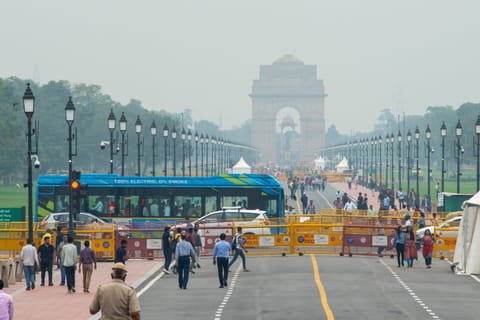
An electric bus passes India Gate in Delhi Shutterstock
According to Dr. Manav Manchanda, Director & Head, Respiratory, Critical Care & Sleep Medicine at Asian Hospital, even short stays in Delhi during peak smog periods can impact the respiratory system.
He explains that PM2.5 particles are nearly 30 times smaller than the width of a human hair, allowing them to travel deep into lung tissue and even enter the bloodstream. Travellers often experience a set of predictable symptoms within hours of arrival: eye and throat irritation, coughing, chest heaviness, headaches, fatigue, and disturbed sleep.
Advertisement
While breathing difficulties can affect anyone, Dr. Manchanda stresses that children, senior citizens, pregnant women, and those with asthma, Chronic Obstructive Pulmonary Disease (COPD), heart disease, diabetes, or weakened immunity are especially at risk. Even people with mild allergies tend to notice flare-ups as soon as they enter the city.
Dr. Puneet Gupta, Head – Pulmonology, Intervention Pulmonology & Sleep Medicine at Yatharth Super Speciality Hospital, adds that polluted air in Delhi contains not only fine particles but also ozone, nitrogen dioxide and other irritants that can reach the bloodstream and trigger inflammatory responses. “Shortness of breath, chest tightness, increased asthma or COPD attacks—these are common even in people visiting the city for a few days,” he says.
Do Air Purifiers And Masks Help Travellers?
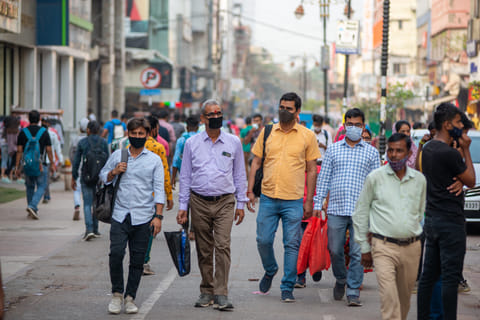
People walk through Karol Bagh’s hazy streets in mask Shutterstock
Both experts agree that masks and air purifiers do offer meaningful protection, especially when used correctly.
Air purifiers, experts say, can meaningfully improve indoor air quality for travellers by significantly reducing harmful particles in enclosed spaces such as hotel rooms, apartments or co-working lounges, creating a controlled breathing zone that becomes especially important at night when the body works to repair inflammation caused by daytime exposure. They are particularly helpful for people with asthma, bronchitis, sinus issues, heart conditions or for anyone who is simply sensitive to pollution.
Advertisement
Outdoors, N95 and KN95 masks remain the most effective line of defence, with Dr. Manchanda noting that while they cannot eliminate all pollutants, they do substantially cut down the amount of PM2.5 reaching the lungs. Dr. Gupta adds that masking is especially important on high-pollution days and during early mornings or late evenings, when smog levels tend to peak.
Should Travellers Carry A Portable Air Purifier To Delhi?

A man wears a portable air-purifier necklace amid rising pollution Shutterstock
Here, opinions diverge slightly.
Dr. Manchanda makes a strong case for carrying compact purifiers when visiting Delhi in winter. The city's rapid fluctuations between moderate and severe pollution within the same day can be especially hard on visitors whose lungs aren’t adapted to the environment. Portable devices, he argues, offer an added layer of comfort and help maintain a clean air pocket in hotel rooms, rented apartments, or cars.
Dr. Gupta, however, calls them “not always practical” for travel, suggesting that effective masking and limiting outdoor exposure may be enough for short trips. His advice:
Wear masks during travel and while outdoors
Keep car windows closed
Avoid spending long periods outside, particularly during early morning and late evening smog peaks
Advertisement
From Luxury To Necessity
There was a time when air purifiers were seen as lifestyle add-ons in urban homes. Today, experts believe they’ve become a basic health utility, much like water filters.
High pollution levels in Delhi and other major cities have made clean indoor air a priority rather than a preference. “People without any existing health issues also benefit,” says Dr. Manchanda. “Purified indoor air reduces fatigue, headaches, poor sleep, and throat irritation caused by long-term exposure.”
This shift is now influencing travel behaviour as well. Many travellers arriving in NCR hotel rooms switch on the purifier before they unpack. Some carry personal devices to ensure a consistent air quality baseline across their trip.
So, Are Air Purifiers The New Travel Essential For Delhi?
If you are travelling to Delhi during peak smog season, the answer increasingly leans toward yes, especially if you fall into a sensitive group or plan to stay for more than a day or two. At the very least, experts recommend:
Checking the AQI before stepping out
Wearing N95/KN95 masks outdoors
Keeping vehicles well-sealed
Avoiding early-morning and late-evening outdoor plans
Ensuring your hotel room has a functioning purifier
Advertisement
With pollution in northern India showing no signs of easing, air purifiers, portable or otherwise, are slowly becoming an essential. For visitors arriving in Delhi’s smog-choked winter, these devices are no longer about luxury or comfort. They’re tools for safer breathing.
FAQs
1. Should travellers carry a portable air purifier when visiting Delhi?
Yes, especially during peak smog months. Experts say compact purifiers improve indoor air quality in hotel rooms and help reduce PM2.5 exposure.
2. Does short-term exposure to Delhi’s pollution affect travellers?
Yes. Even a few hours of exposure can cause coughing, irritation, headaches, chest heaviness and breathing discomfort, especially for sensitive groups.
3. What masks are most effective for Delhi's pollution?
N95 and KN95 masks are recommended, as they filter fine PM2.5 particles more effectively than cloth or surgical masks.
4. What precautions should travellers take when moving around the city?
Check AQI levels, avoid early mornings and late evenings, wear masks outdoors, keep car windows closed and ensure indoor spaces are well filtered.
Advertisement
5. Do hotels in Delhi provide air purifiers?
Most premium hotels do, but travellers should confirm beforehand. Some visitors carry personal purifiers for consistent air quality.

Published At: