New Delhi is set to add a new cultural site to its tourism landscape with the phased opening of the Yuge Yugeen Bharat Museum. This ambitious project aims to showcase nearly 5,000 years of India’s civilizational history, with its first gallery expected to open to the public later this year. Over the next three years, additional galleries will be rolled out, officials have said.
Delhi's New Cultural Landmark: Inside Yuge Yugeen Bharat Museum
The Yuge Yugeen Bharat Museum will soon transform Delhi's tourism landscape into a major cultural landmark, showcasing 5,000 years of Indian civilisational history

Advertisement
The museum is a core part of the Central Vista Redevelopment. It represents a significant shift in the city's urban fabric, converting some of India’s most recognisable administrative buildings into public-facing cultural and educational spaces.
Massive Scale And Curated Collections
The museum will occupy a staggering 1.55 lakh square metres within the historic North and South Blocks on Raisina Hill. According to the Ministry of Culture, the complex will house at least 30 thematic galleries, featuring a mix of indoor exhibition halls, open courtyards, and outdoor display areas.
The scale of the collection is equally impressive. The ministry has already shortlisted 25,000 artefacts for display, a number expected to grow to nearly 1 lakh objects as more galleries open. These items are being sourced from the National Museum, various state institutions, and the Archaeological Survey of India (ASI).
Notable highlights include Indus Valley terracotta hourglass (2500–1750 BCE), a Mauryan edict pillar fragment (3rd century BCE), a Gupta-period Surya sculpture (5th century CE), the Konark Sun Wheel (13th century CE), and a Chola-period Nataraja bronze (10th–11th century CE).
Advertisement
To ensure high standards, the ministry is working with specialist consultants to meet international museological guidelines set by UNESCO and the International Council of Museums.
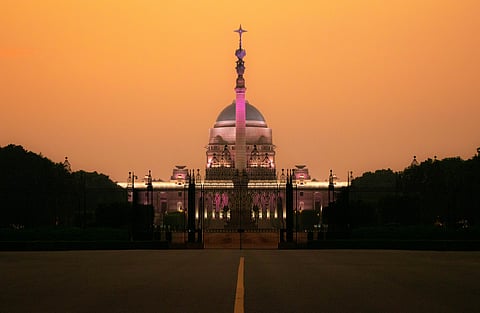
Rashtrapati Bhavan on Raisina Hill, New Delhi Shutterstock
Reuse Of Heritage Buildings
A central feature of the project is the "adaptive reuse" of the North and South Blocks. Built in the early 20th century, these heritage buildings are being carefully redesigned. While their famous external architecture will remain intact to preserve the character of Raisina Hill, the interiors are being overhauled to support modern museum needs, such as climate-controlled environments and advanced conservation facilities.
The transformation was made possible as several government ministries relocated to new office complexes. Beyond exhibition spaces, the museum will include auditoriums, a library, and conservation laboratories. Planners are also considering an underground tunnel to connect the two blocks, which would improve visitor flow and create a seamless "cultural corridor" through the heart of the city.
Global Design And Technical Expertise
The museum is being developed through a high-profile international collaboration. In late 2024, the National Museum signed a technical cooperation agreement with France Muséums Développement. This partnership is intended to bring global best practices to the museum’s curatorial planning and exhibition design.
Advertisement
The design team is led by Arcop Associates, with acclaimed Thai architect Kulapat Yantrasast serving as the principal designer. Yantrasast is well-known for his work on the Academy Museum of Motion Pictures in Los Angeles and the Louvre in Paris. His involvement is expected to help the museum balance its massive physical scale with detailed, immersive visitor experiences that meet contemporary global standards while respecting the buildings' heritage.
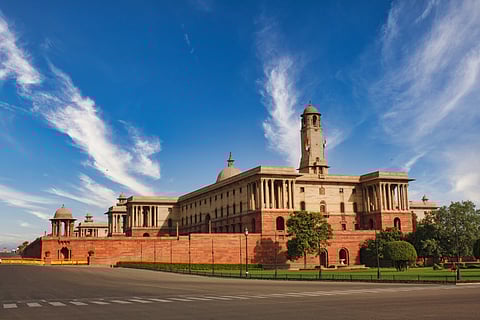
Rashtrapati Bhavan Shutterstock
Impact On Tourism In Delhi
Government officials estimate that the Yuge Yugeen Bharat Museum could attract about one crore (10 million) visitors annually, making it one of the most visited cultural landmarks in India. This influx is expected to benefit local businesses and strengthen Delhi’s reputation as a global hub for heritage and the arts.
Culture Secretary Vivek Aggarwal noted that the first gallery, opening in late 2026, will act as a preview. It will feature about 100 key artefacts that set the stage for the museum's broader narrative. With strong support and extensive media interest, the museum is set to become a defining destination, offering a comprehensive view of India’s past from its most prestigious administrative address.
Advertisement
FAQs
1. What is the Yuge Yugeen Bharat Museum?
The Yuge Yugeen Bharat Museum is an upcoming national museum in New Delhi that will showcase nearly 5,000 years of Indian civilisational history.
2. Where will the museum be located?
It will be housed in the historic North Block and South Block buildings on Raisina Hill, as part of the Central Vista Redevelopment.
3. How large is the Yuge Yugeen Bharat Museum?
The museum will span around 1.55 lakh square metres and include at least 30 thematic galleries.
4. What kind of artefacts will be displayed?
The museum will display artefacts from the Indus Valley period to the Chola era, sourced from the National Museum, ASI and state institutions.
5. When will the museum open to the public?
The first gallery is expected to open in late 2026, with additional galleries rolled out in phases over the following three years.
Published At: