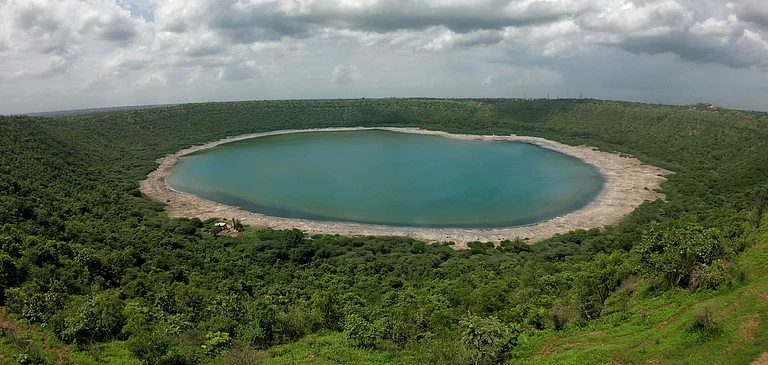


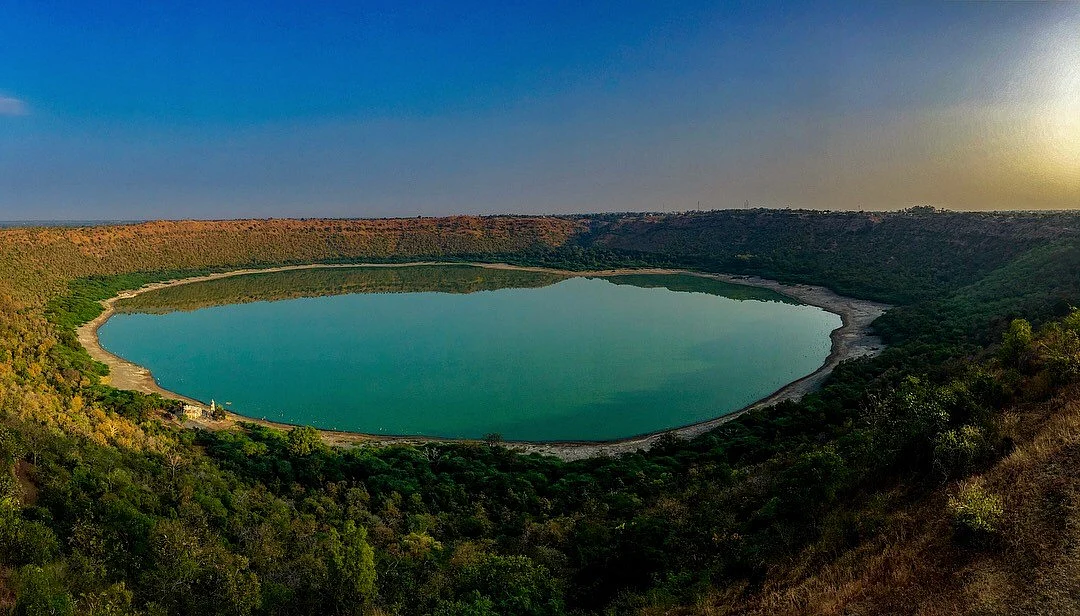
A meteorite travelling at incredible speed struck the Earth thousands of years ago, leaving behind a massive crater in Maharashtra’s Deccan Plateau. Today, that crater is home to Lonar Lake, one of the world’s rare geological formations, known for its saline and alkaline waters and its unusual origins. Now, the natural landmark in Buldhana district has received international recognition, earning a place among the Third 100 IUGS Geological Heritage Sites announced by the International Union of Geological Sciences (IUGS).
With this inclusion, Lonar Lake becomes only the second site in India to feature in the prestigious international programme, following Meghalaya’s Mawmluh Cave, which was recognised in the inaugural selection in 2022. The recognition places Maharashtra’s geological treasure alongside some of the world’s most significant natural formations and is expected to bring greater attention to its scientific importance, conservation, and tourism potential.
A Crater With Origins
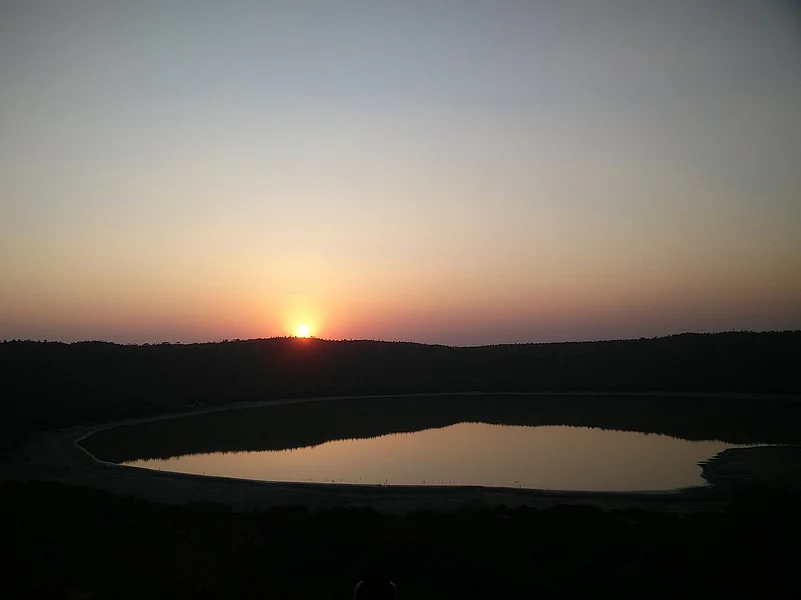

Located in Maharashtra’s Buldhana district, Lonar Lake is one of the youngest and best-preserved hypervelocity impact craters on Earth. According to the Ministry of Mines, the crater is approximately 12,000 years old and measures around 1.88 km in diameter. It was formed when a meteorite struck the Deccan Plateau, creating a bowl-shaped depression in the region’s basaltic rock formations.
What makes Lonar particularly significant is its geological setting. The crater lies within the Deccan Traps, an extensive succession of volcanic basalt rocks formed around 65 million years ago. It is among only five known hypervelocity meteorite impact craters on Earth that developed in basaltic terrain, making it an important site for understanding the effects of meteorite collisions on the planet’s surface.
The crater also houses a saline-alkaline lake at its centre, creating an unusual geological and ecological environment. Its distinctive circular shape, exposed basaltic lava flows along the inner slopes, and deposits of fragmented rocks provide evidence of the impact that created it. Scientists have also identified impact-related materials such as impact glass, spherules, and melt rocks, which offer valuable insights into the physical and chemical processes associated with high-velocity meteorite collisions.
Global Geological Recognition
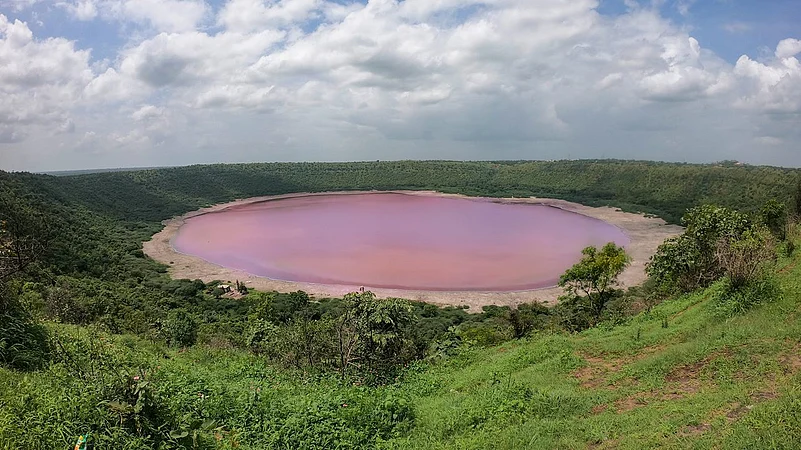
The recognition has been granted under the IUGS Geological Heritage Sites programme, which identifies locations of exceptional scientific value for understanding the Earth's history, geological features, and natural processes. The Geological Survey of India (GSI), under the Union Ministry of Mines, initiated Lonar Lake's nomination for consideration.
The site received preliminary approval during the 82nd IUGS Executive Committee meeting in Bogota, Colombia, in January 2026. Its inclusion was subsequently announced at the IUGS Geoheritage Event held in Algarve, Portugal, from November 4 to 8, 2026. The Ministry of Mines confirmed the development in an official announcement on November 13.
The Third 100 selection features geological sites across 47 countries, covering Africa, the Americas, the Asia-Pacific region, the Middle East, Europe, Antarctica, and the High Seas. Lonar Lake now shares this recognition with several internationally significant natural landmarks, including Mount Fuji in Japan, the Norwegian Fjords, the San Andreas Fault in the United States, Mount Aconcagua in Argentina, and the Chocolate Hills in the Philippines.
Previous editions of the programme have recognised other globally significant locations, including the Grand Canyon, Mount Kilimanjaro, Mount Everest, and the Namib Desert.
Beyond Scientific Value
Lonar Lake's latest recognition adds to an already significant list of distinctions. It is designated as a Ramsar wetland of international importance and has also been recognised as a National Geological Heritage Monument. Its unusual formation and geological composition have made it an important destination for researchers studying meteorite impacts, basaltic formations, and planetary geology.
The IUGS recognition is expected to strengthen the lake's profile among international researchers, geology enthusiasts, and travellers interested in exploring India's natural heritage. Greater visibility could also create opportunities for the surrounding region, particularly through tourism-related businesses, local guides, accommodation providers, and transport services in Buldhana district.
Conservation, however, remains an important part of the recognition. While several sites included in the Third 100 are protected within national parks, geoparks, and nature reserves, others require greater attention and preservation measures. The international designation is intended to encourage appreciation of these geological landmarks, promote their use as educational resources, and strengthen efforts to safeguard them.
For Lonar, the distinction brings its extraordinary origins into sharper focus, placing a remarkable geological formation in Maharashtra within a global conversation about the Earth's history and the natural processes that continue to shape it.
FAQs
1. Why has Lonar Lake received international recognition?
Lonar Lake has been included in the Third 100 IUGS Geological Heritage Sites for its exceptional scientific and geological significance as a meteorite impact crater.
2. Where is Lonar Lake located?
Lonar Lake is situated in Buldhana district in Maharashtra, within the Deccan Plateau.
3. How old is Lonar Lake?
According to the Ministry of Mines, the impact crater is approximately 12,000 years old.
4. Why is Lonar Lake geologically significant?
It is one of only five known hypervelocity impact craters on Earth formed in basaltic terrain. It also contains a saline-alkaline lake at its centre.
5. Is Lonar Lake India's first IUGS Geological Heritage Site?
No. It is India's second entry in the programme, following Mawmluh Cave in Meghalaya, which was recognised in 2022.