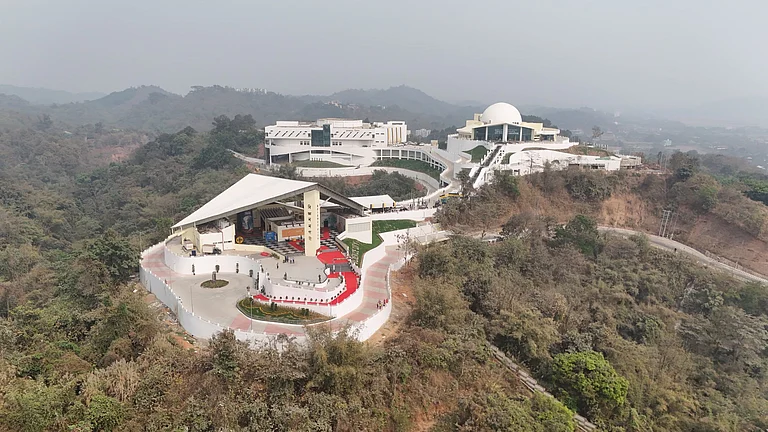


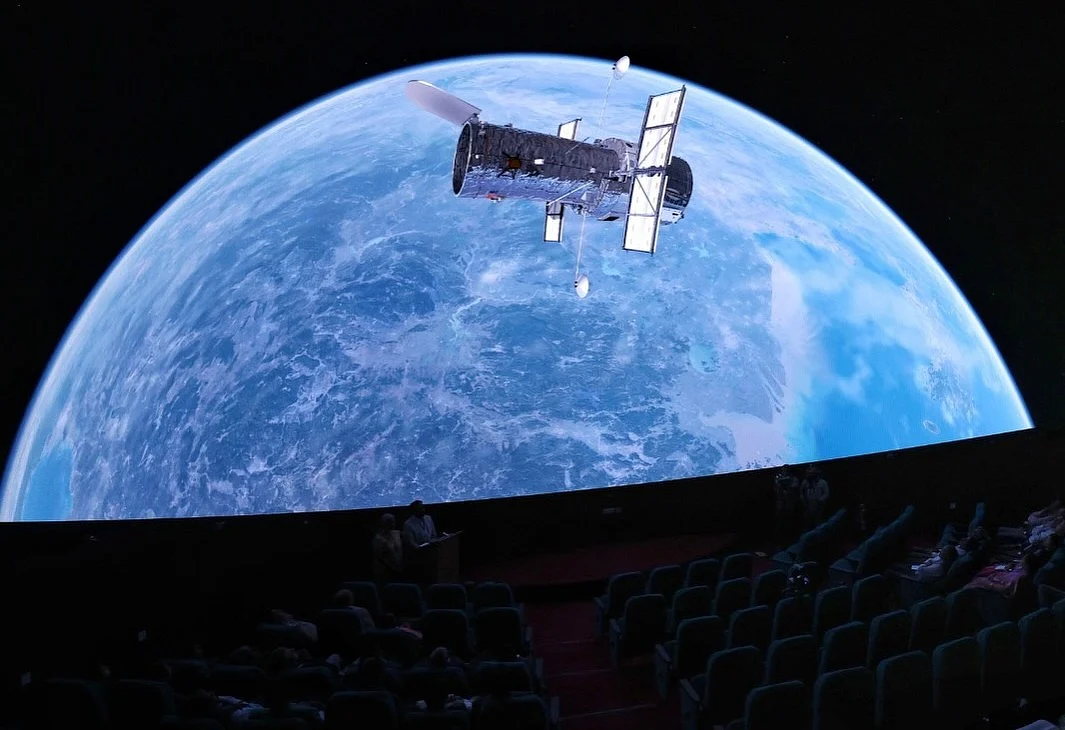
Mysuru has added a new attraction to its educational and cultural landscape with the inauguration of COSMOS Planetarium at the University of Mysore campus, near the foothills of Chamundi Hills. India's first LED dome planetarium, the state-of-the-art facility aims to introduce visitors to the wonders of astronomy and offer an immersive experience of the universe.
Inaugurated on November 13, the planetarium is expected to provide students, researchers and astronomy enthusiasts with opportunities to explore celestial bodies, planets and other astronomical phenomena. Prime Minister Narendra Modi, who inaugurated the facility, said COSMOS would encourage young minds to develop scientific curiosity and pursue new discoveries.
India's First LED Dome Planetarium
Located on the University of Mysore campus, COSMOS Planetarium features advanced LED dome technology that offers visitors an immersive view of the universe. The facility is designed to make complex scientific concepts easier to understand while encouraging interest in space science and astronomy.
Describing it as an extraordinary experience, Modi congratulated the Indian Institute of Astrophysics, the University of Mysore, various government departments and everyone associated with the project. He also called for greater participation by school and college students, urging the planetarium's management to coordinate with educational institutions and organise visits.
Mysuru's Legacy Of Science And Learning
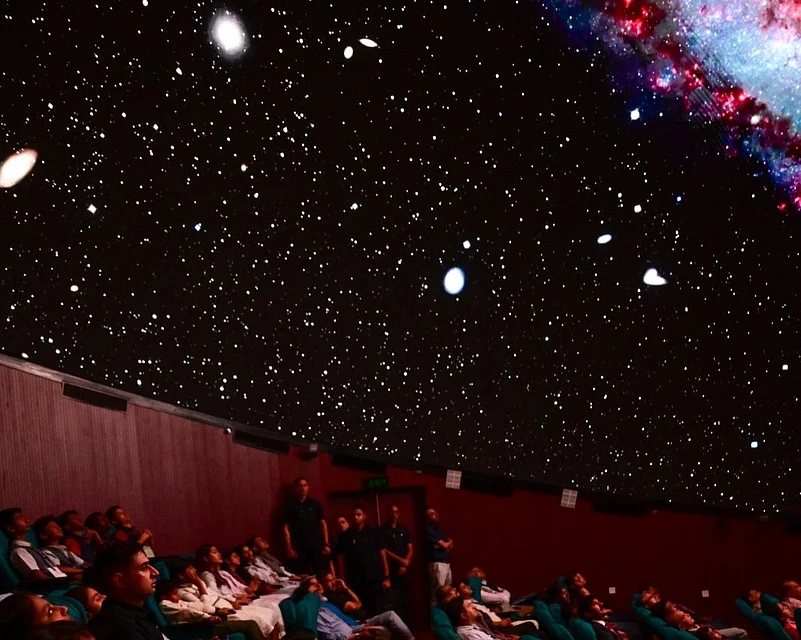

The new planetarium also adds to Mysuru's long association with education and scientific research. The University of Mysore was established during the reign of Nalwadi Krishnaraja Wadiyar, while the Mysuru royal family played an important role in laying the foundation for the Indian Institute of Science (IISc) in Bengaluru.
During the inauguration, Modi drew a parallel between COSMOS and Viveka Smaraka, another institution he had recently inaugurated in the city. While the memorial encourages visitors to look within and explore spiritual knowledge, the planetarium invites them to look towards the skies and understand the mysteries of the universe.
He also highlighted the contributions of ancient Indian astronomers such as Aryabhata, Varahamihira, Bhaskaracharya and Neelakantha Somayaji, who made significant observations and carried out complex mathematical calculations despite not having access to modern instruments.
India's Growing Achievements In Space Research
The inauguration also highlighted India's growing presence in space exploration. Among the major milestones are Chandrayaan-3, which made India the first country to achieve a soft landing near the Moon's south polar region, and Aditya-L1, the country's first space-based solar observatory.
India has also become the fourth country in the world to demonstrate space docking and undocking capabilities. The recent visit of an Indian astronaut to the International Space Station, along with the experiments conducted during the mission, is expected to contribute to the country's Gaganyaan human spaceflight programme.
The opening up of the space sector has also created opportunities for private companies and start-ups to develop rockets, build satellites and explore new technologies.
Encouraging The Next Generation Of Scientists
Young Indians are increasingly making their mark in international science competitions. At the International Olympiad on Astronomy and Astrophysics held in Vietnam this year, all five Indian participants won medals, with four securing gold and one taking home silver.
Several initiatives are also helping strengthen the country's research and innovation ecosystem. More than 10,000 Atal Tinkering Labs have reached over one crore students, giving them opportunities to experiment, develop ideas and explore technology. Other initiatives, including One Nation One Subscription and the Anusandhan National Research Foundation, aim to improve access to scientific resources and support research institutions.
With COSMOS Planetarium, Mysuru adds another destination for students, families and astronomy enthusiasts. The facility is expected to make science more accessible to visitors while inspiring a new generation to look beyond Earth and explore the universe.
(With inputs from various sources)
FAQs
1. Where is COSMOS Planetarium located?
COSMOS Planetarium is located on the University of Mysore campus, near the foothills of Chamundi Hills in Mysuru, Karnataka.
2. What is special about COSMOS Planetarium?
It is described as India's first LED dome planetarium. Its advanced LED technology is designed to offer visitors an immersive experience of astronomy and the universe.
3. When was COSMOS Planetarium inaugurated?
The planetarium was inaugurated on November 13, 2026, by Prime Minister Narendra Modi.
4. Who can visit COSMOS Planetarium?
The facility is intended for students, researchers, astronomy enthusiasts and other visitors interested in learning about space science.
5. What are some other attractions in Mysuru?
Mysuru is known for its royal heritage, palaces, museums and cultural landmarks. Chamundi Hills and the University of Mysore are among its notable attractions.