

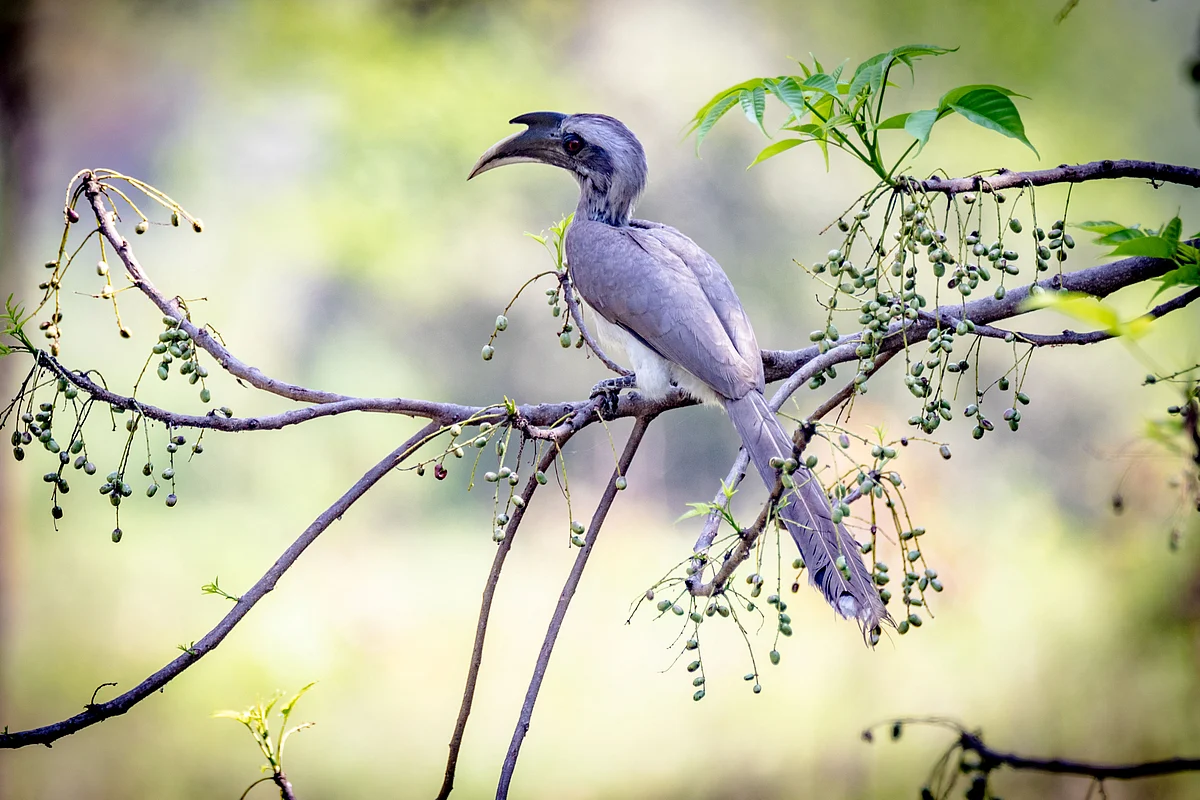
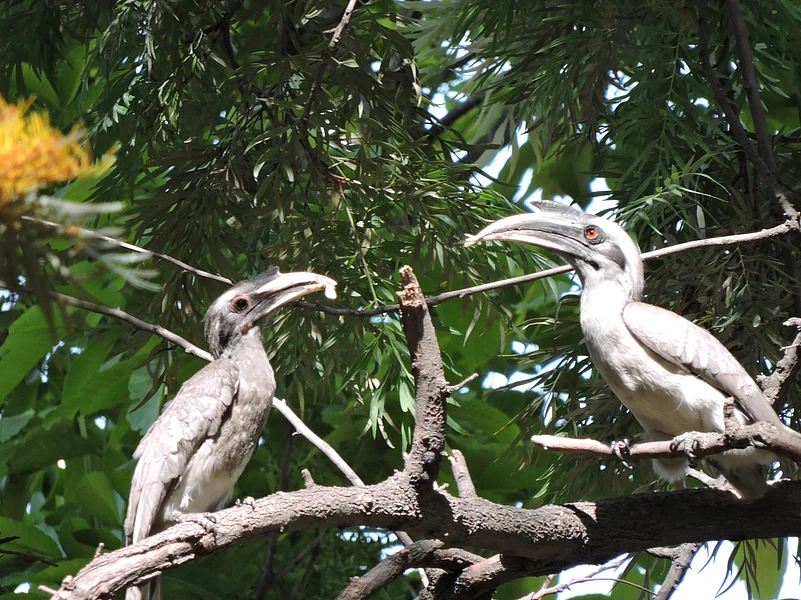
Gujarat's Gir forests have confirmed the successful return of the Indian Grey Hornbill, a species that had been locally extinct for six decades. A new scientific study confirms that birds released under a state-led reintroduction programme have settled, nested and begun breeding in the wild. The research paper, "Reintroduction of Indian Grey Hornbills in Gir, India: Insights into Ranging, Habitat Use, Nesting and Behavioural Patterns," was published in the international peer-reviewed journal Birds and offers the first comprehensive assessment of the project, run by the Gujarat Forest Department with conservation partners.
How The Reintroduction Was Carried Out
The project released 40 Indian Grey Hornbills in two phases: 28 birds between 2021 and 2022, followed by 12 more in 2023. Across both phases, the birds included 21 males and 19 females, a sex ratio of roughly 1.10. Eleven males were fitted with satellite transmitters to track their movements, habitat use and breeding behaviour over several years, said Mohan Ram, Conservator of Forests, Junagadh Circle, and a study co-author. Only males were tagged, since females seal themselves inside the nest cavity for about two months during breeding, and the transmitter's battery and harness could interfere with that process.
The birds were translocated from healthy hornbill populations in the Aravalli forests of Gujarat, roughly 380 km away, after habitat assessments concluded Gir could once again support the species. Aravalli's dry scrub forest, home to Acacia species, axlewood and Indian jujube along with fruit-bearing trees, closely resembles vegetation found in the Gir landscape.

Satellite data tracked how the birds adapted. In the first months after release, hornbills ranged across an average area of about 61 square km as they explored unfamiliar terrain; this shrank to roughly 5.7 square km once they settled. Average daily movement fell correspondingly, from 4.3 km during the exploratory phase to 1.4 km after settlement— a pattern the researchers describe as typical of reintroduced wildlife before it establishes fixed territories.
Breeding Results Over Four Years
One pair bred successfully in the first year after release, and three more breeding pairs nested in the second year, according to Vinod Rao, principal secretary, forests and environment, Gujarat, indicating the population had begun to establish itself naturally. The study found the hornbills favour Gir's dry mixed deciduous and teak forests, while birds ranging outside the protected area used orchards, water bodies, and areas near human settlements.
For nesting, researchers noted a preference for mature trees with large trunk girths, particularly Sterculia urens and Terminalia bellirica, pointing to the importance of conserving old-growth trees. Chicks were fed mainly on fruits of banyan, peepal, karamda, and dhraman, along with insects and other invertebrates.
Rao noted the hornbill's ecological importance as a long-distance seed disperser that helps regenerate forests by carrying seeds of fruit-bearing trees over large areas. Jaipal Singh, principal chief conservator of forests (wildlife) and chief wildlife warden, Gujarat, said the successful breeding, shrinking home ranges and stable habitat use together indicate the programme is progressing toward a self-sustaining population, and could serve as a model for future bird reintroductions in India where suitable habitat exists, but a species has vanished locally.
Why The Hornbill Disappeared From Gir
The last confirmed sighting of the Indian Grey Hornbill in Gir dates to the 1930s, with the population declining until it was locally extinct between 1950 and 1960. Singh said the species likely disappeared from Gir due to hunting pressure rather than habitat loss, noting that historical records point to hunting as the primary cause rather than habitat degradation.
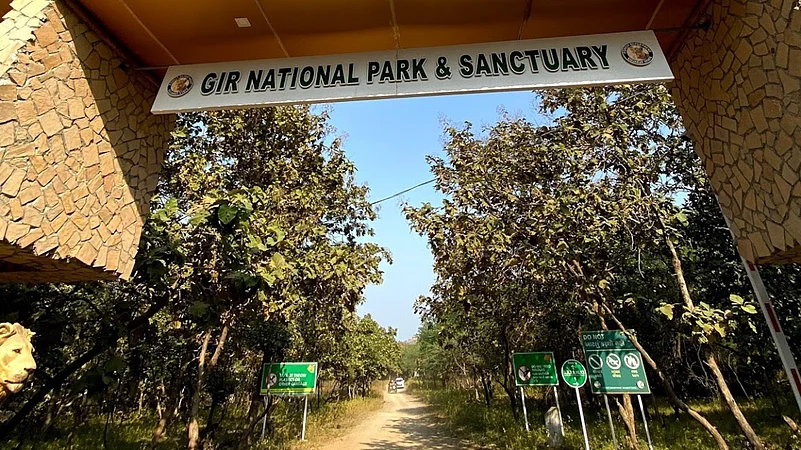
Recovery became possible only after conservation status improved in the region. Habitat conditions improved significantly following Gir's declaration as a wildlife sanctuary in 1965 and as a national park in 1975, creating an opening for reintroduction to be considered. Those protections gave forest officials the ecological basis to conclude, decades later, that Gir could again sustain a hornbill population, leading to the 2021 translocation from Aravalli.
The Indian Grey Hornbill, a mid-sized bird found widely across the Indian subcontinent, is not classified as globally threatened, but its local disappearance from Gir had removed a seed-dispersing species from the ecosystem for over 60 years. Its return is now expected to aid forest regeneration in the landscape, alongside Gujarat's other ongoing recovery efforts for species such as the Great Indian Bustard.
(With inputs from various sources)
FAQs
Why is the return of the Indian Grey Hornbill to Gir significant?
The species had been locally extinct in Gir for around 60 years. Its successful breeding marks the first documented recovery of a locally extinct bird species in the sanctuary.
How were the hornbills reintroduced into Gir?
The Gujarat Forest Department translocated 40 Indian Grey Hornbills from the Aravalli forests between 2021 and 2023 and monitored their adaptation using satellite transmitters.
Have the reintroduced hornbills started breeding?
Yes. The birds have successfully nested and bred in the wild for four consecutive years, indicating that a self-sustaining population is beginning to establish.
Why did the Indian Grey Hornbill disappear from Gir?
Researchers believe hunting, rather than habitat loss, caused the species' local extinction between the 1950s and 1960s.
Why are Indian Grey Hornbills important to the ecosystem?
Indian Grey Hornbills are vital seed dispersers. By carrying and spreading the seeds of fruit-bearing trees, they help regenerate forests and maintain biodiversity.