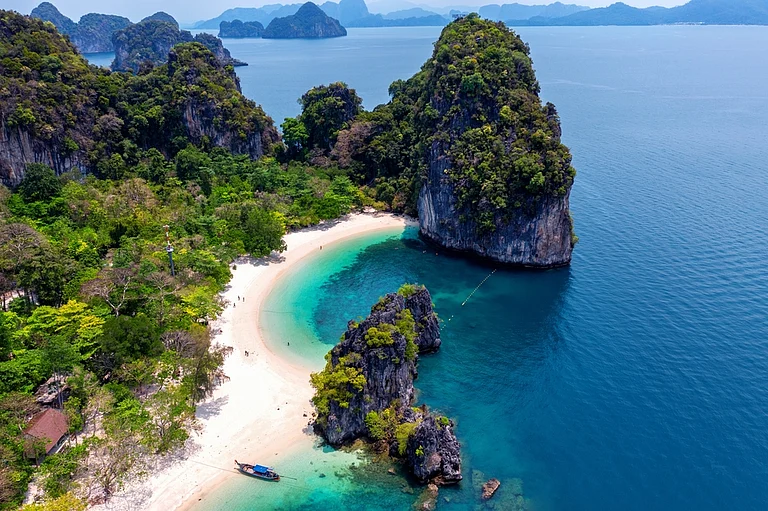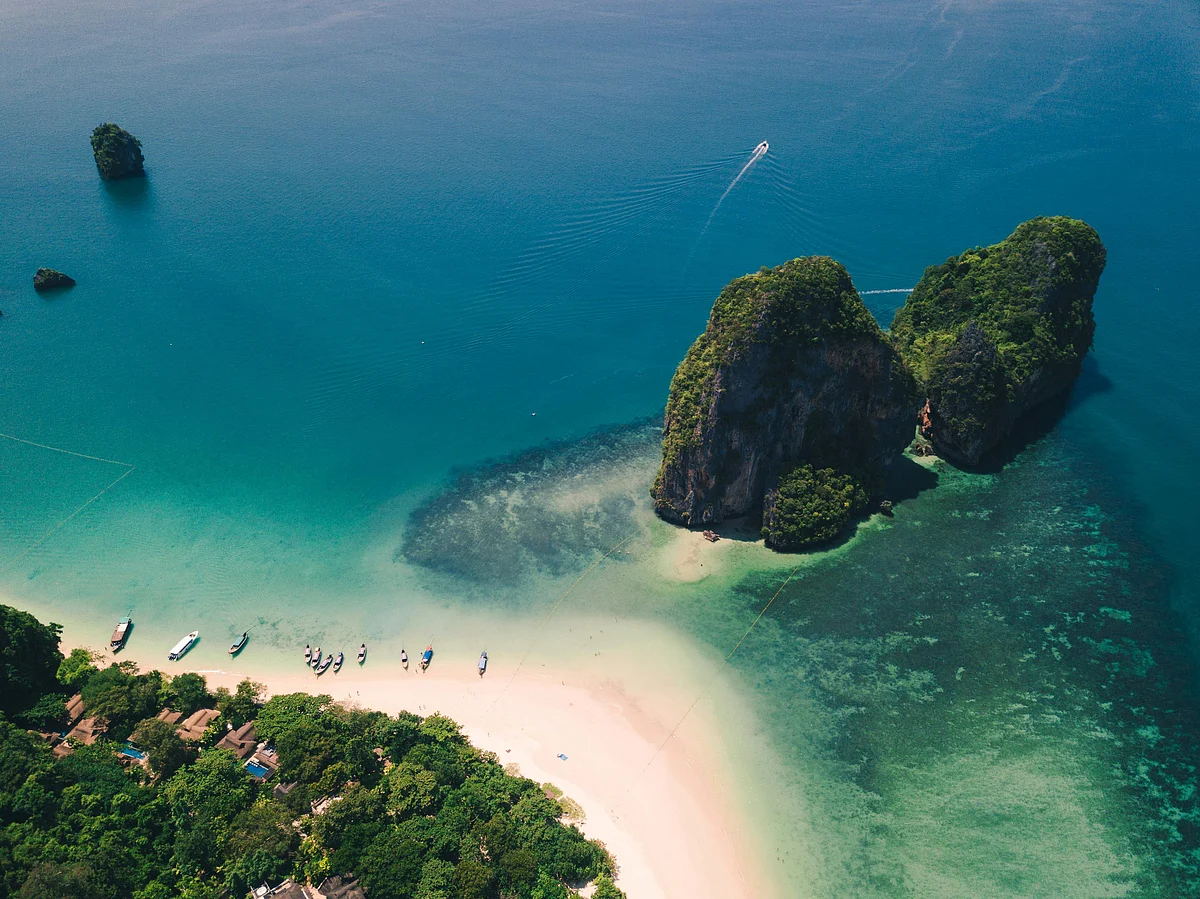
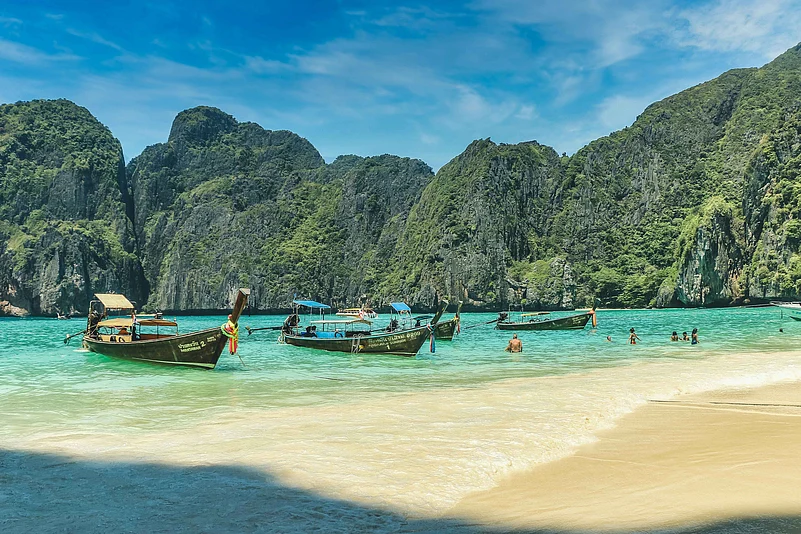
There are places in Thailand that arrive with instant recognition—Phuket, Bangkok, Koh Samui—and then there is Krabi, which has been building its reputation more quietly, almost deliberately. Along the Andaman coast, where limestone cliffs rise sharply from turquoise water and long-tail boats drift between islands, Krabi has steadily become one of the country’s most strategically important tourism destinations. What was once seen largely as a postcard-perfect beach province is now being positioned by Thai tourism authorities as a model for the country’s next chapter in travel—one that leans as much on sustainability as it does on scenic beauty.
Thailand’s tourism recovery has been gathering pace, with the country welcoming more than 32 million international visitors in 2024, and destinations such as Krabi are playing a significant role in that momentum. The province has increasingly featured in the Tourism Authority of Thailand’s international campaigns, not simply as a leisure escape, but as a destination that reflects the changing priorities of modern travel. For Thailand, Krabi represents more than another coastal getaway; it reflects how the country hopes to balance visitor growth with long-term environmental protection.
Krabi's Geographical Appeal
Krabi’s appeal has always been rooted in its geography. The province stretches along a dramatic coastline where jungle-covered hills give way to soft beaches, mangrove forests and clusters of islands scattered across the Andaman Sea. Its natural landmarks, including Hat Noppharat Thara–Mu Ko Phi Phi National Park and Mu Ko Lanta National Park, continue to draw visitors seeking experiences that feel more immersive than a standard resort holiday.
Ao Nang remains the province’s most visible tourism hub, acting as a gateway to nearby islands and marine excursions, while Railay continues to attract climbers and travellers who come as much for the dramatic landscape as for the beaches themselves. Beyond the coast, kayaking through mangrove channels, exploring inland hot springs and visiting local fishing communities have become part of Krabi’s wider tourism identity. These experiences are now being promoted as central to the province’s appeal, showing a shift away from simple sun-and-sand tourism toward a more layered visitor experience.
Protected marine parks in the region receive millions of visitors each year, underlining Krabi’s importance within Thailand’s tourism ecosystem. Yet with that popularity comes a challenge: preserving the very landscapes that have made the destination so desirable in the first place.
Sustainable Coastal Vision
Thai tourism authorities have increasingly framed Krabi as an example of how future tourism in the country could evolve. National tourism strategies have placed stronger emphasis on responsible travel, community participation and conservation, particularly in ecologically sensitive destinations. Krabi’s coastal ecosystems—its coral reefs, mangroves and island habitats—make it one of the clearest testing grounds for that approach.
Rather than promoting rapid expansion alone, the focus has gradually shifted toward managing tourism more thoughtfully. Conservation-led excursions, community-based tourism and eco-conscious hospitality are becoming more visible across the province. Government-backed tourism platforms now highlight experiences that encourage travellers to engage with local culture while reducing environmental strain.
This shift also reflects a broader change in what travellers themselves are seeking. Increasingly, visitors want destinations that feel authentic and less overbuilt, where luxury can exist alongside environmental responsibility. Krabi fits that narrative unusually well. It offers the visual drama Thailand is known for, while still retaining a sense of calm that some of the country’s busier islands have struggled to maintain.
Better Infrastructure, More Connectivity

Infrastructure is another reason Krabi is becoming central to Thailand’s tourism planning. Krabi International Airport has improved connectivity to domestic and international markets, making the province easier to access for both regional and long-haul travellers. Better transport links have also helped distribute tourism beyond the main beach areas, encouraging longer stays and wider exploration of the province.
For Thailand, this matters economically. Coastal tourism remains one of the country’s strongest revenue generators, supporting hotels, restaurants, transport providers and local businesses. Krabi’s growing role within that framework suggests the province is no longer simply benefiting from Thailand’s tourism success—it is helping shape it.
As Thailand looks to strengthen its position in an increasingly competitive global travel market, Krabi stands out as more than just another beautiful coastline. It has become a destination that reflects where the country’s tourism industry appears to be heading: towards growth that feels measured, immersive and built to last.
FAQs
1. Why is Krabi important to Thailand’s tourism industry?
Krabi is emerging as a major coastal destination supporting Thailand’s tourism growth and sustainability goals.
2. What makes Krabi different from other Thai beach destinations?
Its limestone cliffs, marine parks and quieter atmosphere give it a more immersive travel experience.
3. Is Krabi part of Thailand’s sustainable tourism plans?
Yes, the province is being promoted as a model for responsible and eco-conscious travel.
4. How can travellers reach Krabi?
Krabi International Airport connects the province to major domestic and international cities.
5. What experiences is Krabi best known for?
Island hopping, rock climbing, kayaking, beach escapes and nature-based travel.