“How many countries have you been to?” It is a question that travellers seem to be asking each other more than ever. Not so long ago, travellers compared stories. These days, they often compare numbers. Scroll through social media or spend time in backpacker circles and it will not be long before someone asks how many countries you have visited. The rise of country counting has transformed what was once a casual point of curiosity into a badge of honour for some travellers, with every new destination adding another notch to the tally.
From Bucket Lists To Leaderboards
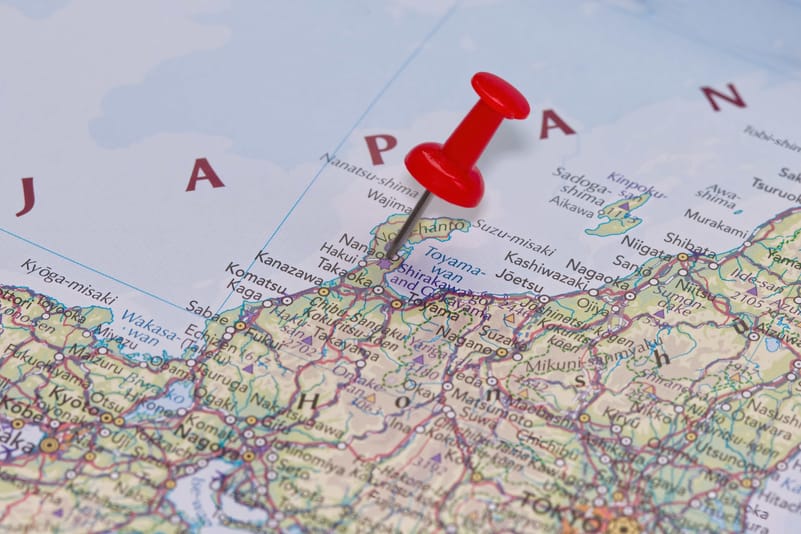

At its core, country counting is exactly what it sounds like: keeping track of how many countries you have visited and setting targets for the next ones on the list. What began as a niche pastime among dedicated travellers has evolved into a global pursuit, helped along by social media and specialist platforms where users can log their journeys, compare rankings and work towards ambitious milestones.
Most, of course, are not chasing a perfect score. They are simply keeping an eye on the number, watching it tick upwards with each new trip and each new border crossed.
Part of the attraction is that it can nudge travellers in unexpected directions. Instead of returning to the same favourite destinations, many find themselves looking at places that rarely feature on conventional bucket lists. But there is another side to the travel trend. Once numbers enter the equation, it becomes easy to compare progress, measure achievements and wonder who is ahead. What was once a collection of personal travel experiences can start to resemble a leaderboard, with countries visited becoming a score that is always there in the background.
The Bragging Rights Factor
For all the talk of exploration and discovery, country counting has quietly developed its own social currency. What was once a private travel record is now often shared, compared and even performed online, where the number of countries visited can say as much as a passport stamp ever did.
Digital status symbol: A country count has started to function as a kind of shorthand online. It shows up in Instagram bios, travel profiles, and captions — anything from “50+ countries” to the more definitive “every country visited”. On social media, especially in reels that prompt “comment your number”, it has become a quick way for travellers to size each other up, turning what used to be personal travel notes into something closer to a public comparison.
The 193 milestone: The number that keeps coming up is 193 — the total UN member states. For a small but growing group of travellers, that figure has become the end goal. What once felt distant, even unrealistic, is now something people actively work towards, helped along by online communities and tracking platforms such as NomadMania and Most Traveled People. More names are being added to the list of those who have done it all, giving the idea of “visiting every country” a visibility it didn’t have before.
Turning Travel Into A Scoreboard
Travel habits have started to shift in subtle but noticeable ways as country counting takes hold. What was once a loose personal record has, in some circles, become something closer to a structured pursuit, shaped by online tools and the lure of the next new destination.
Gamification of travel: Travellers can log their journeys, break them down into regions, track detailed statistics and, in some cases, see how they rank against others on global leaderboards. For many, it turns the act of travelling into something more systematic — part diary, part scorecard.
Pushing beyond the obvious: As well-known destinations become increasingly crowded, some country counters find themselves drawn further off the usual circuit. Remote and less-visited places take on a particular appeal, often for the simple reason that they add a new pin to the map. In the process, travel choices can shift away from familiarity and towards places that are harder to reach, but more valuable in the count.
A Map Redrawn By The Checklist

As the most accessible destinations are ticked off early, many country counters begin looking further afield. Remote island states such as Tuvalu, or politically and logistically complex parts of Central Asia, become the next targets simply because they keep the tally moving. In response, specialist operators like Untamed Borders have emerged, arranging travel to places once considered beyond the usual tourist circuit.
At the same time, not everyone is convinced by the rush to rack up numbers. Among some experienced travellers and those working in tourism, there is growing discomfort with the idea of journeys being boiled down to a count. Instead, “slow travel” is getting more attention — less about how many places can be squeezed into a passport, more about staying put long enough to actually understand them, and putting money and time back into the communities being visited.
How Country Counters Shape The Journey
If you spend enough time around country counters, you start to notice that the world gets mentally divided into routes and strategies rather than continents on a map. You — or more accurately, the people doing it — are not just choosing destinations, but patterns for how to collect them.
Continent completion runs: Europe tends to be the fastest win, with its dense borders and easy rail or budget flight links making it possible to stack up countries in a single trip. The Caribbean works in a similar way, just swapped for ferries and short hops between islands, while Oceania sits at the opposite end — remote, scattered and far more demanding.
Efficiency-led travel: You will also see travellers grouping Central America or the Caucasus into tight overland circuits, where multiple borders can be crossed in one go. In Africa, longer expedition-style routes or organised tours often serve the same purpose, linking several countries that would be difficult to reach individually.
Route-based travel: Some journeys are built around famous corridors rather than lists alone — the Balkans loop, for example, or sections of the Silk Road through Central Asia, where each border becomes part of a larger narrative.
The extremes: At the sharp end are those chasing difficult regions strategically, using visa advantages where possible, or seeking out the world’s smallest states — from Vatican City to Nauru — to keep the count moving.
.jpg?w=801&auto=format%2Ccompress&fit=max&format=webp&dpr=1.0)
FAQs
What is country counting in travel?
It’s the practice of tracking how many countries you’ve visited, often as a personal goal or part of a wider travel challenge.
How many countries are there to visit?
Most country counters refer to the 193 UN member states, though some tracking platforms include additional territories.
Why has country counting become popular?
Social media has played a big role, turning travel milestones into shareable numbers and encouraging comparison between travellers.
Is there a goal people aim for?
Many travellers aim to visit all 193 UN countries, while others simply try to increase their total over time.
Does country counting change how people travel?
For some, yes — it can influence destination choices, pushing travellers towards more remote or harder-to-reach countries to grow their count.