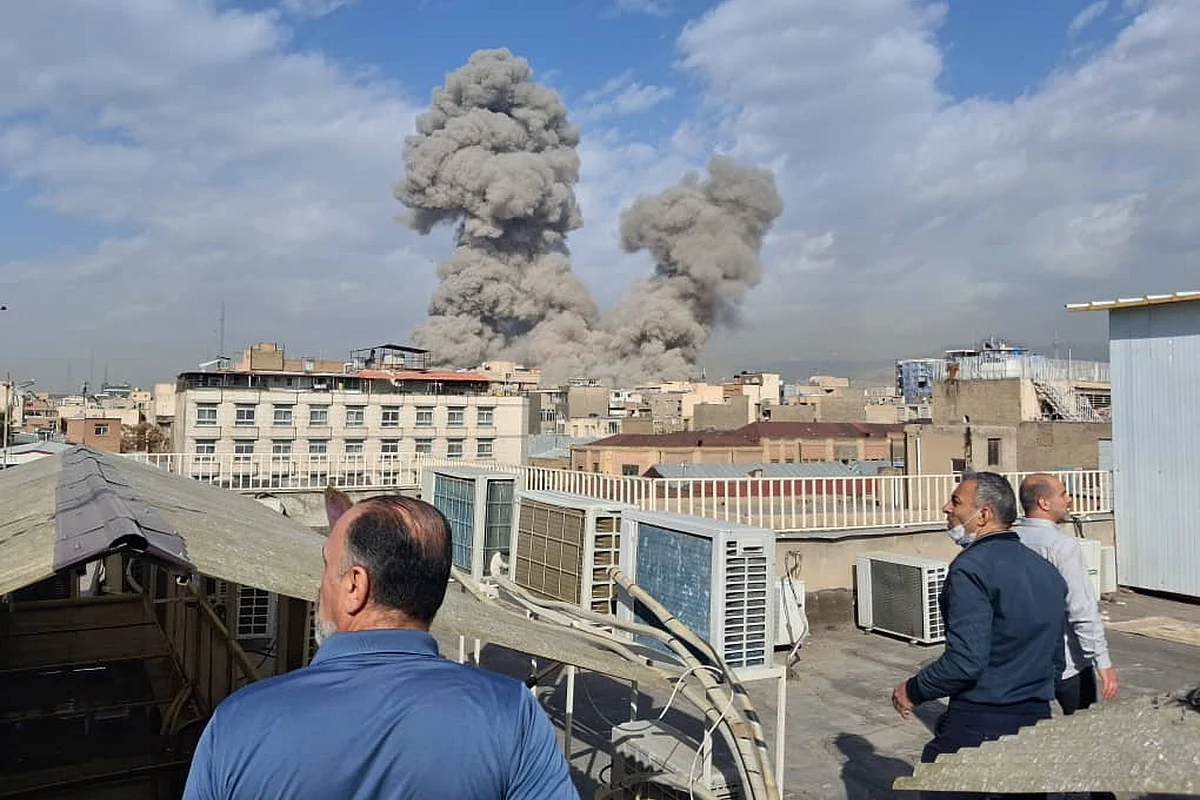
The latest escalation in West Asia has moved rapidly from military strikes to a full-scale aviation disruption. Within hours of US–Israel attacks on Iran and subsequent retaliation across the Gulf, multiple countries shut or restricted their airspace. For India, the impact was immediate.
Sumitro Kar, Executive Director of the World Travel and Tourism Council, India Initiative (WTTCII), speaking in his personal capacity, described it as “one of the sharpest aviation shocks of 2026 so far, with thousands of flights affected and key airspaces and hubs disrupted.”
For India, that shock runs through a very specific channel. The Gulf is not just another travel region for Indian aviation. It is the primary corridor linking India to the Middle East, Europe and North America. When that corridor closes, the disruption spreads quickly across tourism, labour travel, business routes and long-haul connectivity.
M.P. Bezbaruah, Secretary General of the Hotel Association of India and former Union Tourism Secretary, speaking in his personal capacity, said the immediate consequences are likely to be significant.
“It is an important transit bridge and will affect the movement of tourists considerably. However, the impact will depend on the scale of the conflict. It is too early to speculate how things will develop. The immediate impact is likely to be substantial,” he said.
The scale of that disruption becomes clearer when viewed through the role of the Gulf’s transit hubs.
Dubai And The Hub Effect
The escalation was not confined to airspace advisories. Iran launched missile strikes across the region following the US–Israel attacks. Qatar said 66 missiles were fired towards its territory, with air defences intercepting them, though falling debris injured eight people. Kuwait, the UAE and Bahrain also reported interceptions. Authorities in the UAE announced temporary, partial airspace closures after explosions and air defence activity were reported in parts of the region.
Against that backdrop, Dubai International Airport sits at the centre of global aviation. It is the world’s busiest airport for international traffic. Emirates, Qatar Airways and Etihad collectively move tens of thousands of transit passengers through Gulf hubs every day.
When Dubai, Doha or Abu Dhabi slows or suspends operations, the impact is global.
Kar said the Gulf is not only a destination region but one of the world’s most important transit bridges for global travel. “When hubs such as Dubai, Abu Dhabi and Doha are shut or severely restricted, the impact is felt immediately across airline schedules, hotel demand, tour operations, airport retail and destination markets across Europe, Africa, Asia and beyond,” he said.
These airports operate on tightly scheduled banks of arrivals and departures. Aircraft arrive within narrow time windows, passengers transfer, and onward flights depart in coordinated waves. If inbound flights are delayed or cancelled, the entire connecting bank collapses. One disruption can affect dozens of onward flights across continents.
A disruption in Dubai also carries symbolic weight. For years, the Gulf has positioned itself as a stable aviation bridge between East and West. Dubai International, in particular, represents reliability, frequency and scale. When a hub of that magnitude faces operational strain, it challenges the perception of uninterrupted connectivity.
Perception matters in tourism. Travellers think not only about physical safety, but also about the risk of being stranded in transit, missing connections or facing repeated cancellations. Even partial airspace closure forces airlines to reconsider routes and travellers to reconsider bookings.
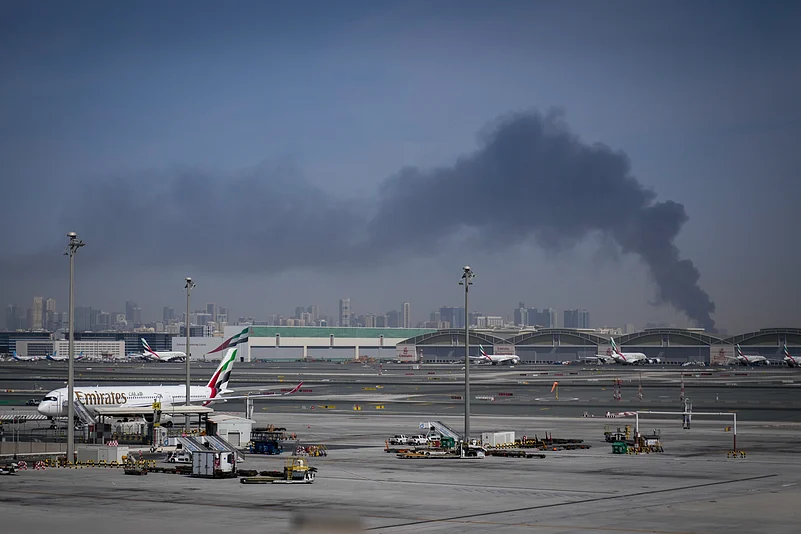

Because the Gulf functions as a major transit region, instability there spreads quickly through global airline networks. For India, this exposure is direct. A large share of passengers travelling to Europe, North America and Africa connect through these hubs. When they slow down, India feels it immediately. And the impact is not limited to schedules. It also reshapes airline cost structures.
Oil And Airline Costs
Beyond schedules and demand, the conflict also affects cost structures.
Aviation costs are closely tied to fuel prices, and fuel is one of the largest expenses for any airline. Any sustained increase in crude oil prices is directly reflected in aviation turbine fuel costs. When geopolitical tension rises in the Gulf, oil markets react quickly because the region sits at the centre of global energy supply routes.
If crude prices rise and remain elevated, airlines feel the pressure almost immediately. At the same time, rerouted flights burn more fuel because they fly longer paths to avoid restricted airspace. Even an additional 45 minutes to two hours on a long-haul route significantly increases fuel consumption.
Operational expenses also rise during disruptions. Airlines must manage diversions, additional crew hours, unscheduled ground handling, passenger accommodation and rebooking logistics. Aircraft rotations become less efficient, reducing daily utilisation and affecting revenue planning.

For Indian carriers, especially those operating long-haul routes to Europe and North America, these pressures combine. Longer routes and higher fuel burn increase per-flight operating costs. Airlines do not pass these costs to passengers in full immediately. But over the weeks, fares often rise, promotional inventory shrinks and flexibility declines.
Even if active hostilities reduce, cost pressures can linger. Oil prices may not return quickly to pre-conflict levels. Airlines may continue to use conservative routing until regulators are confident that risk has subsided.
What It Means For Tourism
The operational disruption and rising costs quickly feed into tourism behaviour. Tourism is among the first sectors to respond to uncertainty. It reacts to risk perception, advisories and flight schedules in real time.
When airspace closures change daily and airlines cancel flights at short notice, hesitation follows. Discretionary leisure travel is usually the first to slow. Weekend trips to Dubai, short Gulf holidays and shopping breaks are often impulse-driven and are quickly postponed when uncertainty rises.
Corporate travel also tightens. Companies issue internal advisories, reduce non-essential travel and move meetings online. Conferences and group movements are deferred. Multi-city group tours are particularly vulnerable. If even one segment of an itinerary becomes unstable, the entire plan may need to be re-routed or cancelled, creating refund and rescheduling pressures for operators.
Ravi Gosain, President of the Indian Association of Tour Operators, said there is caution in the market but no panic.
“Some travellers are postponing immediate departures, especially on long-haul routes via Gulf hubs, but we are not seeing large-scale cancellations as of now,” he said. “Prolonged uncertainty could delay bookings and push travellers towards short-haul or safer routes.”
He added that India’s outbound sector remains significantly exposed to disruptions in the Gulf corridor.
“If rerouting continues and fuel costs rise, airfares may firm up in the coming weeks,” Gosain said. “That said, Indian travel demand is extremely resilient. Once flight schedules stabilise and there is clear communication, confidence typically returns within a few weeks, and bookings pick up quickly.”
Meanwhile, Bezbaruah noted that inbound tourism could also feel the impact.
“India’s inbound tourism is slowly returning to pre-pandemic levels. The West remains the most important source market. The uncertainty and apprehension may affect traffic flow substantially,” he said.
If uncertainty persists, the effects are unlikely to remain limited to passenger numbers alone. They extend across the wider travel economy.
Kar said the disruption extends well beyond passengers and airlines. “Hotels face over-stays in some markets and no-shows in others; airlines and tour operators face refunds, rebookings and cash-flow pressure; and destinations lose forward momentum as uncertainty weakens future bookings,” he said. Airport retail, food and beverage and other travel-linked businesses also feel the impact when major hubs slow or shut.
Travellers may adjust accordingly. Some may opt for direct flights to avoid transit uncertainty. Others may choose destinations that require fewer connections. Southeast Asian destinations reachable without Gulf transit could see marginal shifts in demand if instability persists.
Kar added that major global trade events can also be affected. “Events such as ITB Berlin depend on physical participation, pre-fixed meetings and buyer attendance. If connectivity breaks down, delegations shrink and the quality of deal-making suffers, especially for smaller operators and destinations,” he said.
Meanwhile, drawing on past crises, Bezbaruah said regional tourism often strengthens during periods of geopolitical uncertainty.
“As happened during earlier disruptions, regional tourism tends to grow. India would do well to focus on South Asia and Southeast Asia. A part of the growing Indian outbound may also divert to domestic tourism,” he said.
Long-haul travel to Europe and North America remains closely tied to Gulf hub efficiency. The region provides competitive pricing and high frequency that alternative routes do not easily replicate.
The Broader Pattern: How Geopolitical Tensions Affect Travel

What is unfolding now follows a pattern seen in earlier geopolitical crises.
Geopolitical conflict tends to affect travel in predictable stages. It begins with operations. Airspace is closed or restricted, airlines suspend routes or cut frequency, aircraft are diverted, and airports shift into contingency mode.
The next phase is advisory. Governments update travel warnings, companies tighten corporate travel policies, and tour operators pause departures until there is more clarity.
Then comes the behavioural shift. Travellers delay bookings, families postpone leisure trips, and companies move meetings online.
Referring to West Asia’s role in global aviation, Bezbaruah said the region’s position as a bridge between continents shapes traveller response.
“It is an important connection between East and West. Travellers are likely to become risk-averse and rework destinations to avoid the affected area,” he said.
Recovery in aviation depends less on a single announcement and more on consistency. One day of reopened airspace does not restore confidence. Stable operations over several weeks do.
On recovery timelines, Bezbaruah cautioned against firm projections but pointed to historical precedent.
“If the conflict ends, past disruptions such as 9/11, Covid-19, the tsunami and the financial crisis show that tourism tends to bounce back quickly,” he said.
Meanwhile, Kar noted that UN Tourism expects international arrivals to grow between 3 per cent and 4 per cent in 2026, while IATA projects passenger traffic growth of 4.9 per cent. “Global tourism will not stop,” he said, “but it will become more expensive, more volatile and more uneven if restrictions continue. Travel and tourism is resilient, but it is not immune to sustained geopolitical shocks.”
What Comes Next
For now, the situation remains fluid, and aviation planners are operating in contingency mode. Regulators may reopen portions of airspace if military activity becomes geographically contained. Airlines will restore schedules gradually once routing stability returns.
Bezbaruah said governments must prioritise safety and communication.
“Tourism is not an end in itself. Governments and civil aviation authorities must constantly review and issue advisories. Destination promotion strategies may also need to be recalibrated,” he said.
The conflict may be centred in West Asia. But its aviation and tourism consequences are already global. For India, the episode underscores a structural reality: disruption in the Gulf corridor reverberates across its aviation and tourism system.
The skies may reopen soon. The economic and travel effects will take longer to settle.
FAQs
1. How is the West Asia conflict affecting Indian aviation?
Airspace closures across the Gulf are forcing Indian airlines to reroute flights, increasing travel time, fuel consumption and operational costs.
2. Why are Dubai and Doha important for Indian travellers?
Dubai and Doha are major global transit hubs linking India to Europe, North America and Africa. Disruptions there directly affect Indian outbound and long-haul travel.
3. Will airfares increase due to the West Asia conflict?
If oil prices remain elevated and rerouting continues, airlines may gradually increase fares to offset higher fuel and operational costs.
4. Is tourism being affected by Gulf airspace closures?
Yes. Uncertainty and flight disruptions are causing some travellers to postpone trips, especially long-haul and transit-dependent routes.
5. How long could aviation disruptions last?
Recovery depends on geopolitical stability. Historically, aviation and tourism rebound once airspace operations stabilise and advisories ease.