OT Your name suggests an India connection...
Biswajit Guha My father, a Bengali from Calcutta, moved to Malaysia and then to Singapore. My grandfather was a doctor in India and my paternal relatives &mdash the Guha Thakurtas &mdash still live there. A businessman, my father travelled out of the country to seek his own fortune in the 1950s. He met my mother, a Sumatran, in Singapore in the 1960s, fell in love and got married. Unfortunately, I have neither visited India nor Sumatra. It&rsquos fortuitous that the two tigers &mdash a Bengal and a Sumatran &mdash met in Singapore and produced an offspring with a keen desire for wildlife conservation
OT So how did you land up at the zoo
Biswajit Guha I have always been interested in animals and conservation, and when I was accepted into the National University of Singapore, I decided to major in invertebrate zoology. After completing my degree, I joined the Singapore Zoo and helped establish the Fragile Forest exhibit &mdash a walk-through rainforest habitat of mixed species like lemurs, mouse deer, sloths, tree kangaroos and invertebrates like butterflies, stick insects, millipedes and scorpions.
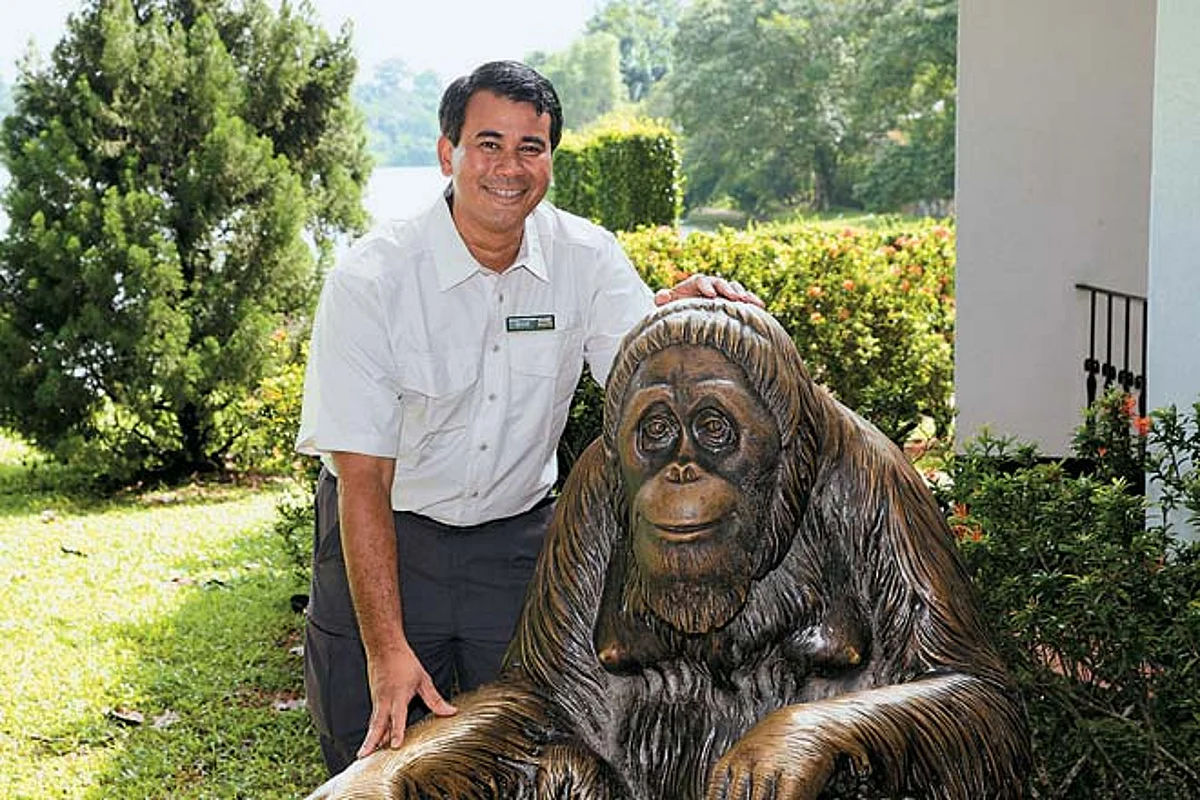
A pivotal experience that fired me on to do more for conservation happened several years ago, on a trip to an orangutan rehabilitation and rescue centre in Borneo. I was shocked when I was shown a female orangutan that had been caught by poachers, brought to a village, shaved, made-up and chained to a bed for commercial sexual exploitation by men working in the nearby plantations, before it was rescued.
OT What keeps you going
Biswajit Guha There are many high points [to my days] &mdash like when I&rsquom informed of new hatchings and births, especially first-time births for certain individual animals, or first-time hatchings for various bird and reptile species. Another high point is when I walk through the parks and witness the emotional bonding between the animals, keepers and visitors. For example, one day, I was watching a pair of cotton-top tamarins venturing into their open exhibit with two babies on the father&rsquos back. I pointed this out to a tourist, and she immediately burst into tears. I was alarmed and asked if anything was wrong &mdash her reply was that it was one of the most beautiful and moving sights she had ever witnessed. I felt a lump in my throat, told her I agreed with her and quickly walked away.
OT With so many species and acquisitions across the four settings &mdash Jurong Bird Park, Singapore Zoo, Night Safari, and now the River Safari [opening this year] &mdash have any of the animals been tricky to manage
Biswajit Guha One of the more memorable experiences was coordinating to bring in a pair of giraffes from Israel in 2005. They had to come in a modified container &mdash with its roof removed &mdash by a cargo ship on a 16-day journey. The coordination was done completely via email, faxes and phone calls, and there were numerous hair-raising moments when it appeared that the transaction wouldn&rsquot happen. Finally the day of the giraffes&rsquo arrival came, and we went to the wharf to see the unloading. It was amazing to see a 40ft container being hoisted up so many feet in the air and gently placed on a flatbed truck.
OT Any favourites
Biswajit Guha I have a soft spot for the tamarins and marmosets, small primates from Central and South America. What they lack in size, they make up for in character. I also have a favourite animal at the Zoo and that&rsquos Boey, the 23-year-old black-and-white ruffed lemur. He is one of the first non-domestic animals I cared for.
OT What&rsquos in store at the new River Safari
Biswajit Guha Our team selected species that were unique or synonymous with the regions featured [environments along the Mississippi, Congo, Nile, Ganges, Murray, Mekong, Yangtze and Amazon] to ensure authenticity. We also looked at other managed wildlife institutions to leverage captive management and get captive-bred and -raised animals.