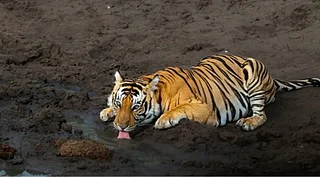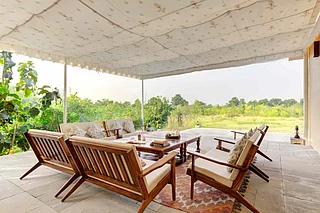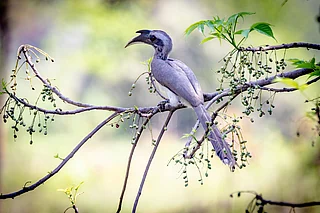


Most wildlife itineraries to India default to tigers, since the country has an estimated 3,000-plus wild tigers across more than 50 designated reserves, more than any other nation. What often gets left out of the conversation is that India is also the only place on Earth where the Asiatic lions still roam wild and live alongside the village residents.
Put tiger, leopard and lion together in a single circuit, and India offers something almost no other country can: a big-cat tour built around three entirely different conservation stories. Naturalists who have tracked all three describe watching a tigress walk directly alongside a jeep in Ranthambore, entirely unbothered, and watching a leopard descend a temple-topped granite outcrop in Jawai, where a Rabari shepherd moved his goats past it without breaking stride.
At A Glance: India's Big Three Cats Safari
Tigers: Why The Reserve You Choose Matters More Than The Species
India has the majority of the world's wild tigers, but the experience of seeing one varies by park. Among the best-known reserves, Bandhavgarh offers the highest tiger density, Kanha the most variety, Pench the most solitude, and Corbett, the highest overall landscape population.
Ranthambore deserves its own mention because it behaves differently from all four. Its tigers are famously habituated to vehicles bold enough to walk directly alongside a jeep in daylight. The 10th-century Ranthambore Fort rising directly out of the forest adds a backdrop no other reserve can match.


Ranthambore uses random zone allocation rather than a fixed booking-per-zone system; you don't choose your zone directly, which means booking three to four safaris improves your odds of landing a core zone.
The park's 10 zones split into five core (highest density) and five buffer (newer, less crowded, improving tiger numbers) zones. Buffer zones are easier to book and worth considering if flexibility matters more.
The park is closed from July to Late September, the same as the Madhya Pradesh reserves, with a roughly 10% entrance-fee increase applied from April 2026.

Leopards in Jawai, The Safari That Breaks The Rules
Every other big-cat experience in this circuit happens inside a defined reserve boundary. Jawai doesn't have one, and that's what makes it remarkable. Set in Rajasthan's Pali district, Jawai's leopards live openly across a landscape of granite hills, scrubland and a reservoir, sharing the terrain with Rabari herding communities who have coexisted with the cats for generations without the adversarial relationship.
Lions: The Only Wild Population Left On Earth
It's worth stating that Gir Forest in Gujarat is the only place on the planet where Asiatic lions still exist in the wild. Hunting and habitat loss pushed the subspecies to fewer than 50 individuals in the early 20th century. But conservation efforts have rebuilt the population to roughly 674 lions at the last major count.
Gir lions are visibly distinct from their African cousins, with a belly fold of skin and generally shorter male manes, and the park's dry teak and acacia forest also holds a substantial leopard population, striped hyenas, and different birds, making it a multi-species destination.

Insider Tips For Planning The Trip
Ranthambore's Zone Lottery
Unlike Bandhavgarh or Kanha, where you book a specific zone directly, Ranthambore assigns zones through a randomised system at the time of booking. A single safari gives roughly even odds of landing a core versus buffer zone; booking through an operator with quota access, or simply booking multiple safaris across a stay, meaningfully improves the odds.
Jawai's Off-Season Is Prime Time For Photographers
Most luxury travellers default to the cooler October–April window, reasonably enough for comfort, but May and June, despite serious heat, concentrate leopard movement around the region's shrinking water sources, producing some of the most dramatic sightings of the year.
Gir's Devalia Zone Isn't A Compromise
Some travellers assume the fenced Devalia Interpretation Zone is a lesser, zoo-like alternative to the open Gir Jungle Trail. In practice it's a legitimate, near-guaranteed-sighting option covering a slice of the same ecosystem, a sensible choice if a schedule allows only a single safari, rather than something to feel apologetic about.
The Conservation Story Is The Real Draw
All three of these animals were, within living memory, in danger of local extinction in their respective landscapes. Asiatic lions numbered under 50; Ranthambore's tigers were once relocated to other reserves specifically to rebuild genetic diversity elsewhere. Understanding that context changes what a safari here actually is: not a wildlife-viewing transaction, but a look at one of conservation's global success stories.
Safety And Conservation: What To Know
All three experiences are managed through official forest department systems with mandatory guides and fixed vehicle limits. Reputable lodges and operators only work within these official frameworks.
Jawai's open, unfenced landscape means leopards occasionally move through village peripheries, a live example of the coexistence model.
Gir's lions, despite being genuinely wild, have a long history of relatively low aggression toward vehicles and guided groups.
All three destinations depend directly on safari tourism revenue for their conservation funding. Choosing a responsible, forest-department-compliant operator isn't just a safety choice; it's a direct contribution to the same conservation story that makes the trip worth taking.
Planning The Trip
Most people plan an Indian wildlife trip around a single animal, because that's how most available information frames it: a tiger trip, or a specific park. The more interesting version of that trip is the one hardly anyone books: a single, continuous route through three of the rarest, most differently managed big-cat landscapes on Earth, ending not with a checklist but with an understanding of what conservation looks like when it works.
For travellers who want the full three-cat experience without group-tour logistics, boutique operators such as BizareXpedition run private, no-group-coach circuits across all three landscapes from a single-reserve tiger safari to the complete Ranthambore–Jawai–Gir Big Cat Circuit, built around how many of the three cats a traveller wants to see and how much time they have.
Quick FAQs
Can I do all three cats safari in one trip?
Yes. You can do an all-three-cat tour in one trip. Jawai's location between Rajasthan's tiger country and Gujarat's Gir Forest makes an 8–9 night circuit continuous rather than three separate trips stitched together.
Which has the best sighting odds?
Jawai's leopards are frequently cited, often exceeding more famous tiger reserves, though Ranthambore and Bandhavgarh both offer very strong odds.
Is Jawai suitable for a first-time safari?
Yes, the open terrain and high sighting rate mean less waiting and less uncertainty than a first tiger safari typically involves.
Why isn't Gir better known?
Gir lions are geographically confined to a single landscape in Gujarat and have historically received far less international marketing than India's tiger reserves.
When should this trip be avoided?
July through September/mid-October, the core zones at Ranthambore and Gir both close for monsoon, and while Jawai is open, sightings and road conditions are less predictable during heavy rain.
About the author: Ms Deepika Negi is the CEO and Founder at BizareXpedition, a private safari operator running circuits across Ranthambore, Jawai and Gir.