The forests are most beautiful during the change of seasons.
For photographer Yashas Narayan, who has been the subject of a Discovery Channel feature film for his stunning wildlife photography, the period of transition from summer to monsoon is magical when the rains bring new life to the brown and dry jungles and makes them lush green.
“The lush green backdrops and divine golden light creates great photo opportunities. The forests are alive with the sounds of cicadas and toads echoing through the tall trees. The rains bring new possibilities to get creative while making images,” said Narayan, who hails from Mysore. He specialises in capturing the beauty of Asiatic wildlife, with a particular focus on big cats like tigers and black panthers.
As a child, Narayan would accompany his parents to wildlife sanctuaries where he once saw a tiger chase a leopard up a tree.. Now at 31, he is known for his exceptional skills of tracking big cats, and offers dedicated forest treks in pursuit of these majestic animals.
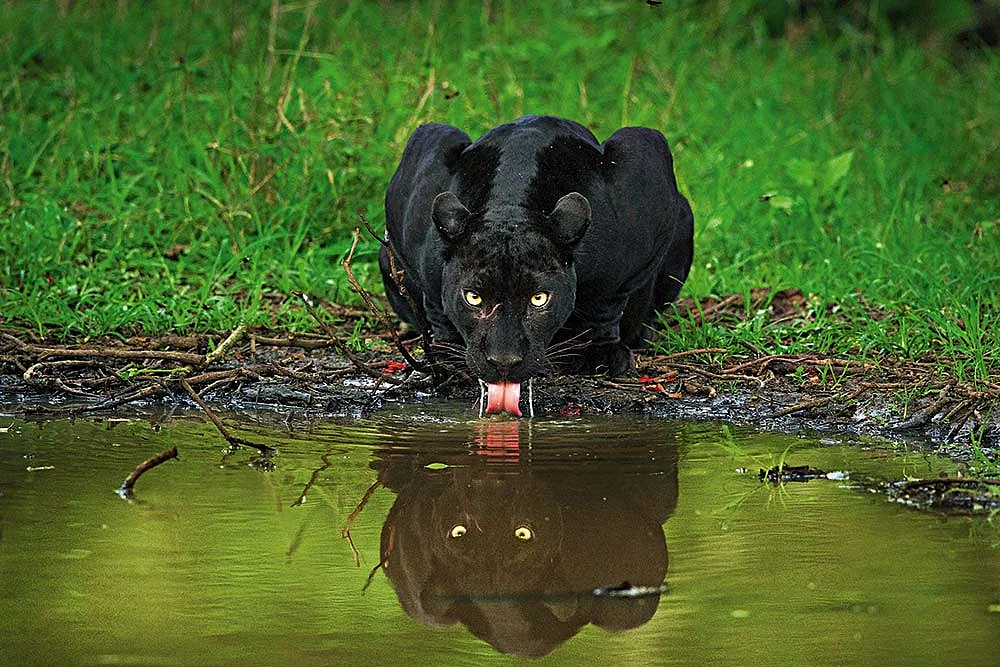
“There is a single black panther in the Nagarhole forest that I have been studying for years,” said Narayan. “Leopards and black panthers are my favourite animals. They are smart, elusive and most challenging to track. They lead a life of refugees in their own land, which is dominated by tigers. They are the most adaptable; we see them in the jungles, villages and in cities like Mumbai. They are also stunning with sleek bodies, rosette pattern, long whiskers and green eyes.”
A lot of effort goes into taking pictures in the wild. Finding subjects are not easy, especially big cats.
“On safaris, we have to check every tree for a leopard’s hanging tail and paws, while keeping an eye on the bushes below for tigers. The jungle keeps giving us clues about presence of big cats in the form of pug marks and alarm calls. We have to connect these hints together, because once we find a cat, we have very little time to make good pictures before it disappears into the jungle again,” said Narayan.


BABY STEPS
“When the mother is busy feeding, her swaying tail touches the calf to ensure it is safe and close.”
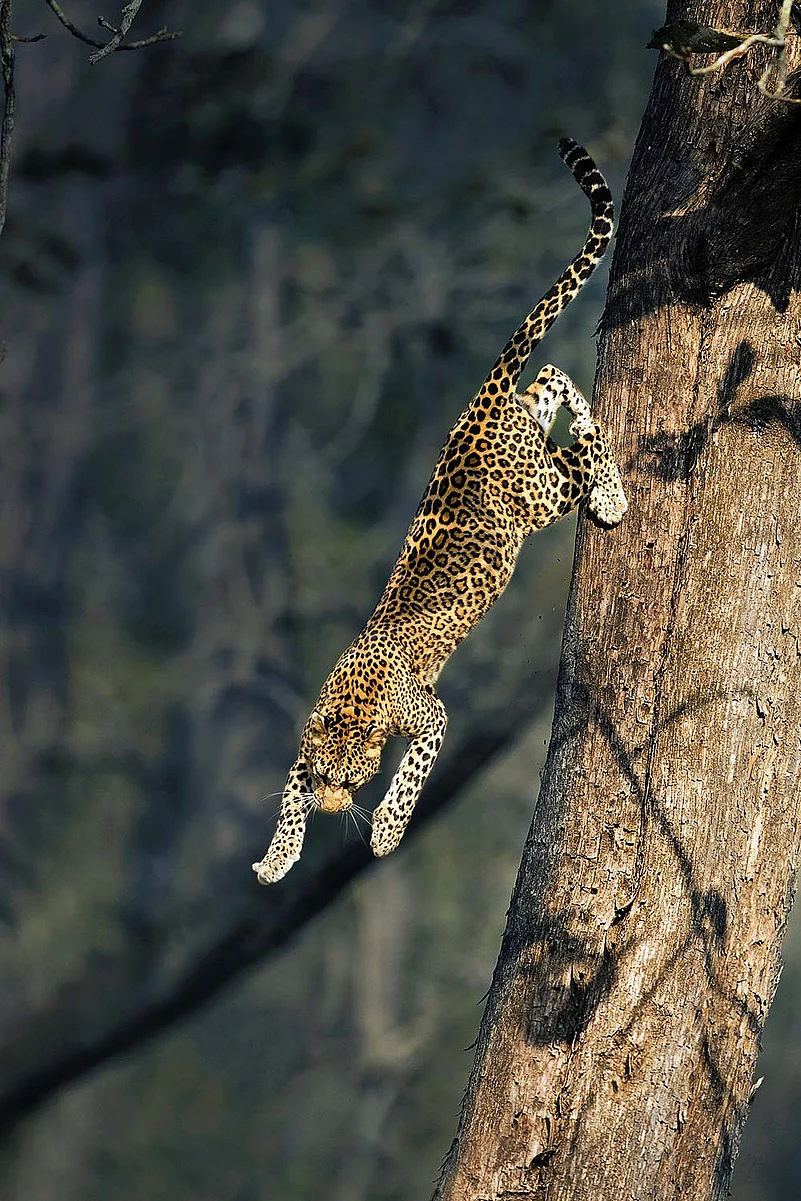
NOSE DIVE
“A leopard’s ferocity is unparalleled. Besides being smart and elusive, they are famed for their acrobatic skills.”
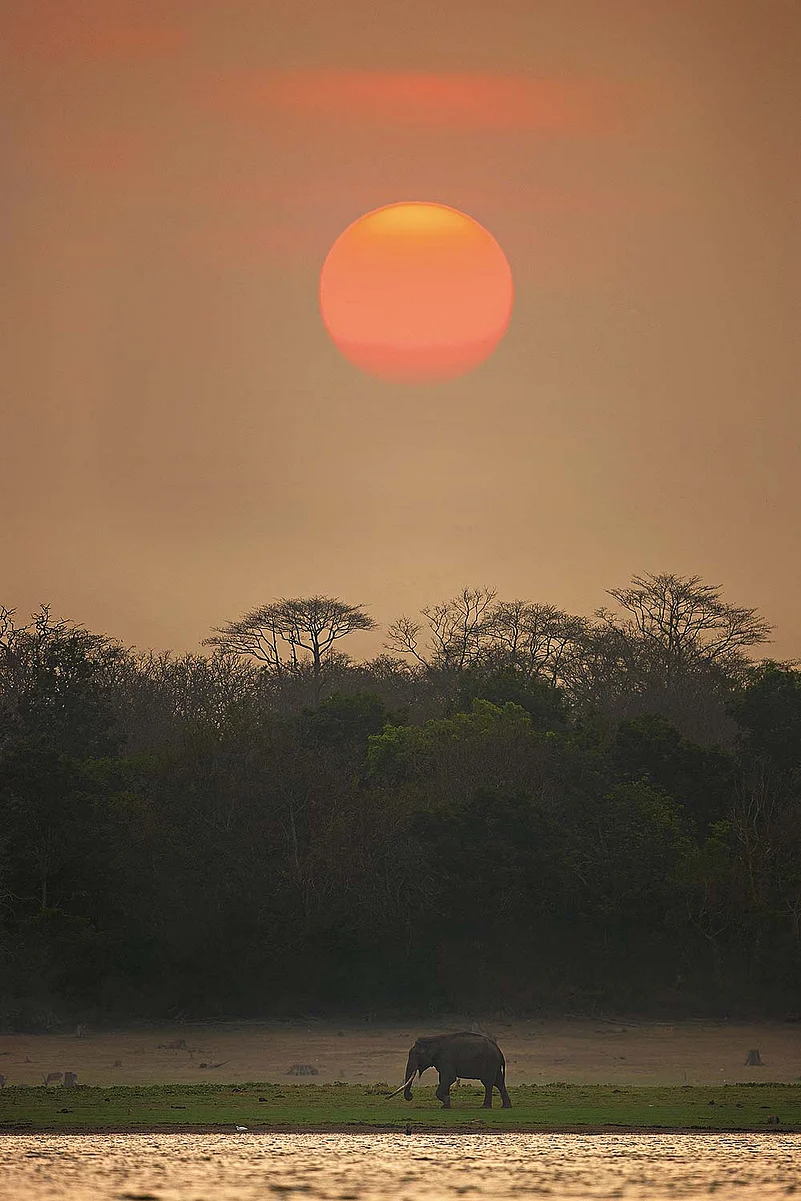
THE GENTLE GIANT
“An elephant peacefully grazes the banks of the Kabini River against the setting sun.”
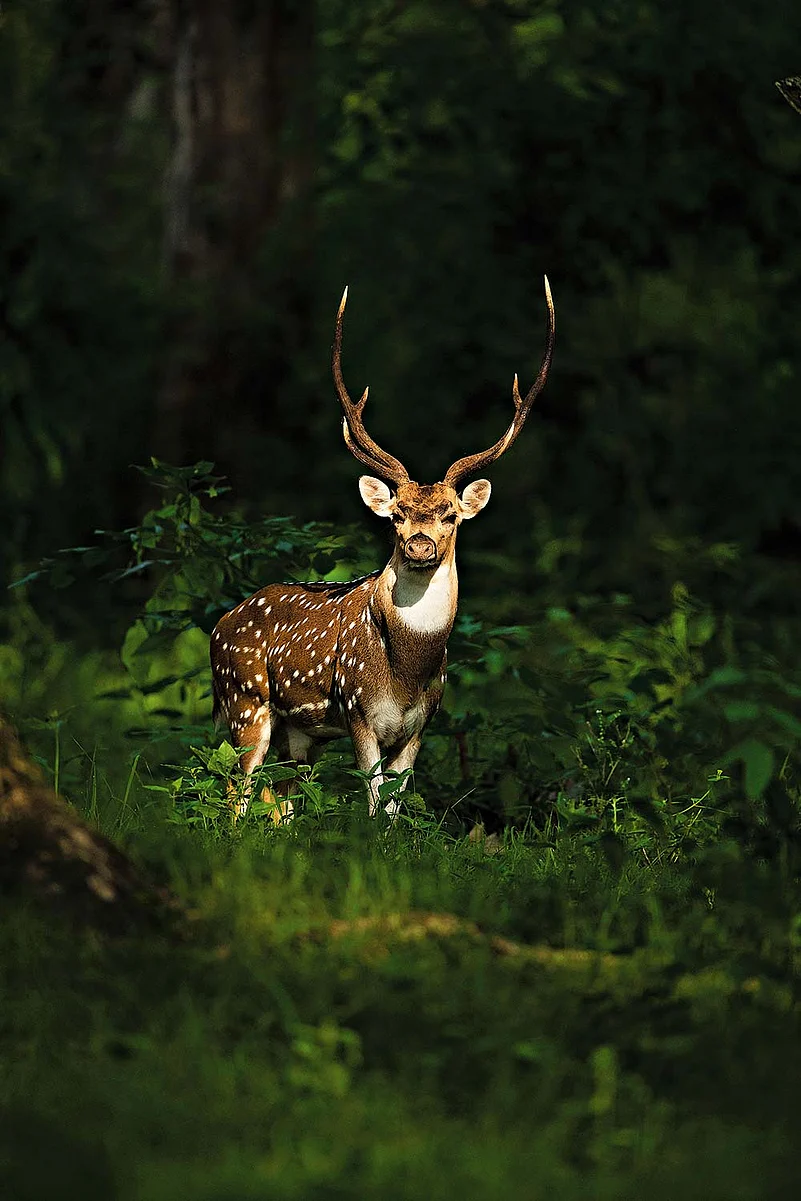
DIVINE LIGHT
“The sunlight falls perfectly on a stag deer through the thick forest cover. Bathed in the glow, it shines.”
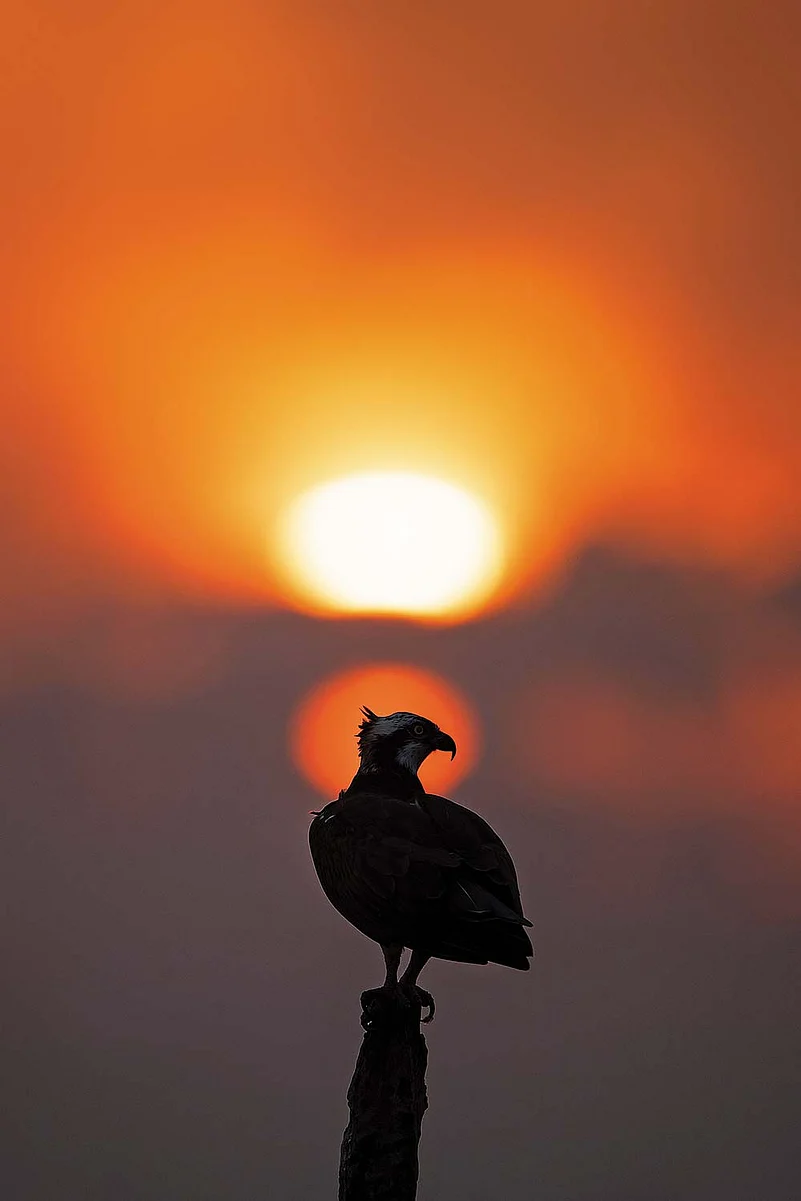
GUARDIANS OF DAWN AND DUSK
“Ospreys are large fish-eating hawks sporting long, narrow wings, a white underside, and a crown.”

FAMILY TIES
“Around Kabini, the roars of big cats echo ever so frequently. While it is known to be the land of leopards, active conservation efforts by the government have resulted in its soaring population.”
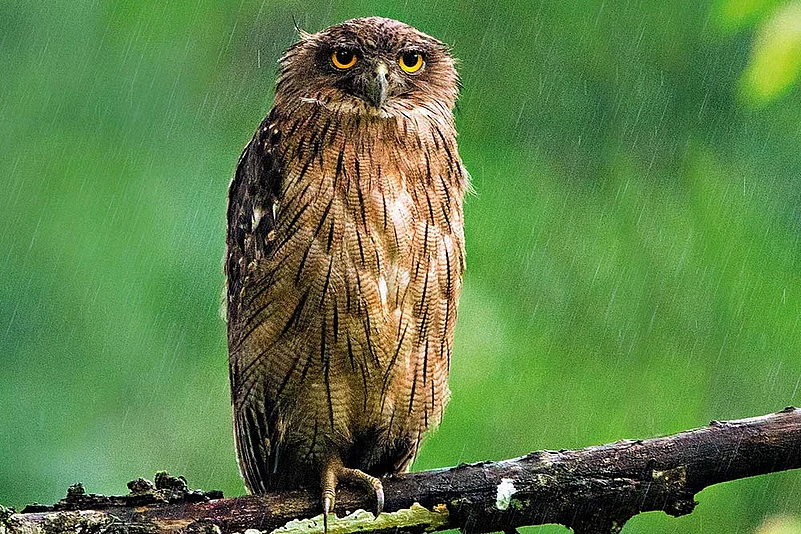
BROWN FISH OWL
“As summers wane and the rain makes the jungle lively again, bringing dried streams, puddles and ponds to life, the brown fish owls become active.”
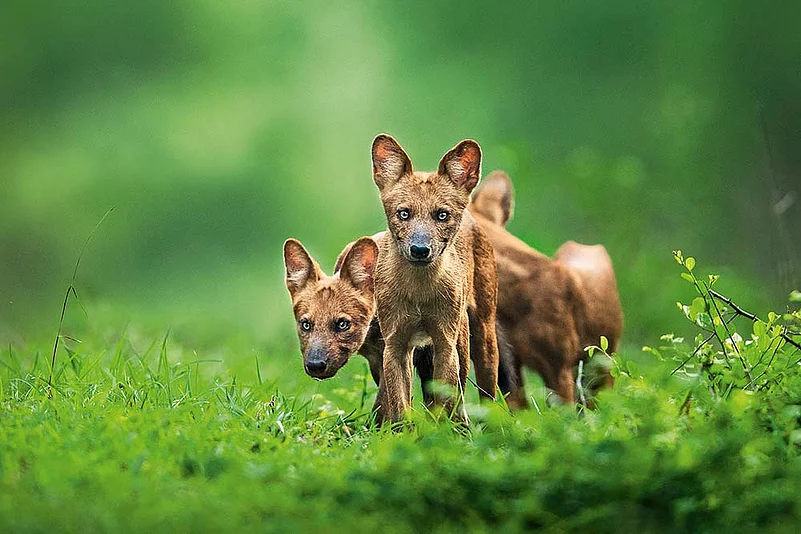
ON DOG WATCH
“A litter of wild puppies watch me curiously as I try to capture a perfect shot.”