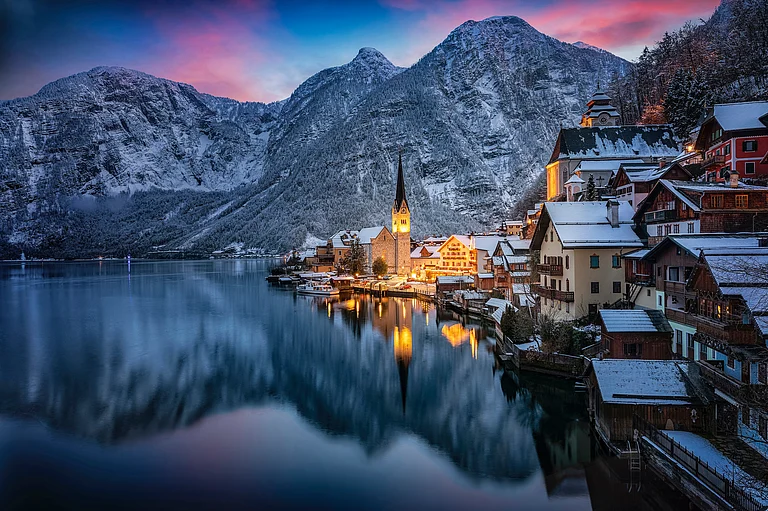


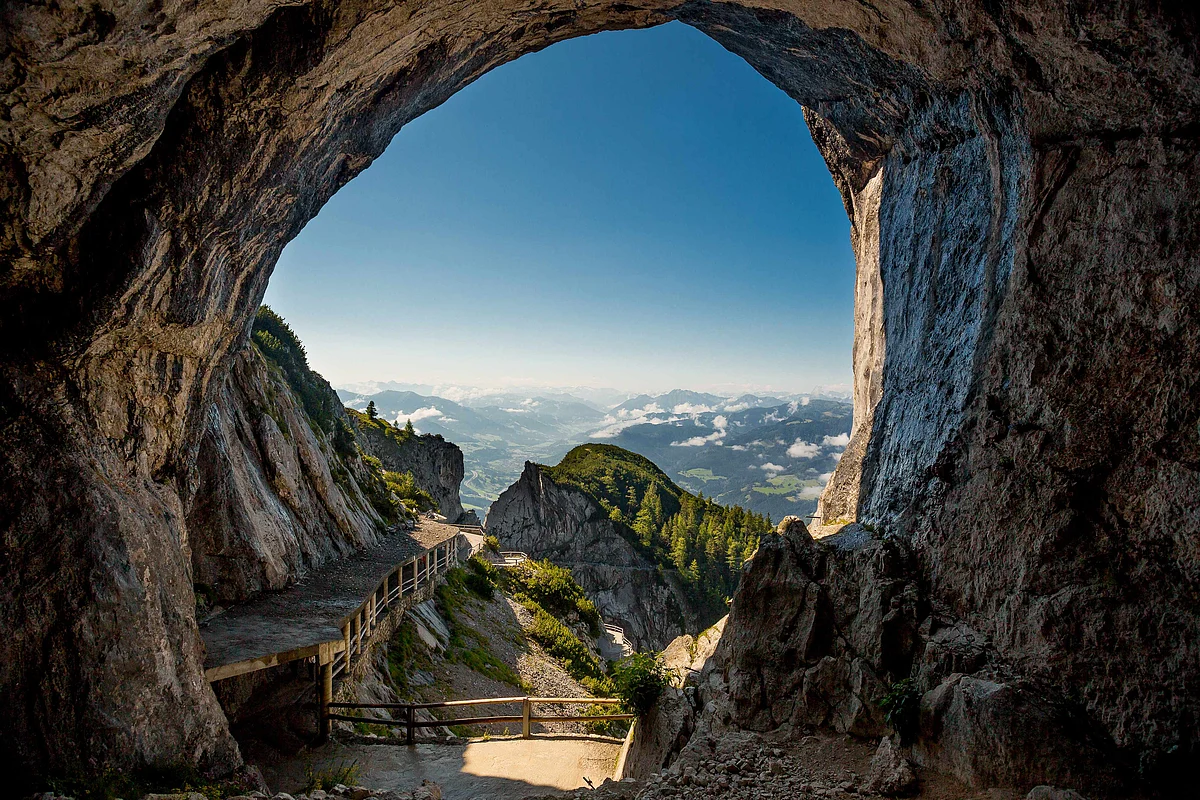
The Austrian Alps are known for their snow-covered peaks, mountain lakes and beautiful valleys. But there is another side to this landscape that lies beneath the mountains. Hidden inside one of them is a vast network of ice-filled chambers and winding limestone passages that makes for quite an unusual experience.
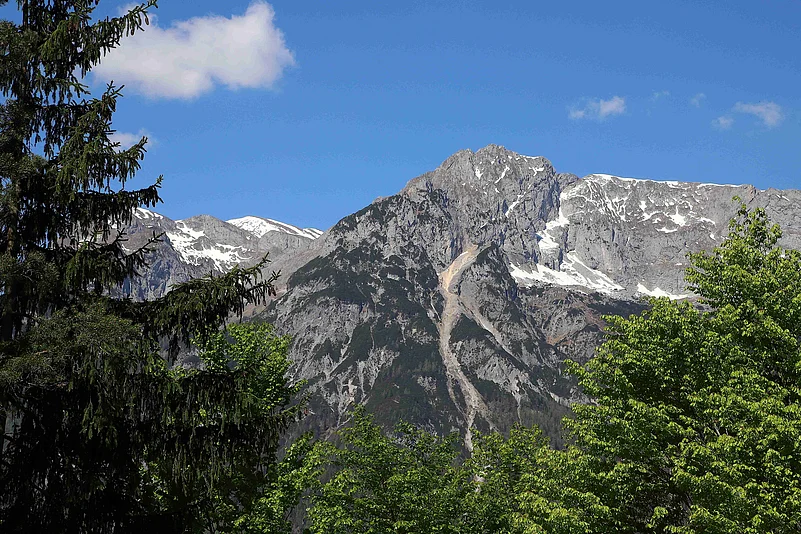
Located inside the Hochkogel mountain in Austria’s Tennengebirge Alps, Eisriesenwelt is unlike most natural attractions. From the outside, the mountain looks much like any other in the region. But within it lies an extraordinary cave system stretching more than 42 kilometres underground.
Situated near the village of Werfen, around 40 kilometres south of Salzburg, Eisriesenwelt translates to ‘World of the Ice Giants’. It is recognised as the largest ice cave system in the world. While the entire network extends deep into the mountain, only its first kilometre contains permanent ice and is open to visitors on guided tours. The rest is an extensive limestone labyrinth, explored largely by researchers and experienced speleologists.
How The Ice Cave Was Discovered

For generations, locals were reluctant to venture into the cave. The freezing winds blowing out of its entrance led to stories that it was the breath of Hell. It was only in 1879 that Austrian naturalist Anton Posselt ventured around 200 metres inside and documented what he found.
His discovery brought attention to the cave, but much of its deeper network remained unexplored for decades. From 1912 onwards, speleologist Alexander von Mörk led several expeditions that helped map its passages and chambers. He died during World War I, and his ashes were later placed inside one of the cave's largest halls, which now bears his name.
The cave opened to regular guided tours in 1920, allowing visitors to experience a landscape that had remained hidden from the outside world.
Why Does The Ice Never Melt?
One of the most fascinating things about Eisriesenwelt is how it manages to retain its ice even during summer. The answer lies in its natural ventilation system, often described as the chimney effect.
During winter, cold air enters through the cave's lower opening and cools the surrounding limestone rock. When spring arrives, melting snow and rainwater seep through cracks in the mountain and freeze as they come into contact with the chilled rock surfaces.
In summer, the movement of air changes. Cold, dense air flows out of the cave, helping maintain its low internal temperature. As a result, the ice formations remain largely intact throughout the year, although they can melt and regrow slightly with changing seasons.
Temperatures inside generally hover around freezing, making warm clothing essential even when the valley outside is experiencing pleasant summer weather.
What To Expect Inside The Cave
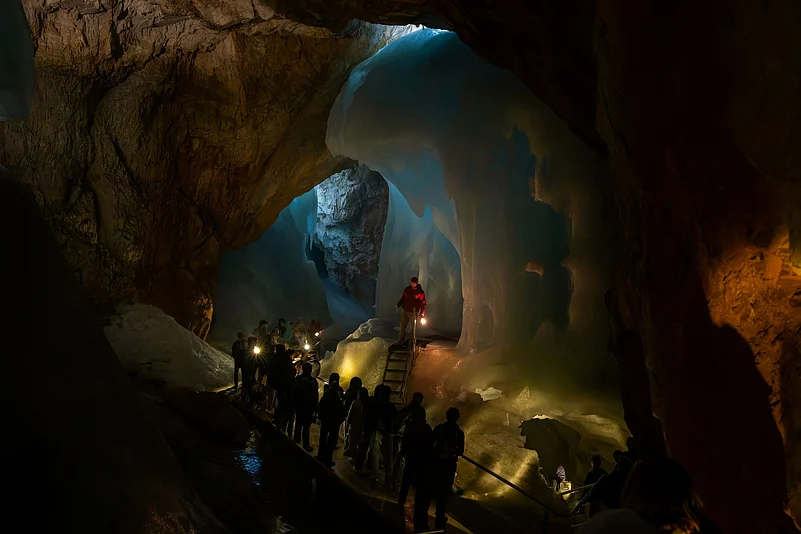
A visit to Eisriesenwelt is as much a physical experience as it is a sightseeing excursion. The guided tour lasts around 75 minutes and involves climbing approximately 1,400 steps, with an ascent of about 134 metres.
There is no electric lighting inside the cave. Instead, guides use traditional carbide lamps and magnesium strips to illuminate the enormous ice formations. When the magnesium is lit, the ice catches the light, revealing shades of silver and blue against the darkness.
Some of the most striking formations are found along the route. Posselt Hall marks the early exploration history of the cave, while the Great Ice Embankment rises around 25 metres and is among its most impressive ice structures. Further along, visitors encounter Hymir's Castle and Frigga's Veil, known for their towering columns and curtain-like formations.
The Alexander von Mörk Cathedral is another highlight. Measuring approximately 70 metres long and 42 metres high, this enormous underground chamber also houses the explorer's memorial urn. The tour eventually reaches the Ice Palace, a spectacular chamber deep inside the mountain, before returning towards the entrance.
The Information
Getting To Eisriesenwelt
The journey to the cave is an experience in itself. From Salzburg, visitors can take an ÖBB regional train to Werfen, a journey of approximately 40 to 45 minutes. A dedicated shuttle bus connects the railway station to the Eisriesenwelt visitor centre. It is worth carrying cash for the shuttle fare.
Those travelling by car can take the A10 Tauern Autobahn south towards Werfen before following the winding mountain road to the visitor centre.
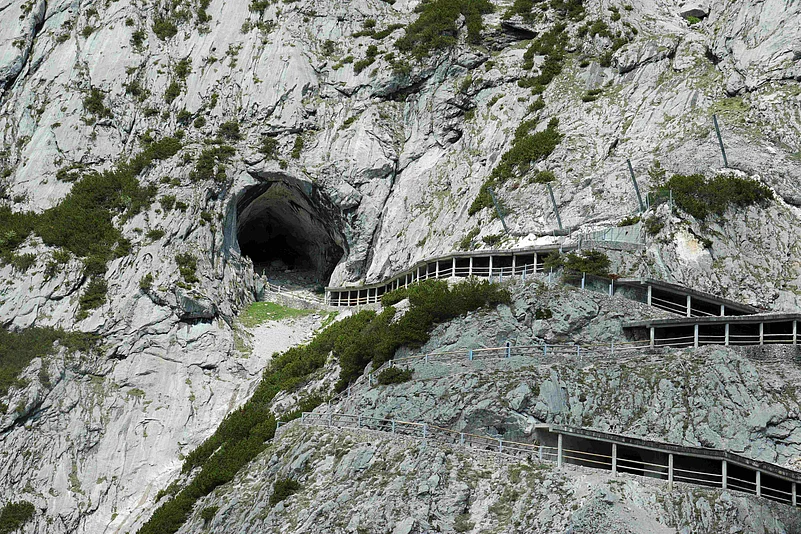
From here, reaching the cave entrance involves three stages. First, there is a 20-minute uphill walk to the cable car station. A short cable car ride then takes visitors nearly 500 metres higher up the mountain. From the upper station, another 20-minute walk along a cliffside trail leads to the cave entrance, with sweeping views of the surrounding Alps along the way.
The entire excursion, including the return journey from the valley, can take around three-and-a-half to four hours.
Best Time To Visit And What To Wear
Eisriesenwelt generally opens between May and late October, closing during winter due to extreme weather and avalanche risks. It is advisable to check the official website for the latest opening dates, tour timings and ticket availability before planning a visit.
While summer is a popular time to explore the Austrian Alps, the cave itself remains cold throughout the season. Carry a warm winter jacket, gloves, a beanie and long trousers. Sturdy hiking shoes with good grip are equally important, as the wooden staircases and walkways can become slippery.
Visitors should also keep their tickets handy throughout the excursion, as they need to be scanned at different points, including the visitor centre and cable car stations. Booking a timed entry slot online is recommended, particularly during busy summer afternoons.
The cave is not particularly suitable for people with mobility difficulties, as the route involves steep stairs and considerable walking. There are no toilets inside, so it is best to use the facilities at the visitor centre or cable car stations before beginning the tour.
Make A Day Of It
Since reaching Eisriesenwelt involves a fair amount of travel and walking, it makes sense to spend some time exploring the surrounding area. The Dr Friedrich Oedl Haus, a mountain shelter near the upper cable car station, is a good place to stop for a meal or a warm drink while enjoying views of the Alps.
Back in Werfen, Hohenwerfen Castle is another worthwhile stop. Perched dramatically on a rocky outcrop overlooking the Salzach Valley, the medieval fortress offers a glimpse into the region's history and makes for a fitting addition to the day.
FAQs
1. Where is Eisriesenwelt ice cave located?
Eisriesenwelt is located near Werfen in Austria's Tennengebirge Alps, approximately 40 kilometres south of Salzburg.
2. Why is Eisriesenwelt famous?
Eisriesenwelt is recognised as the world's largest ice cave system. It stretches for more than 42 kilometres, with permanent ice formations in its first kilometre.
3. How long does the Eisriesenwelt tour take?
The guided cave tour takes approximately 75 minutes. Visitors should allow around three-and-a-half to four hours for the complete excursion, including the journey to and from the cave.
4. Can you visit Eisriesenwelt in summer?
Yes. The cave generally opens from May to late October. Despite the warmer weather outside, temperatures inside remain around freezing.
5. How do you reach Eisriesenwelt from Salzburg?
Visitors can take a regional train to Werfen and continue by shuttle bus to the visitor centre. From there, the route involves an uphill walk, a cable car ride and another walk to the cave entrance.