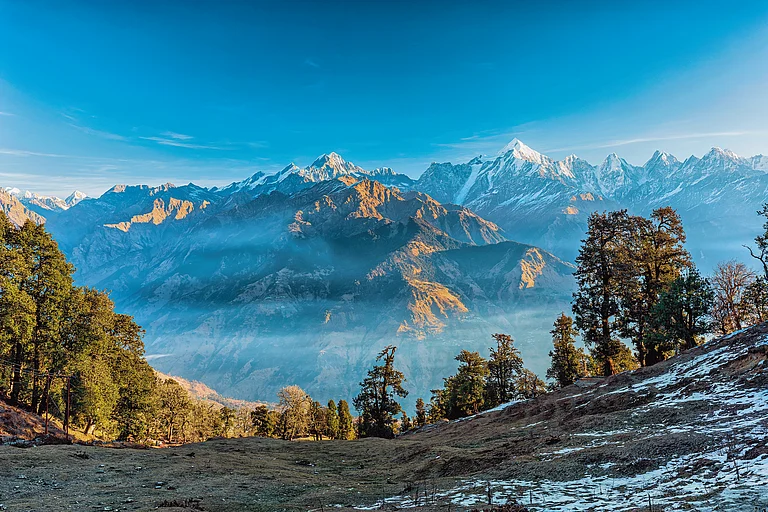


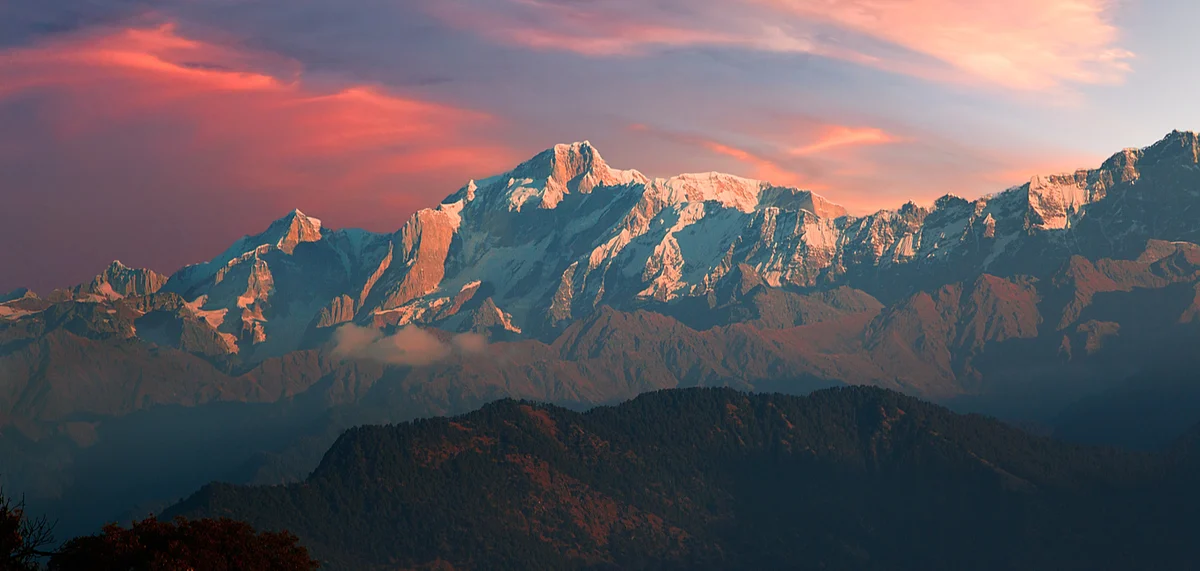
Beyond Kedarnath lies a quieter side of the Garhwal Himalayas filled with hidden lakes, forests, meadows, and remote trails. Away from the main pilgrimage crowds, these lesser-known spots offer raw mountain scenery, peaceful walks, and real Himalayan wilderness. From glacial lakes and wildlife sanctuaries to scenic hill stops and trekking routes, each place has something unique to explore. Here are some places near Kedarnath and what you can see and do at each one.
Chopta
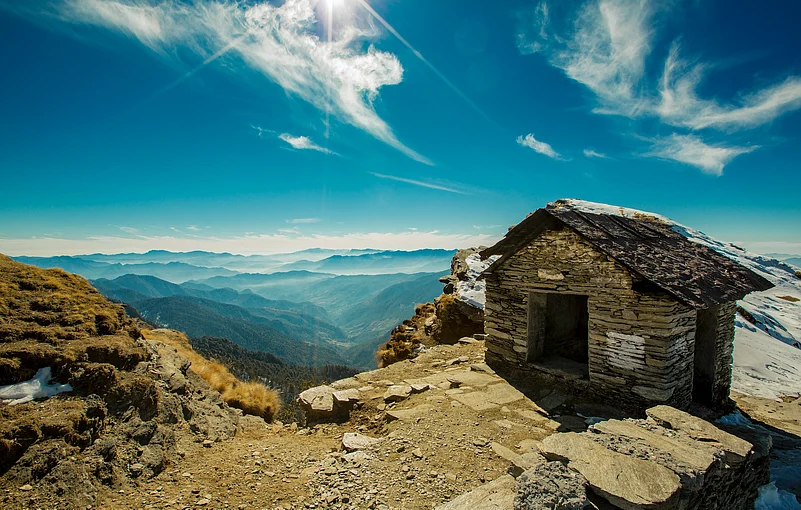

Chopta is a quiet Himalayan hill station surrounded by forests and open meadows (bugyals). It’s best known as a base for some of the most scenic short treks in the Garhwal region.
From here, you can trek to Tungnath, the world’s highest Shiva temple, and continue up to Chandrashila Summit, where you get wide 360-degree views of major Himalayan peaks. The landscape shifts quickly from forest paths to open ridgelines, making the journey as rewarding as the destination.
Nearby, Deoria Tal offers a calm lake setting with clear reflections of the surrounding mountains, especially during sunrise. Together, these spots make Chopta a simple but powerful Himalayan escape focused on trekking, nature, and open mountain views.
Discover Khirsu
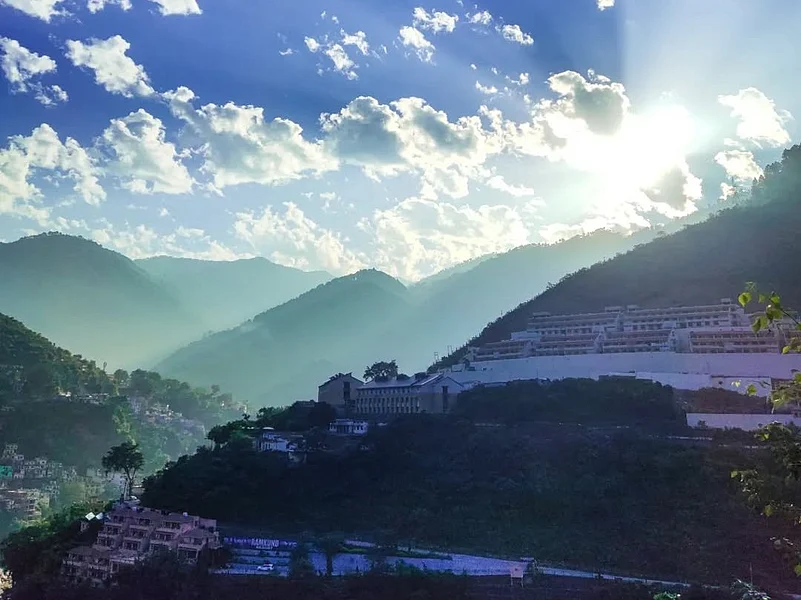
Khirsu is a small, calm hill station in Pauri Garhwal, set around 1,700 meters high. It’s not crowded or commercial, which is exactly what makes it appealing if you’re trying to slow down for a bit.
The main draw here is the view. On clear days, you can see a long stretch of the Himalayas, including peaks like Nanda Devi and Trishul. Mornings and evenings are usually the best time, when the mountains look sharp against the changing light.
Around Khirsu, you’ll find thick oak and deodar forests, small village paths, and apple orchards. There isn’t a long list of “things to do”—people usually come here to walk, sit quietly, and take in the landscape.
Trek To Vasuki Tal
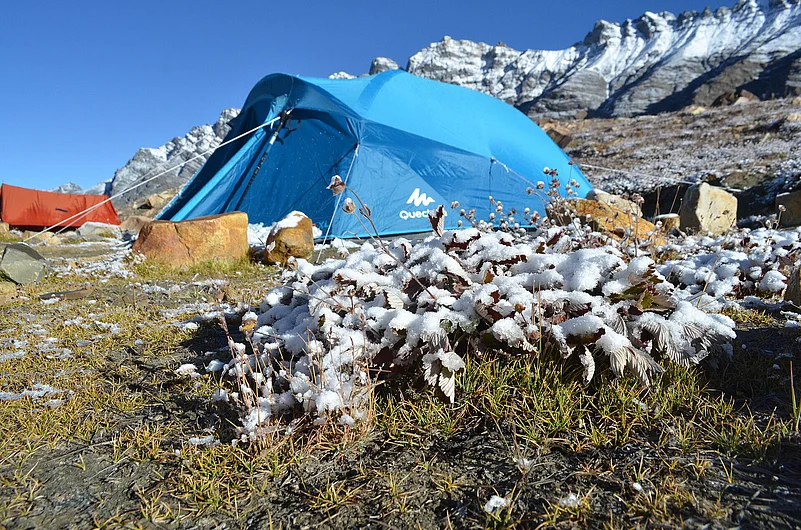
Vasuki Tal is a high-altitude glacial lake in the Kedarnath region of Rudraprayag district, reached by a steep trek starting from Kedarnath. At over 4,000 meters, it sits in a remote, quiet part of the Garhwal Himalayas.
The lake is small but striking, with clear water surrounded by towering peaks like Chaukhamba. The trail is rocky and challenging in sections, so it’s suited for experienced trekkers.
Most people visit in May–June or September–October when conditions are safer. The journey is less about stops and more about the rugged mountain landscape and the effort of reaching a high, isolated lake.
Step Into a High-Altitude Wildlife Sanctuary
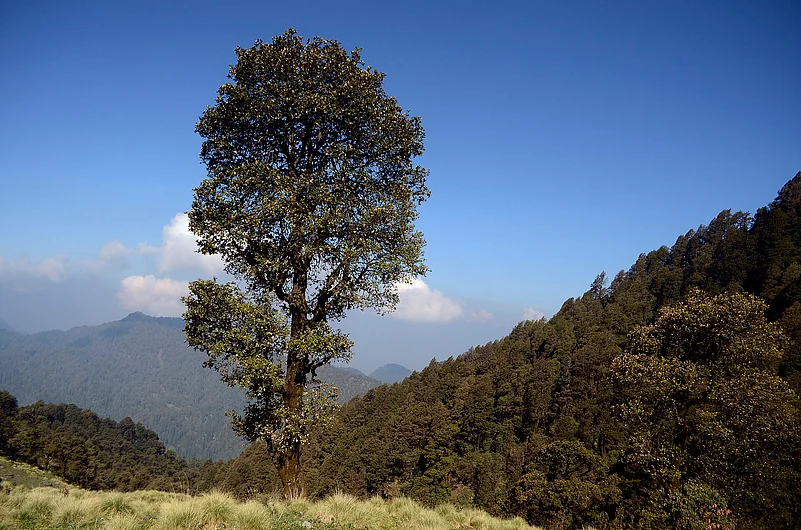
Kedarnath Wildlife Sanctuary is a large protected forest area spread across Rudraprayag and Chamoli districts in Uttarakhand. Covering nearly 975 sq km, it is one of the most important wildlife zones in the Western Himalayas.
The sanctuary is known for its rugged landscape—dense oak and rhododendron forests, high alpine meadows, and steep mountain terrain. It was originally created to protect the Himalayan musk deer, but it is now home to many rare species like the Himalayan black bear, snow leopard, and Himalayan tahr.
It’s also a strong birdwatching region, with sightings of birds like the Himalayan Monal in higher forest zones. Most of the sanctuary is remote and accessed through trekking routes, making it more about nature exploration than typical sightseeing.
This is a place where wildlife, forests, and high-altitude ecosystems come together in a raw, undisturbed setting.
Experience Garhwali Village Life
Rudraprayag’s indigenous culture comes alive in its mountain villages like Jakholi and Agastyamuni. Life here revolves around the Himalayas—stone-and-wood homes, terraced farming, and hardy crops such as millets, rajma, and potatoes. Most communities still depend on agriculture and small livestock for their livelihood.
Instead of formal attractions, culture is found in everyday life: folk traditions, oral storytelling, and handwoven wool clothing made locally. It is a living mountain society shaped by generations of adaptation to its environment.
Discover High-Altitude Pastoral Traditions
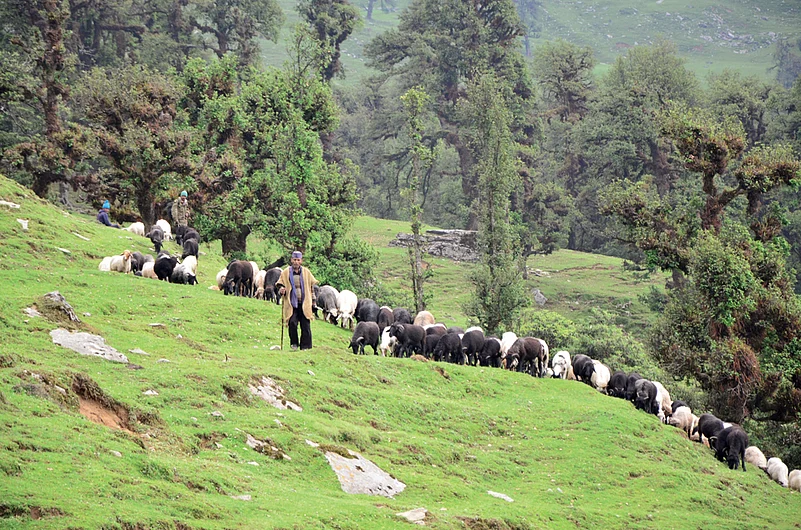
Higher up in Rudraprayag, you’ll still see shepherd families moving with their sheep and goats to alpine meadows (bugyals) in summer. These wide grasslands aren’t just scenic—they’re where livestock graze and where much of the seasonal work happens.
On the way toward Chopta and nearby hills, you mostly pass through forests, river valleys, and open grassy stretches. There aren’t many built attractions here—the focus naturally shifts to the land itself and how people move through it with the seasons.
FAQs
What are the best hidden places near Kedarnath to visit?
Some of the best offbeat spots include Chopta, Deoria Tal, Vasuki Tal, Kedarnath Wildlife Sanctuary, and nearby high-altitude trails in the Garhwal Himalayas.
What is the best time to visit hidden places around Kedarnath?
The best time is May–June and September–October when the weather is clearer and trekking conditions are safer.
Can I visit these places without a guide?
Some lower-altitude spots like Chopta can be visited independently, but treks like Vasuki Tal or remote sanctuary routes are safer with a guide.
Are there wildlife sightings in this region?
Yes, the Kedarnath Wildlife Sanctuary is home to animals like Himalayan black bears, musk deer, and Himalayan monal birds.
How many days are enough to explore these hidden places?
A 4–6 day trip is usually enough to cover 2–3 key offbeat destinations around Kedarnath depending on trekking plans.