Most people arrive in Pattaya with preconceived notions. I was no different. I had already pictured neon-lit streets, endless rows of bars, and a high-energy atmosphere that leaves little room for quiet. That image persisted as I arrived.
The Standard, Pattaya Na Jomtien: A Coastal Base For Discovering Pattaya
A stay at The Standard, Pattaya Na Jomtien reveals a slower side of Thailand’s most vibrant coastal city

Advertisement
The drive south from Bangkok’s Suvarnabhumi International Airport was smooth, the early hour sparing me the traffic. Broad expressways stretched ahead, passing a blur of palm groves and single-storey houses with tin or tiled roofs. As we neared the coast, the streets opened out, and by the time I reached Na Jomtien, the shoreline felt wider and the pace eased.
I checked into The Standard, Pattaya Na Jomtien, a beachfront base for travellers looking to experience Pattaya beyond its stereotypes. Here, the coastal city revealed itself in measured fragments, through unhurried mornings, meals that stretched longer than planned, and short excursions that began and ended at the calm of Na Jomtien.
A Design-Led Arrival
The first impression of The Standard, Pattaya Na Jomtien was striking. An all-white structure shaped by undulating curves and strong vertical lines, the building reads as modernist at first glance, then softens as you take it in. Brutalist edges give way to movement and flow, the architecture appearing to respond to the coastline rather than impose itself on it.
Advertisement
As I stepped into the lobby, colour and character took over. Straight ahead, in full view of the entrance, the courtyard opened onto a pair of hand-carved stone figures titled Unity of the Double. Created on site by French-American artist Chloé Kelly Miller, I was told the work reflects themes of duality, family, and joyful reunion that mirrored the welcoming ethos of the hotel itself.

Unity of the Double by Chloé Kelly Miller at The Standard, Pattaya Na Jomtien Is'haq Bhat
Beyond the courtyard, whimsy ran through the lobby in the details. Curved, low-slung seating in warm terracotta and citrus tones sits alongside sculpted tables, while wall upholstery and woven textile art add texture without overwhelming the space. Every design felt playful yet composed, inviting you to sit, linger, and look a little closer.

A design-forward reception sets the tone at The Standard, Pattaya Na Jomtien The Standard, Pattaya Na Jomtien
I was then shown to my Deluxe One-Bedroom Suite on the sixth floor, its balcony overlooking the hotel’s tiered layout, unfolding like a cinematic landscape. Set in warm, grounded neutrals and layered with playful accents, the room felt immediately easy and fun to settle into. The living area opened out generously, with mid-century–inspired furniture giving the room an immediate ease and balance. The bedroom, set apart from the living area by sliding doors, felt calm and self-contained. The bed sat invitingly at the centre of the space, framed by a patterned headboard of foliage and merpeople motifs. Comfortable and thoughtful, it was the kind of space that instantly slowed you down.
Advertisement

Deluxe One-Bedroom Suite at The Standard, Pattaya Na Jomtien The Standard, Pattaya Na Jomtien
The bathroom carried the same confident design language: twin basins and a standalone bathtub set the frame, while an oversized shower, with dual rain showers, colour-blocked tiles, and thoughtful amenities added both scale and personality.
This experience echoed across the property’s 161 rooms and suites, from the sleek Standard King to expansive Deluxe One-Bedroom Suites, culminating in a dramatic 322-square-metre Penthouse.
Experiences That Shaped The Stay
It didn’t take long for me to settle into the hotel’s shared spaces. At Sereia, breakfast was served buffet-style, with several live stations adding to the buzz. Rooted in the seafood traditions of Chonburi, the restaurant focuses on fresh local catches and premium meats, many cooked over live fire. Each afternoon, I returned for lunch, where the kitchen showed its range: beef cheek Massaman curry cooked until yielding, crab with betel leaf in a rich Thai curry, grilled fish cakes straight off the flame, and a tiger prawn Pad Thai that felt indulgent without excess.
Advertisement

Crab with betel leaf Thai Curry at Sereia Tenzin Chodon
A few steps away was Esmé, the brand’s first-ever beach club. It moved to a different rhythm. By day, the space felt relaxed and sunlit, and as the sun began to set, the atmosphere gradually shifted. Music grew livelier, the light mellowed, and bold Mexican flavours blended with Thai accents, signalling the transition from tranquil day to vibrant evening as the shoreline slipped into dusk.

Sunlit seating at Esmé The Standard, Pattaya Na Jomtien
Perched above Sereia, the adults-only rooftop Mmhmmm offered a unique, guests-only experience. Part spa, part social space, it brought together a sleek bar, mud lounge, ice bath, and a secret pool, indulgent yet relaxed, and perfectly suited to winding down as the evening set in.
Nearby Attractions
The Sanctuary Of Truth

The Sanctuary of Truth, Pattaya Is'haq Bhat
Staying at the hotel made it easy to explore Pattaya in layers, with the option to retreat when needed. My first stop was the Sanctuary of Truth, a monumental wooden structure perched on Rachvate Cape. Designed by the late Thai businessman Lek Viriyaphan, the structure has been under continuous construction since 1981.
Advertisement
Moving through the site, I listened as our guide explained that every inch of the towering structure is hand-carved. She shared that the motifs are a mix of Buddhist and Hindu beliefs, all tracing the cycle of life and human purpose. Looking up into the vast, intricate interiors (my movements slightly restricted by the safety helmet I had on), the scale of the craftsmanship was almost overwhelming. You could smell the aged timber, and at the same time hear the rhythmic tap of chisels from the ongoing construction nearby, signalling the living, breathing evolution of this wooden marvel.
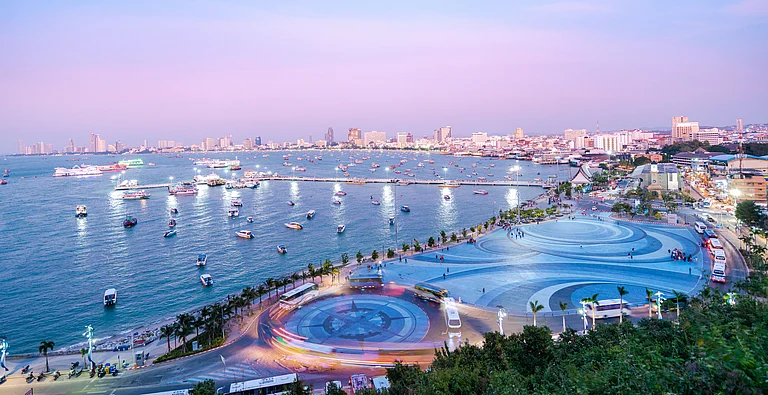
On the way back to the hotel, a quick detour up Pratumnak Hill brought me to Wat Phra Yai, famous for its 18-metre-tall golden Buddha statue that watches over the region. But the area is perhaps best known for the Pattaya Viewpoint. It’s the city’s classic postcard vantage point, offering a fantastic view of the entire crescent bay.
Advertisement
Nong Nooch Tropical Garden
One of the pleasures of staying in Na Jomtien is the proximity to Nong Nooch Tropical Garden, a 600-acre botanical park just 11km away. Originally intended as a fruit plantation in 1954, it was transformed into a world-class conservatory that feels more like an eccentric dreamscape.
Walking through the grounds was a sensory experience; lush greenery layered with life-sized animal statues and the famous Dinosaur Valley, where prehistoric giants loom over the palms. Massive statues of deities, including a 14-metre-high Lord Ganesha, lend a sense of ancient myth to the landscape. A ride on the park’s tour bus eventually revealed the true scale of the grounds, gliding past meticulously pruned bonsai collections that resembled living sculptures.
Market Hopping: From Floating Canals To Thepprasit
As the afternoon heat softened, I ventured out toward the markets. The Pattaya Floating Market offers a canal-based experience designed to evoke traditional riverside life. Gliding through the water, vendors called out from the banks, offering everything from sweet purple sticky rice to intricate handicrafts. The gentle movement of the boat lent a dreamlike pace to the afternoon.
Advertisement

Pattaya Floating Market Is'haq Bhat
Later, at the Thepprasit Night Market, Pattaya revealed its local heart. The air was thick with the scent of sizzling satay (seasoned skewered meat) and the sound of Thai pop music. Rows of stalls sold breezy linen shirts, local sweets, and quirky tech gadgets. A word of advice, though: keep a close eye on your budget. It is easy to lose track of the conversion from Thai Baht to INR, and before you know it, those ‘small’ purchases start to add up. I certainly learned that the hard way, walking away with far more than I had planned after one too many quick conversations.
A Quiet Departure

Golden hour view from The Standard, Pattaya Na Jomtien Is'haq Bhat
On my final evening, I returned to the beach. As the sun edged toward the horizon, families gathered along the shore and couples lingered near the tide. A DJ’s set hummed low in the background as the sky shifted from sharp daylight to muted pastels.
Advertisement
As I sipped on my cappuccino, I realised the sharp contrast to the neon-soaked caricature I’d arrived with. From the quieter stretch of the coast, and anchored by the playful luxury of The Standard, Pattaya Na Jomtien the city’s final impression was one of calm, balance, and unexpected stillness.
The Information
Getting there: Major airlines like IndiGo, Air India, and Thai Airways operate direct daily flights from Delhi and Mumbai to Bangkok’s Suvarnabhumi Airport. From there, Pattaya is a smooth 90-minute drive by taxi.
Where to stay: The Standard, Pattaya Na Jomtien caters to those looking for a design-led stay. The resort features 161 rooms and suites, ranging from the Standard King to a Penthouse.
Permits: Indian travellers currently enjoy visa-free entry to Thailand for stays up to 60 days. Visitors must complete the online Thailand Digital Arrival Card (TDAC) within three days of arrival.
FAQs
1. Where is The Standard, Pattaya Na Jomtien located?
Advertisement
The hotel is located in Na Jomtien, a quieter stretch of coastline south of central Pattaya.
2. Is The Standard, Pattaya Na Jomtien suitable for a relaxed stay?
Yes, its beachfront setting, spacious rooms and slower pace make it ideal for travellers seeking calm.
3. How far is The Standard, Pattaya Na Jomtien from the airport?
The Standard, Pattaya Na Jomtien is approximately 130 km from Bangkok’s Suvarnabhumi International Airport, with a transfer time of around 90 minutes by road, depending on traffic.
4. What dining options are available at the hotel?
The hotel features multiple dining spaces, including Sereia, Esmé beach club and an adults-only rooftop experience.
5. What attractions are close to The Standard, Pattaya Na Jomtien?
Nearby sights include The Sanctuary of Truth, Wat Phra Yai, and Nong Nooch Tropical Garden.
Published At: