In 2018, cleanup crews hauled two tonnes of garbage off the Stok Kangri basecamp, sitting at 5,000 metres in Ladakh. It wasn’t just wrappers and batteries. Plastic and faecal matter had reached the glacier below, and the damage was severe enough that authorities eventually banned the peak entirely. A mountain that thousands once queued up to summit is now closed for good— because of how it was used.
The Himalaya’s Warning Sign: What Every Trekker Needs To Ask Before They Book
From the permanent closure of Stok Kangri to porters abandoning camps during a 2021 storm, the Himalaya is sending warnings. A new safety toolkit from Aquaterra Adventures breaks down exactly what to ask before you book your next trek, raft, or climb

Advertisement
It’s the kind of fact that should stop any aspiring trekker mid-scroll. According to Aquaterra Adventures, one of India’s oldest adventure travel outfitters, it’s exactly the kind of incident that a little traveller awareness could have prevented. The operator has just released “The Responsible Adventure Traveller Guide,” a free safety and customer-awareness toolkit designed for anyone planning to trek, raft, camp, or climb in the Indian Himalaya and beyond.
Indian adventure tourism is booming—both a National Strategy for Adventure Tourism and a National Board for Adventure Tourism have been established to guide the sector’s growth. But growth has come with a cost: a rising accident rate, missing-persons cases on popular treks, the Lamkhaga Pass and Sahastratal incidents, the Stok Kangri closure, and a Bugyal ban in Uttarakhand, alongside overcrowding that’s quietly wearing down trails like Hampta Pass, Kedarkantha, the Great Lakes of Kashmir, and Bhrigu Lake.
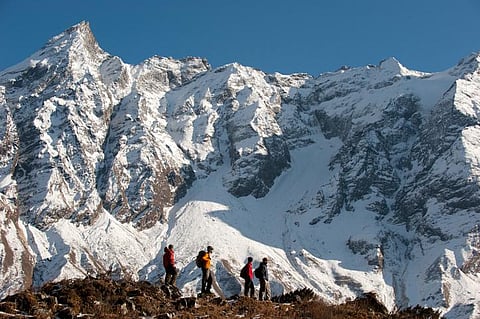
Choose a safe and responsible trekking operator Flickr: Treks Himalaya
“Every accident, casualty, or preventable crisis in adventure travel traces back to one of three factors: gear, guides, or guidelines,” said Vaibhav Kala, founder of Aquaterra Adventures. “We have been lobbying for better regulation, safe, and sustainable conduct for years. This guide is our attempt to change things at a different level—not by waiting for policy, but by giving travellers the knowledge to make better choices right now.”
Advertisement
The Three Pillars: Gear, Guides, And Guidelines
Aquaterra’s entire framework rests on three simple questions travellers rarely think to ask. On gear, the toolkit asks whether the equipment is actually appropriate for sub-zero or technical conditions, and whether the operator owns and maintains it or rents it from an unknown source; high-altitude tents and Type V life jackets are described as the non-negotiable floor. On guides, the emphasis shifts from someone who simply knows the route to someone who can manage a dislocated shoulder, recognise Acute Mountain Sickness, and run an evacuation. And on guidelines, the question is what protocols actually exist when a storm hits, or a guest falls ill—written risk assessments, evacuation plans, and 24/7 head-office emergency contacts, not vague reassurances.
The guide also lays out a five-level qualification ladder for guides, starting at Wilderness First Aid and CPR as the absolute baseline, moving through institutional mountaineering courses from bodies like HMI or NIM, river certifications such as the Swiftwater Rescue Technician qualification, and finally Search and Rescue expertise. At the top sits the trip leader—someone empowered to make the hard call to turn back a guest with early AMS symptoms, “regardless of the summit goal.”
Advertisement
The Numbers That Actually Save Lives
Perhaps the most useful part of the toolkit is how specific it gets. Guide-to-guest ratios, it argues, are not a nice-to-have: standard river trips can run at 1:6, but technical rivers demand tightening to 1:3 or 1:4. On high-altitude treks, a single guide managing 15 people simply cannot track everyone’s breathing, hydration, and exhaustion—one straggler, the guide notes, can turn a hard day into a fatal emergency. Serious mountaineering objectives need ratios closer to 1:2, with Aquaterra saying it always carries a spare guide above 5,000 metres so a sick guest can be escorted down without splitting the group. Even toilet tents get a ratio: one for every four to six guest tents, since mass-market ratios as loose as 1:30 guarantee hygiene collapse and environmental damage.
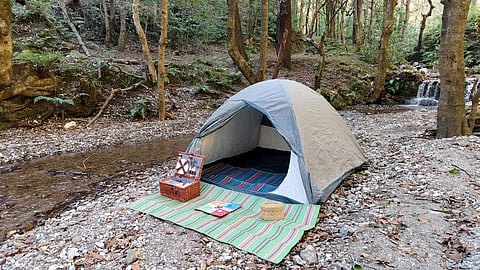
A tent set up inside Mussoorie Wildlife Sanctuary Anwesha Santra
Equipment tells a similar story. The guide contrasts an INR 3,000 three-season tent against an INR 1,50,000 expedition-grade one, and an INR 1,200 local foam life jacket against an imported INR 18,000 Type V PFD that keeps an unconscious swimmer face-up in a rapid. On pricing, it points to a real gap—an INR 15,000 “budget” trip that excludes transfers, uses two-season tents, and skips forest fees and porter welfare, versus an INR 50,000 trip that includes full porter support, satellite phones, and evacuation protocols. Aquaterra’s own pricing philosophy holds that at least 80 per cent of a traveller’s payment should stay in the local community as fair wages for guides, horsemen, and suppliers.
Advertisement
The guide is blunt about what happens when this is ignored: in October 2021, it notes that porters without shelter abandoned their camps during a storm, leaving trekkers to arrive at snow-covered sites with no tents at all.
Your Duty As A Traveller
The guide is careful not to place all the responsibility on operators. It closes with an “Adventure Traveller Pledge” that asks travellers to commit to their own share of the bargain: not defaulting to the cheapest option, disclosing medical conditions honestly, testing gear before packing, treating pre-departure briefings as a safety requirement rather than paperwork, and—perhaps hardest of all—accepting a guide’s “No” on a ridge as the decision that keeps them alive. It borrows heavily from the classic “Leave No Trace” principles, adapted for the Himalayan context: washing at least 60–70 metres from water sources, cooking only on gas or kerosene since forest wood is often illegal to gather, and honouring a no-drone, no-speaker rule near wildlife and in raptor habitats.
Advertisement
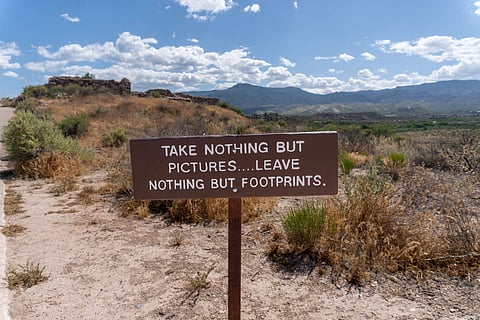
Practice the Leave No Trace principle on every trip you take Shutterstock
Before signing any contract, the toolkit suggests a short verification checklist: confirm the operator’s recognition by the Ministry of Tourism and membership in the Adventure Tour Operators Association of India (ATOAI), ask exactly how many times the lead guide has led that specific route rather than accepting a general “years of experience” claim, request contact with two past guests who did the same trip, and insist on seeing the written risk-disclosure and evacuation policy—walking away if the operator turns defensive.
None of this is complicated. It’s mostly a matter of asking the right questions before money changes hands, rather than after something goes wrong on a ridge with no phone signal.
The Responsible Adventure Traveller Guide is available free at aquaterra.in.
FAQs
1. How can I stay safe while trekking in the Himalayas?
Choose an experienced operator, check guide qualifications, understand evacuation protocols, use appropriate equipment and take pre-departure safety briefings seriously.
Advertisement
2. What should I check before booking a trek in India?
Check the operator’s Ministry of Tourism recognition and ATOAI membership, ask about the lead guide’s experience on the specific route, and request details of its risk and evacuation procedures.
3. What is a safe guide-to-guest ratio for Himalayan treks?
The appropriate ratio depends on the terrain and difficulty. Technical and high-altitude trips require smaller groups, while serious mountaineering objectives may need ratios closer to 1:2.
4. What makes an adventure travel operator responsible?
A responsible operator should have qualified guides, suitable and well-maintained equipment, written risk assessments, evacuation plans and fair practices towards local guides, porters and suppliers.
5. What should trekkers do to reduce their environmental impact?
Travellers should carry waste out, avoid gathering forest wood, maintain proper distance from water sources when washing and follow local restrictions on drones, speakers and other activities that can disturb wildlife.
Advertisement
Published At: