“सत रस भोजन राजस्थान में, पाचन राखे खेड़, पान नहीं पर कल्पवृक्ष, किण विध भूलूँ सांगरी केर,” — (“Food with seven flavours is only found in Rajasthan, easily digestible; how can we forget the medicinal properties of kair and sangri, as miraculous as the Kalpataru tree?”) recalls Dr Chef Saurabh Sharma when asked to define the soul of Rajasthani cuisine. Chef Sharma’s story begins in the sands of Ladnun, where childhood memories of his mother’s chulha—shaping ghee-laced laapsi into warm spheres—inspired his belief that, “food is more than sustenance—it’s emotion, heritage, and healing.”
How This Chef Is Reviving The Seven Flavours Of Rajasthan
Tracing Chef Saurabh Sharma’s journey from Ladnun to Jaipur, this story explores his effort to preserve Rajasthan’s food traditions through research, memory, and community-led revival

Advertisement
Driven by that conviction, he pursued a PhD on culinary heritage of Rajasthan and its impact on tourism & economy, documenting village kitchens, palace scrolls and oral traditions. He travelled from village to palace, observing grandmothers stirring makki ki raab and farmers transforming drought-resilient millets into festive feasts.
“I remember watching in awe as families used every part of an ingredient, their zero-waste practices perfected over generations. But when I saw these sustainable traditions disappearing, replaced by plastic-packaged snacks and forgotten recipes something shifted in me. Pursuing my PhD became more than academic; it was an act of love,” he says.
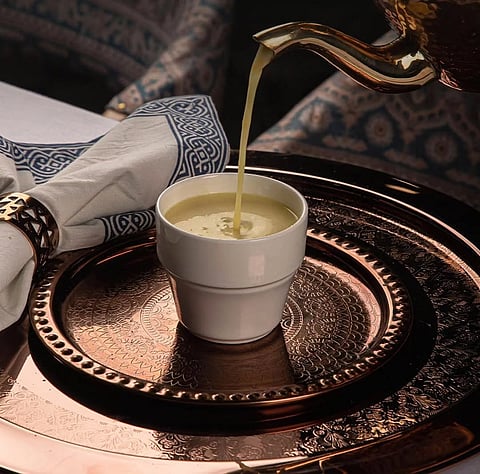
Makki ki Raab is a traditional Rajasthani warm, fermented drink made from maize (makki) flour, commonly consumed during winters for its health benefits RajRasa
That research opened doors to national television: as judge on MasterChef India for Delhi and Jaipur auditions and host of Rajasthani Rasoi on FoodXp TV, he introduced viewers to dishes long forgotten. A highlight came in 2024, when he recreated an ancient millet banquet at Delhi’s Red Fort—an event that crystallised his belief in food as living history. Those years of research became the foundation for RajRasa, his boutique Jaipur restaurant and cultural hub dedicated to showcasing Rajasthan’s regional culinary heritage, where hand-ground masalas toast over wood fires and earthen pots cradle slow-cooked gravies.
Advertisement
The Story of RajRasa
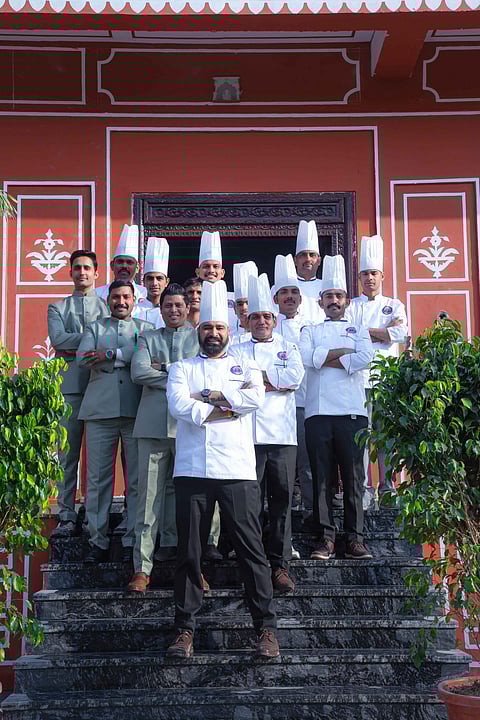
Chef Sharma with his team at RajRasa RajRa
In Jaipur, Chef Sharma brought his vision to life with RajRasa, “more than a restaurant—it’s a movement to revive Rajasthan’s edible heritage.” At RajRasa, each tasting-menu item reads like a chapter of Rajasthan’s history: anjeer maans, a fig-and-mutton stew from Agra’s royal archives; palak mangodi, sun-dried spinach dumplings in tangy yoghurt curry; kheerand, the winter “silver lentil” dal; and his manifesto dish, jowar ki raab, a humble sorghum porridge turned lesson in memory and sustainability.
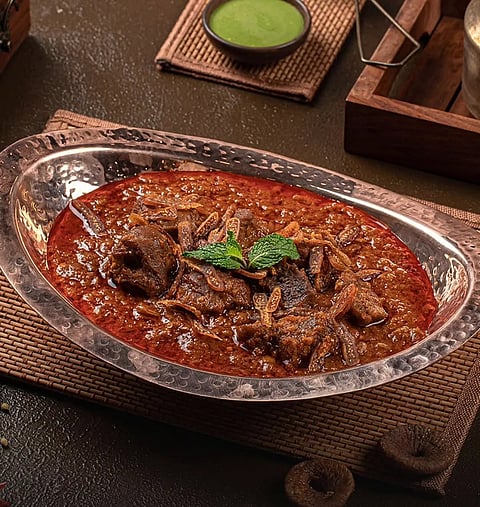
Anjeer maans - A unique and royal Rajasthani dish that blends the richness of mutton (maans) with the natural sweetness of figs (anjeer) RajRasa
Understanding Rajasthani Cuisine
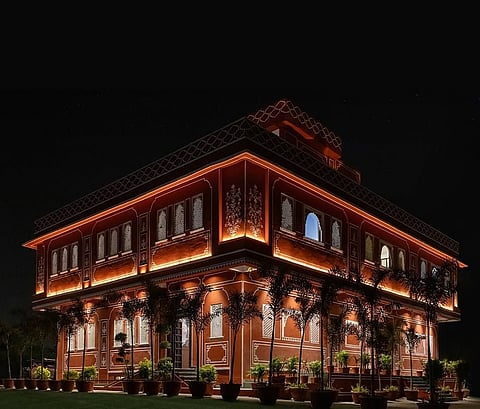
RajRasa Restaurant RajRasa
To Chef Sharma, Rajasthani cuisine isn’t just laal maas or ker-sangri. “It’s a love letter written by five communities,” he says—royals with their shikar feasts, rural mothers turning millet into magic, tribal foragers crafting wisdom from wild berries, Marwari traders balancing spice and traveller food, and Mughal-influenced artisans layering fragrances into Nagauri korma. Yet outsiders often reduce it all to dal-baati-churma—a simplification Chef Sharma likens to calling the Taj Mahal “a white building.” He champions forgotten dishes like 31 Mirch ka Maans, Govind Gatte, and Chandi Wali Dal—seasonal, nutritious, and woven with community rituals.
Advertisement
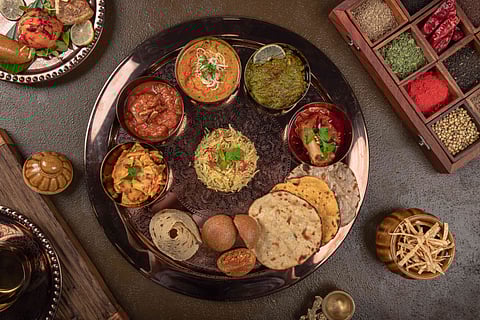
Clock wise from bottom: Keema batti, Papad, Rabodi ki sabji, Anjeer mutton, Murgh ka mokul, Dal methi machi, 31 mirch ka maans, Gehun roti, Missi roti and Bejad roti RajRasa
Looking Ahead
Chef Sharma’s vision extends beyond RajRasa’s dining room into Rajasthan’s villages and global tables. Looking ahead, Dr Chef Saurabh envisions RajRasa’s recipes housed in every corner of the globe—from sun-dried spice blends to pressed oils that carry Rajasthan’s seven rasas into home kitchens. Yet his message to aspiring chefs remains unchanged: “Use your knife like your ancestors used their wisdom, to reveal what the earth wants to say.” He further adds “If Rajasthani food could speak, it would tell tales of war, drought, valor, and survival—each dish born from necessity and pride, scarcity transformed into poetry and that is what the world needs to know about Rajasthani food.

Published At: