Shillong’s Ward’s Lake has a new drinking-water facility designed to extract moisture from the surrounding air and convert it into potable water. Inaugurated on October 14, 2026, as part of an upgrade to one of Meghalaya’s established tourist attractions, the installation uses a moisture-harvesting system followed by multiple stages of purification. The initiative places a relatively unconventional water technology within a public visitor space, adding to the wider discourse of how tourist destinations can provide basic amenities to visitors while also limiting their environmental footprint.
From Air To Water: Shillong’s New Water Harvesting Installation At Ward’s Lake
Shillong’s Ward’s Lake has introduced a facility that converts atmospheric moisture into drinking water, bringing a new approach to public amenities and discourse around the role of water-harvesting technology in tourism infrastructure

Advertisement
Water From Air At Ward’s Lake
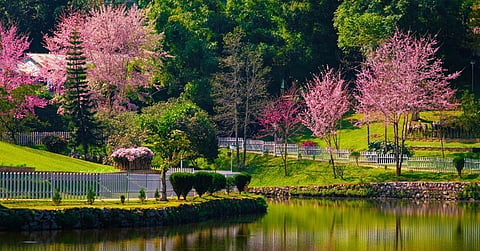
The Ward's Lake in Shillong during the cherry blosom Shillong
The system, reportedly, collects moisture through a 10-micron aluminium mesh-supported high-density polyethene (HDPE) fabric. The collected water is then treated through ozonisation, ultraviolet (UV) sterilisation and ultrafiltration (UF) membrane technology. The reported process is intended to provide drinking water to visitors while supporting the development of more sustainable tourism infrastructure.
The installation is intended to improve access to drinking water at a popular public destination while introducing an alternative approach to supplying a visitor amenity. Its environmental contribution will come through everyday use, including whether visitors find it convenient to refill reusable bottles rather than buy packaged water.
Water Harvesting In Shillong’s Climate
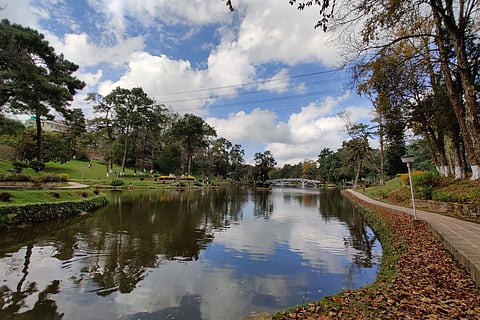
Ward's Lake Shillong Meghalaya Tourism
The facility brings an emerging water-harvesting approach to a destination long part of Shillong’s public life. Meghalaya Tourism describes Ward’s Lake as a more than century-old attraction, known for its wooden bridge, landscaped gardens, shaded paths and paddle boating. It draws visitors throughout the year, and especially so during the cherry blossom season. Its location makes the new installation relevant to the everyday infrastructure of an established urban tourist attraction, rather than a remote destination built around a specialised water project.
Advertisement
The setting also poses interesting questions about the equation between climate and water technology. Meghalaya Tourism describes the state as having bountiful precipitation, pronounced seasonal changes and weather that can be unpredictable throughout the year. These conditions make the introduction of a moisture-harvesting system worth examining; however, rainfall alone does not determine how effectively a particular technology can collect water from the atmosphere.
The installation’s suitability will depend on the mechanism it uses and how that system responds to local temperature, humidity and air movement. There are also practical considerations like treatment, maintenance, energy requirements and the quality of the water produced, which will all affect its long-term implementation. For a popular tourist attraction, the conversation at Ward’s Lake is also about access. A facility that visitors can easily use to refill their bottles could become part of a more resource-conscious visitor experience. As the installation begins full-throttle operation, its daily output and patterns of use will offer a clearer picture of how the technology can support the lake’s existing facilities.
Advertisement
Global Approaches To Atmospheric Water Collection
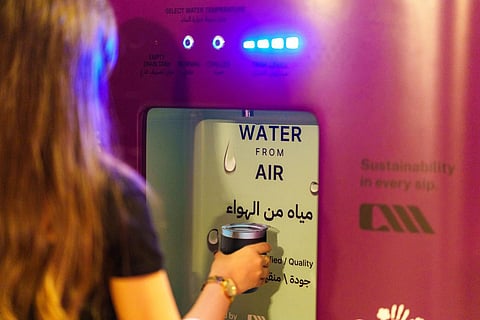
A1RWATER installed five water generating units at Umm Al Emarat Park Construction Week Online
Atmospheric water collection takes different forms, shaped by local climate and water needs. In Abu Dhabi, five atmospheric water generators installed at Umm Al Emarat Park in 2024 were designed to supply drinking water to visitors. Reported capacities ranged from 30 to 100 litres per day per unit, with the initiative also encouraging alternatives to single-use plastic bottles. In southwestern Morocco, the Dar Si Hmad Foundation uses mesh nets to capture fog droplets, channelled into reservoirs and a distribution network serving more than 400 residents across five villages. The project responds to persistent drought and pressure on groundwater, making community water access its central purpose.
Chile’s Peña Blanca community has developed fog harvesting in the coastal drylands, where camanchaca (ocean-origin fog) passes through high-density mesh. In Cerro Grande Ecological Reserve, collected water supports crop irrigation, ecological restoration and drinking water for people and animals. The reserve’s 34 fog catchers cover 306 square metres and can collect up to 650,000 litres annually, according to the Food and Agriculture Organisation (FAO).
Advertisement
Rather than providing a single transferable model, these initiatives illustrate distinct applications. Generators extract moisture from air, while fog nets capture existing droplets; each depends on different atmospheric conditions and infrastructure. Their experiences show how the technology must be tailored to the setting and the purpose it is intended to serve.
What Comes Next
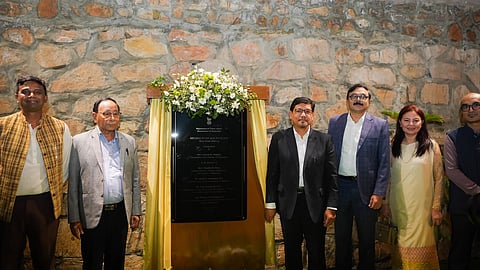
Chief Minister Conrad Sangma inaugurated the Meghalaya Age Pavillion opposite the Ward's Lake SangmaConrad (X)
At Ward’s Lake, the installation marks the beginning of a practical trial of atmospheric moisture collection within a busy public attraction. As it becomes part of the visitor experience, its water output, seasonal performance, maintenance needs and energy use will help clarify its wider potential. Visitor uptake will also show whether access to refillable drinking water can become a useful alternative to packaged bottles.
The facility was inaugurated alongside the upgraded entrance to Ward’s Lake and the Meghalayan Age Pavilion, which showcases local products and entrepreneurship. Together, these additions form part of a broader effort to develop visitor amenities and expand Meghalaya’s tourism offerings. The new facility does not need to emulate projects elsewhere to establish its value. Its relevance will emerge from how well the technology responds to Shillong’s conditions and the needs of the people using the lake. If dependable and reliable in long-term usage, it could offer a useful addition to the planning of public amenities and a starting point for considering where similar systems might serve visitors in the future.
Advertisement
FAQs
1. What is the new water facility at Ward’s Lake in Shillong?
The facility is designed to collect moisture from the surrounding air and convert it into drinking water through a multi-stage purification process.
2. How does the atmospheric water-harvesting system work?
According to reports, the system collects moisture using aluminium mesh-supported HDPE fabric. The collected water then undergoes ozonisation, UV sterilisation and ultrafiltration.
3. How could atmospheric water harvesting benefit tourism in Shillong?
The facility could provide visitors with an additional source of drinking water. If convenient for refilling reusable bottles, it may also help reduce reliance on packaged water over time.
4. How do other countries collect water from the atmosphere?
Projects in Abu Dhabi use atmospheric water generators, while initiatives in Morocco and Chile capture moisture from fog using mesh nets. Their methods reflect different climates and water needs.
5. What other developments were inaugurated at Ward’s Lake?
Alongside the water facility, the upgraded entrance to Ward’s Lake and the Meghalayan Age Pavilion were inaugurated as part of broader improvements to Meghalaya’s tourism offerings.
Advertisement

Published At: