A short drive from Alibag’s busy beaches, where weekend traffic hums and seaside cafés spill over with city escapees, lies a village that seems to exist in deliberate contrast. Hemnagar does not announce itself with signboards or souvenir stalls. It unfolds slowly—through paddy fields that glint under the Konkan sun, narrow roads shaded by coconut palms, and the faint saltiness of the Arabian Sea drifting in on humid breezes.
Beyond Alibag’s Beaches, Hemnagar Offers A Slower, Softer Side Of Coastal Maharashtra
Rooted in agriculture and coastal geography, Hemnagar invites travellers into Konkan’s quieter, enduring side

Advertisement
Set in Raigad district’s Alibag taluka, Hemnagar is less a destination in the conventional sense and more a pause—an interlude between the rush of Mumbai and the languid rhythms of coastal Maharashtra. With a population of just 645 residents spread across 166 hectares, this modest village offers something increasingly rare along the Konkan coast: quiet authenticity.
Village By The Sea
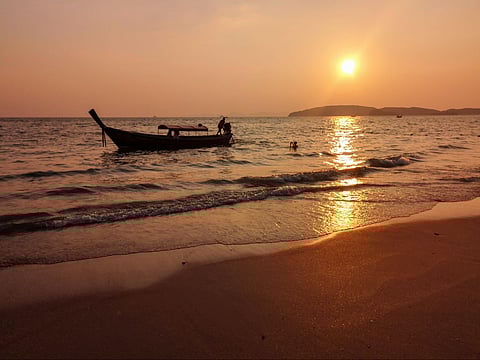
Close to Mumbai yet far from the rush, Hemnagar delivers fertile landscapes, community warmth and rare stillness Shutterstock
Hemnagar sits barely seven metres above sea level, close enough to the Arabian Sea to feel its presence without the spectacle of crowded shores. The geography shapes both lifestyle and mood. Mornings here arrive with a haze of humidity and the distant rustle of palm fronds; evenings soften into pastel skies over flat, fertile land.
Marathi is the language that binds daily life, though Hindi is understood, making the village accessible to visitors from across the country. The surrounding region—part of the Konkan division—has long been defined by its agricultural traditions. Fields of rice and seasonal crops stretch around the settlement, forming a patchwork of green during the monsoon and early winter months. Farming remains integral to Hemnagar’s identity, and visitors arriving during harvest season may glimpse scenes of collective labour that feel unchanged by time.
Advertisement
Despite its tranquil air, Hemnagar is not isolated. The village falls under the Kusumbale Gram Panchayat and shares its local governance with ten neighbouring settlements, including Chikhali, Jalashi and Khatwira. Nearby villages such as Kopari, Fanasapur and Simadevi form part of its everyday orbit, connected by local roads and shared markets.
Alibag, the nearest town, lies roughly 23 kilometres away—a drive of about 30 to 60 minutes depending on traffic and road conditions. Mumbai is approximately 45 kilometres from here, making Hemnagar a surprisingly accessible escape for urban dwellers seeking something less predictable than the usual coastal haunts.
Life In Miniature
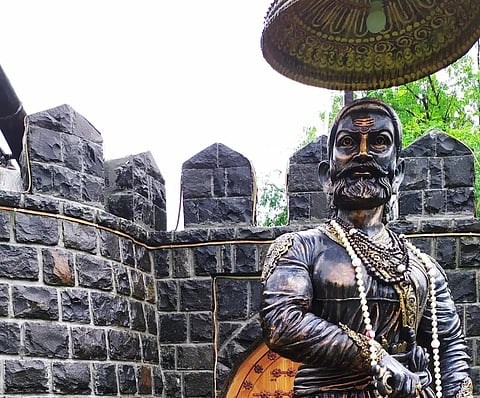
Hemnagar feels suspended in time Instagram
What distinguishes Hemnagar is scale. With 162 households and a sex ratio of 984 women for every 1,000 men, the village feels balanced and intimate. In 2011, the Census counted 53 kids under six, showing that this is a living community, not just a rural memory. The area values education, with a good literacy rate of 84.03 per cent—88.92 per cent for men and 79.06 per cent for women.
Advertisement
Life goes at a calm pace. Buses run in the village, connecting people to Alibag and other places nearby. It's not far to where you can catch private buses, and train stations are a bit over 10 kilometres away, so it’s connected but still feels peaceful. The ride there is nice: twisty roads, quick views of fishing spots, and green scenery all around.
In politics, Hemnagar is similar to the wider Raigad area, with parties like the Nationalist Congress Party, Shiv Sena, and Congress active. Polling places in nearby villages, like Ruishet Bhomoli and Talvali Tarfe Khandale, remind everyone that even small places are part of India’s voting system.
But politics doesn't usually get in the way for visitors. Instead, you see everyday life—women getting water, farmers working, kids riding bikes on small paths. There are no big attractions; the charm is in seeing normal things become beautiful.
Roads Less Travelled
Advertisement
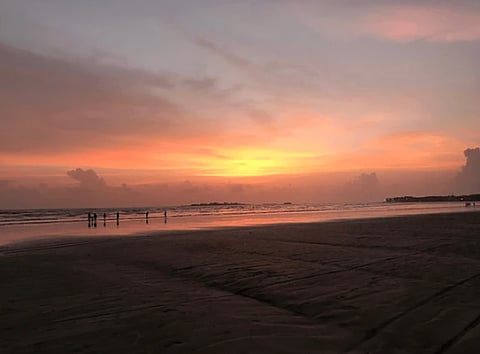
Hemnagar preserves a slower Konkan rhythm Shutterstock
If you're used to Alibag’s busy beaches, Hemnagar is a great side trip. It’s close to the district center—about nine kilometres west—so you can easily visit for the day. But staying overnight in the Alibag area lets you see more. The drive from Alibag to Hemnagar is between 23 and 27 kilometres, depending on which way you go, and takes from half an hour to a little over an hour.
Pen, Uran, and Roha aren’t too far away, giving you more options for a longer trip in Konkan. Having no train station within 10 kilometres helps Hemnagar maintain a quiet atmosphere, but its connections via roads make sure it’s not isolated. Cars and bikes are the easiest ways to get around, but government buses are a more economical alternative.
Situated by the seaside coupled with low-lying land means the air is often slightly humid, especially when it rains a lot. That’s when Hemnagar looks its best: the fields turn bright green, ponds fill up, and the sky keeps changing from dark grey to bright blue.
Advertisement
Winters are milder and arguably the most comfortable time to visit, with clearer skies and softer humidity.
Hemnagar does not promise luxury resorts or curated experiences. Instead, it offers immersion—into Konkan’s agricultural landscape, into a rhythm dictated by tides and seasons, into a community that continues to function much as it has for decades. If you're looking for an authentic look at rural Maharashtra, this spot offers both convenience and a striking perspective.
Now that coastal spots are quickly turning into commercial areas, Hemnagar reminds us that travel doesn't always mean chasing big sights. The best trips can be to simple places that are low-key and secretly appealing. In case you'd like to veer from the well-trodden Alibag trail, Hemnagar is there with open spaces, fertile ground, and a prospect to unwind.
Published At: