Guwahati’s Lokpriya Gopinath Bordoloi International Airport opened its new Terminal 2 on February 22, 2026. The space, designed to handle over 1.3 crore passengers annually, is being pitched as India’s first nature-themed airport. It features a bamboo-inspired design that is said to reflect the region’s natural heritage. Here is a look at what it offers.
A Traveller’s Guide To Guwahati’s New Eco-Friendly Terminal
Guwahati’s Terminal 2 at Lokpriya Gopinath Bordoloi International Airport blends modern travel with Assam’s natural heritage. From dining and lounges to local-inspired design and shopping, here’s a look at everything travellers can do

Advertisement
An Award-Winning Space
Guwahati’s Lokpriya Gopinath Bordoloi International Airport has been recognised with the International Architectural Award 2025 in the Airports and Transport Centres category. This accolade, awarded annually by The Chicago Athenaeum: Museum of Architecture and Design in partnership with The European Centre for Architecture Art Design and Urban Studies and Metropolitan Arts Press, Ltd, highlights the airport as one of only seven worldwide to receive distinction for architectural quality and urban design. The terminal features a lot of bamboo, 100,000+ plants representing local species, and 57 orchid-shaped columns inspired by the Kopou Phool.
Facilities At Terminal 2
The new terminal can accommodate 34 air traffic movements (ATMs) per hour and features 14 entry points, making passenger movement smooth and efficient. Travellers can expect a range of facilities designed for convenience and comfort. The terminal houses multiple check-in counters, fast-track immigration for international flights, and dedicated lounges for both domestic and international passengers. Additionally, technology such as CT baggage scanners and Digi Yatra e-gates aim to improve efficiency and streamline the passenger experience.
Advertisement
Green And Local Design
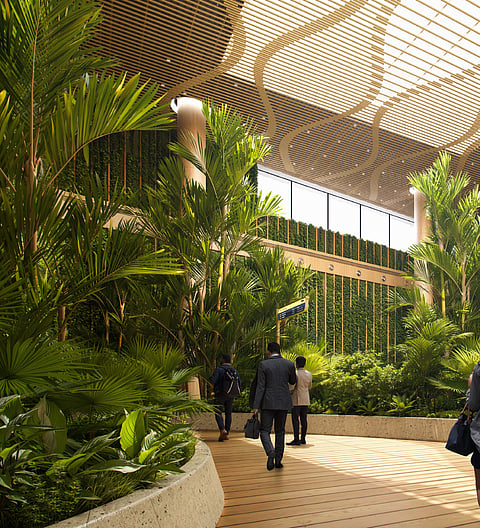
Designed with sustainability in mind, the terminal operates on solar power X/GuwahatiAirport
Terminal 2 showcases Assam’s natural and cultural heritage through its design. From arrival to departure, passengers can experience the region’s flora, artistry, and eco-conscious design up close. Look out for the sustainable bamboo architecture that illustrates local craftsmanship. At the “Sky Forest,” check out the plants across several native species. Structural columns are shaped like Assam’s state flower, and energy-efficient skylights allow natural light to illuminate the space.
The terminal operates on solar power, incorporates water recycling systems, and maximises natural lighting. It integrates a range of sustainable features, including a green roof, rainwater harvesting systems, and energy-efficient lighting.
Dining, Lounges, And Services
Terminal 2 at Lokpriya Gopinath Bordoloi International Airport provides plenty of options for dining and relaxation. Cafés, bars and restaurants in the security hold area serve local Assamese dishes alongside popular national and international fare. Regional cafés and eateries serve traditional Assamese dishes such as pithas and bamboo-smoked meats, alongside pan-Indian and international cuisine. Travellers can enjoy fresh momos before boarding, artisanal teas from the Brahmaputra Valley, or hearty comfort bowls during layovers.
Advertisement
Dedicated lounges offer comfortable seating, buffet meals and quiet corners for working or resting, while transit rooms are available for short stays between flights. Duty-free shops sell perfumes, electronics and local handicrafts. Passengers can also make use of free Wi-Fi, porter assistance, Pranaam meet-and-greet services, and on-site medical facilities, ensuring a smooth and comfortable experience throughout their time at the airport.
FAQs
When did Terminal 2 open?
Terminal 2 at Lokpriya Gopinath Bordoloi International Airport was inaugurated on 20 December 2025 and began operations on 22 February 2026.
How many passengers can the terminal handle?
The terminal is designed to handle over 1.3 crore passengers annually.
What are the key design features?
It features sustainable bamboo architecture, 57 orchid-shaped columns, a central “Sky Forest” with 100,000 plants, and energy-efficient skylights.
What dining options are available?
Travellers can choose from regional cafés serving pithas and bamboo-smoked meats, pan-Indian and international cuisine, fresh momos, and artisanal teas from the Brahmaputra Valley.
Advertisement
Are there lounges and rest areas?
Yes, there are dedicated lounges with seating, buffet meals, quiet corners, and transit rooms for short stays.
What shopping and services are offered?
Duty-free shops sell perfumes, electronics, and local handicrafts. Free Wi-Fi, porter services, Pranaam meet-and-greet, and medical facilities are also available.

Published At: