The first thing many wildlife travellers hope to see is a tiger. Failing that, an elephant crossing a forest track or a sloth bear lumbering through the undergrowth will do just fine. The photographs, after all, are meant to capture the wild.
The Wild Among Us: How India’s Wildlife Conservation Begins With Communities
Behind every rescued elephant, rehabilitated sloth bear and returning leopard lies a network of communities, scientists and conservationists working to redefine how India protects its wildlife

Advertisement
The most memorable wildlife encounters, however, rarely happen where tourists expect them to.
Not on a safari trail where a tiger melts into the lantana. Not on a jeep ride that ends with a leopard disappearing into the scrub. They happen in places few travellers ever visit: an elephant hospital on the outskirts of Mathura, a rescue centre in Junnar where an injured leopard slowly regains confidence, a village in Rajasthan where families who once survived by exhibiting dancing bears now run small businesses instead, or a farmer’s field in Maharashtra where covering an abandoned well can mean the difference between life and death for a leopard.
What remains largely invisible is the network of people working much after the tourists have left: veterinarians treating crushed paws, researchers tracking wildlife movements, forest officials answering emergency calls, villagers choosing coexistence over conflict, former wildlife exploiters building new livelihoods, and volunteers who discover that conservation rarely involves touching an animal at all.
Advertisement
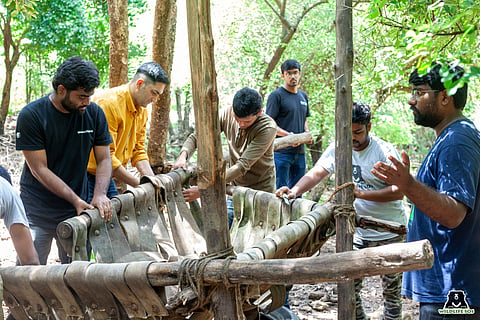
Volunteers making hammock enrichment for bears at BBRC Supplied
These are landscapes where conservation is measured less by sightings than by coexistence. They tell a different story about India’s wildlife, one in which local communities are as essential as forests, and where saving a species often begins by changing the lives of the people who live alongside it.
Few organisations illustrate this shift better than Wildlife SOS.
Founded in 1995 by conservationists Kartick Satyanarayan and Geeta Seshamani, Wildlife SOS began as an effort to end the centuries-old practice of dancing bears. Three decades later, it has grown into India’s largest wildlife rescue, rehabilitation, and conservation organisation, operating 17 centres across the country. Its work spans everything from elephant hospitals and leopard rescue centres to anti-poaching intelligence, habitat restoration, human-wildlife conflict mitigation, and scientific research.
“In these 30 years, we have taken a multi-faceted approach, protecting natural habitats as well as rescue, treatment and rehabilitation of distressed animals,” Kartick Satyanarayan, co-founder and CEO of Wildlife SOS, tells Outlook Traveller. “Wildlife SOS hotlines provide emergency rescue support systems that operate in Delhi NCR, Agra, Mathura, Vadodara and Jammu & Kashmir to provide round-the-clock assistance in rescue and rehabilitation of wild animals.
Advertisement
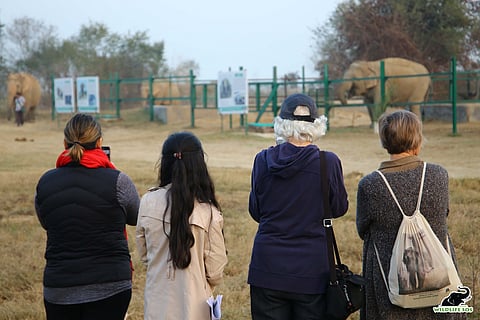
A view of the elephant enclosures at ECCC (Elephant Conservation & Care Centre Supplied
Today, those rescue teams respond to more than 5,000 wildlife emergencies every year. Their 24-hour helplines receive dozens of calls daily, from snakes trapped inside homes in Delhi NCR to birds, reptiles and mammals injured in rapidly expanding urban landscapes. Yet rescue, they insist, is only the beginning.
The People Behind India’s First Conservation Success
Long before ethical wildlife tourism entered the travel vocabulary, Wildlife SOS was tackling a problem that could not be solved by rescuing animals alone.
For centuries, members of the Kalandar community travelled with sloth bears, forcing the animals to perform for crowds after enduring brutal training methods that involved piercing their muzzles with iron rings. By the mid-1990s, the practice had become illegal, but banning it did little to address the poverty that sustained it.
Wildlife SOS realised that unless the communities themselves found new livelihoods, rescued bears would simply be replaced.
What followed became one of India’s largest community-based conservation programmes.
Advertisement
Investigations between 1995 and 1997 laid the groundwork for the Dancing Bear Project. By 2009, when Raju, India’s last dancing bear, was surrendered, Wildlife SOS had rescued 628 sloth bears and effectively ended the practice across the country. Four specialised bear rescue centres were established in Agra, Bannerghatta, Bhopal’s Van Vihar, and West Bengal.

Asiatic Black Bear Supplied
But perhaps the more remarkable achievement happened outside the rescue centres.
Since 2002, the Tribal Rehabilitation Programme has supported more than 5,000 Kalandar families across Rajasthan, Uttar Pradesh, Madhya Pradesh, and Haryana. More than 17,000 children have received education, over 3,000 women have undergone vocational training, and alternative livelihoods have helped break generations of dependence on wildlife exploitation.
It is conservation that recognises people as part of the solution.
The same philosophy continues to shape Wildlife SOS’s work today.
“Effective protection of wildlife depends on strong partnerships between conservation organisations, government agencies, law enforcement authorities, and the communities that share landscapes with wildlife,” says Satyanarayan.
Advertisement
Healing Giants
The relationship between people and elephants is perhaps one of the most complicated in India.
For decades, elephants have been used in temples, circuses, weddings, tourism, and begging, often at enormous physical and psychological cost.
To address this, Wildlife SOS established the Elephant Conservation and Care Centre in Mathura in 2010 in partnership with the Uttar Pradesh Forest Department. Eight years later, it opened India’s first dedicated Elephant Hospital, equipped with digital radiography, ultrasound, hydrotherapy, physiotherapy, and specialised treatment facilities for rescued elephants. The organisation also introduced the country’s first hydrotherapy pool for elephants and operates Hathi Sewa, a mobile veterinary service that provides treatment to working and wild elephants across India.
Today, more than 30 rescued elephants live under its care.
Many arrive with severe arthritis, infected feet, untreated wounds and behavioural trauma after years spent walking on concrete roads or carrying tourists.
Some stories remain difficult to forget.
Advertisement
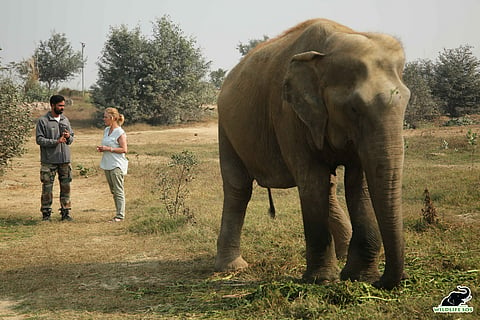
Volunteers observing evening walks of Elephants at ECCC Supplied
Laxmi was rescued from the begging trade in Maharashtra in 2013. Barely 18 years old, she had spent much of her life surviving on fried snacks and sugary food handed to her by passers-by while walking through cities. The unnatural diet had left her severely overweight and suffering from osteoarthritis. Years of veterinary care, carefully managed nutrition, and enrichment gradually transformed her into one of the most responsive elephants at the centre.
Veer arrived only recently after years spent begging and participating in religious processions. Veterinarians found severe degeneration in his forelimb, painful chain wounds and chronic mobility issues. Today, he is recovering at the Elephant Hospital campus, where soft substrates, medical therapies and behavioural enrichment have become part of his daily routine.
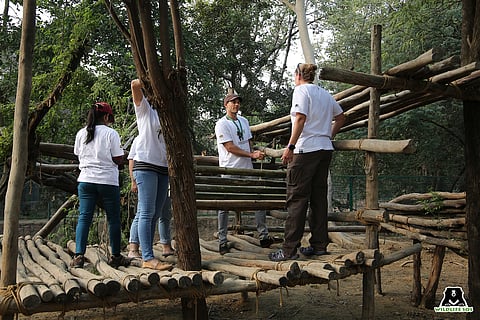
A view of the platform enrichment made by volunteers Supplied
Providing this care is far more complex than treating injuries.
“Over the last three decades, Wildlife SOS has responded to thousands of wildlife emergencies across India through its rescue helplines, field teams, veterinary facilities and long-term care centres,” says Satyanarayan. “Many rescued animals arrive with severe physical injuries, chronic illnesses, psychological trauma or behavioural challenges resulting from years of exploitation. Through veterinary intervention, enrichment programmes, species-appropriate diets and positive reinforcement-based care, many of these animals regain mobility, confidence and the ability to express natural behaviours.”
Advertisement
Recovery is measured not by returning animals to work, but by allowing them to simply be elephants again.
The Science Of Rehabilitation
Every rescued species presents a different challenge.
Former dancing bears often arrive with broken teeth, infected wounds, damaged muzzles, and deep psychological trauma. At Wildlife SOS’s rescue centres, rehabilitation extends beyond medicine into behavioural enrichment. Puzzle feeders encourage foraging. Scent trails stimulate curiosity. Large naturalistic enclosures allow bears to climb, dig, and explore instincts that captivity had suppressed.
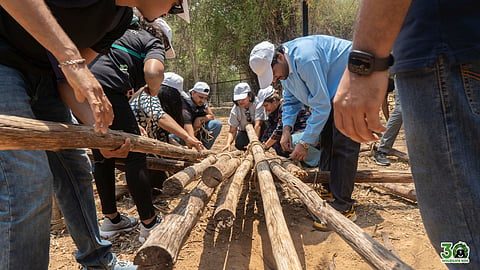
Volunteers also assist in making enrichments for animals Supplied
Sometimes innovation becomes necessary.
One of the organisation’s most extraordinary patients was Vasi, a sloth bear whose hind leg had to be amputated after a poacher’s snare caused irreversible damage. In collaboration with international experts, Wildlife SOS fitted him with what is believed to be the world’s first prosthetic limb for a sloth bear, opening new possibilities for wildlife rehabilitation.
Alongside rescue and veterinary care, the organisation has expanded its scientific research. Camera traps deployed during the Sloth Bear Denning Project recorded the first documented evidence of triplet cubs in the wild, while reproductive endocrinology studies continue to deepen understanding of female sloth bear biology. Satellite telemetry is also helping researchers monitor Indian star tortoises rescued from trafficking after they are released back into their natural habitats.
Advertisement
The work, increasingly, is as much about understanding wildlife as saving it.
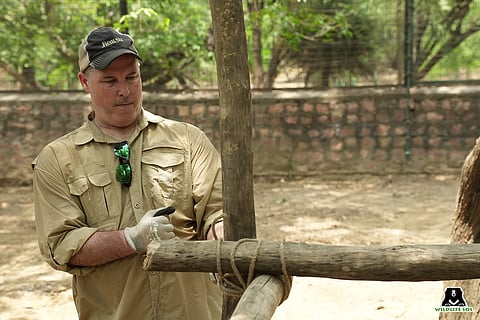
Volunteers tying logs for platform enrichment for sloth bears Supplied
Living With Leopards
If elephants embody India’s long and complicated relationship with captivity, leopards represent the challenge of sharing space with wildlife that has never left the wild.
In Maharashtra’s Junnar landscape, where sugarcane fields have become ideal cover for leopards, encounters between people and big cats are inevitable. Fear often leads to retaliation, orphaned cubs or injured animals. Wildlife SOS, in partnership with the Maharashtra Forest Department, has spent nearly two decades trying to change that equation.
Established in 2008, the Manikdoh Leopard Rescue Centre cares for leopards that are injured, orphaned or too habituated to humans to survive if released. But its work extends well beyond rehabilitation.
Community outreach programmes encourage villagers to understand leopard behaviour, adopt safer farming practices and report sightings rather than resort to violence. The approach has resulted in more than 110 leopard cubs being reunited with their mothers, allowing them to remain in the wild instead of entering captivity.
Advertisement
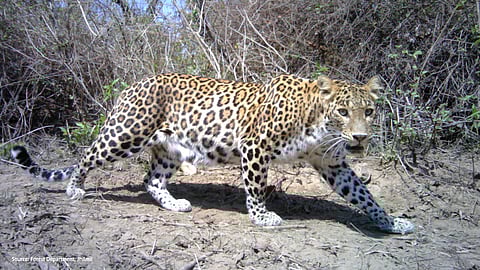
A shot of a leopard (for representation purposes only) jhilmil.in/Website
Not every leopard, however, gets a second chance in the wild. Ganesh was only three years old when he wandered into a village in Maharashtra and was brutally attacked. The injuries left him completely blind, making survival in his natural habitat impossible. Rescued and brought to the Manikdoh Leopard Rescue Centre, he gradually adapted to life under specialised care, relying on his remaining senses to navigate his surroundings. His story is a stark reminder that while coexistence is improving, fear and conflict continue to shape the lives of India's big cats.
“We work closely with local communities in Maharashtra, including farmers and villagers, to educate and sensitise them about leopard avoidance behaviour,” says Satyanarayan. “We encourage communities to recognise the important ecological role leopards play and remind them that previous generations successfully farmed in these landscapes while coexisting with these animals.”
Sometimes conservation comes down to solving an unexpectedly simple problem.
Advertisement
Across rural Maharashtra, thousands of unlined open wells dot agricultural landscapes. Built for irrigation, many remain uncovered, becoming deadly traps for wildlife. Leopards, civets, jackals, deer, cobras, and owls frequently fall into them while moving through farmland.
Launched in 2022, the Open Wells Conservation Project identifies high-risk wells and installs protective covers that continue allowing communities access to water while preventing wildlife fatalities. Working alongside the Maharashtra Forest Department, Wildlife SOS had secured 19 wells by 2025, with the first phase targeting 40. It is a reminder that not every conservation intervention requires moving animals. Sometimes it requires changing the infrastructure.
Conserving Landscapes, Not Just Animals
Rescuing wildlife addresses immediate crises. Conserving habitats prevents them.
In Karnataka’s Ramdurga Valley, Wildlife SOS has spent years restoring degraded sloth bear habitat. Beginning with the purchase of 40 acres in 2006 and later expanding the site, the organisation has planted more than 10,000 native saplings, achieving a survival rate of nearly 90 per cent. The recovering landscape now supports not only sloth bears but also leopards, Indian pangolins, wolves, tortoises, and yellow-throated bulbuls.
The restoration effort has since expanded through the “Rewild for Wildlife” initiative, which plants native species at Ramdurga, the Elephant Conservation and Care Centre in Mathura and the Agra Bear Rescue Facility. The programme responds to the growing pressures of habitat fragmentation, declining tree cover and desertification while encouraging individuals to directly fund reforestation.
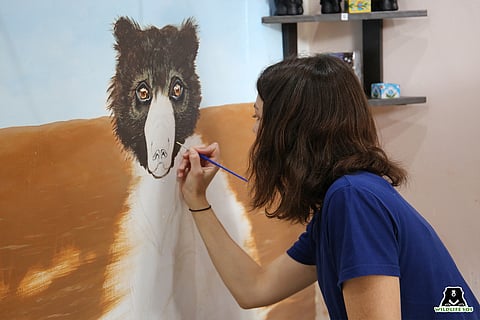
Wall painting activity at ABRF (Agra Bear Rescue Facility) Supplied
Further south, the Nilgiri Biosphere Reserve presents another conservation challenge. Spread across Tamil Nadu, Kerala, and Karnataka, the landscape has witnessed increasing habitat fragmentation and conflict between people and wildlife.
Wildlife SOS’s Nilgiri Conservation Project combines ecological research with community engagement. Camera traps, GIS mapping, and habitat surveys help identify conflict hotspots, while plans for research facilities, rescue vehicles, and training programmes aim to strengthen long-term conservation capacity across the region. Instead of reacting to conflict after it occurs, the project seeks to understand why it happens in the first place.
The organisation has adopted a similar approach in Chhattisgarh, where expanding elephant ranges have brought herds into closer contact with villages. Through its Human-Elephant Conflict Mitigation Programme, matriarch elephants have been fitted with radio collars that allow forest officials and trained volunteers to monitor herd movements. Across eight villages, the Haathi Mitra Dal, comprising 94 local volunteers, relays early warnings that help communities prepare for approaching elephants, reducing the likelihood of conflict for both people and animals.
In Jammu & Kashmir, Wildlife SOS is working to protect the critically endangered Himalayan brown bear after research found the animals feeding at open garbage dumps. Through its “Be Bear Safe” initiative, the organisation promotes bear-proof waste bins and better waste management practices, working with local communities to reduce conflict and keep bears away from human settlements.
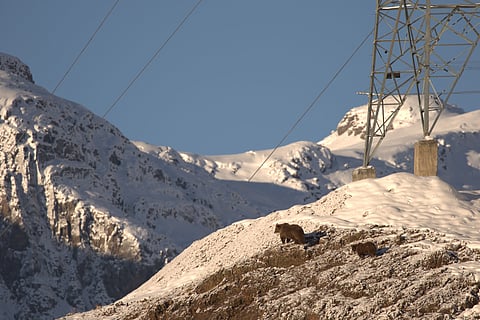
Himalayan brown bears in the upper reaches of the Dras valley Copyright: Niazul Hassan Khan
Fighting Invisible Threats
Not every conservation battle unfolds in forests.
Some begin in illegal wildlife markets.
Since its inception in 1995, Wildlife SOS’s anti-poaching intelligence network, Forest Watch, has worked with enforcement agencies to disrupt trafficking networks dealing in tigers, leopards, elephants, tortoises, reptiles, and birds. The programme has contributed to the repatriation of more than 50 Indian star tortoises smuggled to Singapore and supported investigations that led to the conviction of wildlife poachers in Tamil Nadu.
The organisation’s emergency rescue network also tackles everyday threats that rarely make headlines. Its 24-hour helplines receive hundreds of calls each month involving snakes, birds, reptiles, and mammals stranded in homes, factories, and urban neighbourhoods. Rescue teams also work against practices such as illegal snake charming and the cruel stitching of snakes’ mouths, highlighting forms of wildlife exploitation that often go unnoticed.
Every rescue, Satyanarayan says, becomes an opportunity to educate.
“People are often unaware of how a frog, a snake, or even a butterfly can serve as an indicator of environmental health. Their presence reflects the well-being of an ecosystem, while their absence can signal troubling trends that may ultimately affect human communities as well.”
Rethinking Wildlife Travel
As wildlife tourism evolves, so do travellers’ expectations.
More visitors are looking beyond safari sightings, seeking experiences that contribute to conservation rather than consume it. Wildlife SOS’s volunteer programme reflects that shift.
“Wildlife volunteering has the potential to fundamentally transform how people engage with conservation. Volunteering creates a much deeper relationship by allowing people to understand the realities of rescue, rehabilitation, animal welfare and conservation management," says Geeta Seshamani, co-founder and secretary of Wildlife SOS.
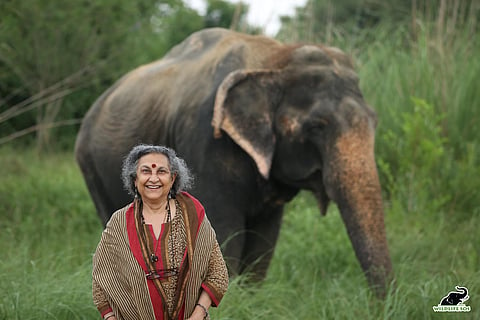
Geeta Seshamani, co-founder and secretary of Wildlife SOS Supplied
Operating from its elephant and sloth bear rescue centres, the programme welcomes students, professionals, researchers and wildlife enthusiasts from around the world. Instead of offering close encounters with animals, volunteers assist with food preparation, enrichment activities, enclosure maintenance, gardening and habitat upkeep while learning from veterinarians, caregivers, and conservationists.
Direct interaction with animals is deliberately avoided.
“The volunteering programme offers participants a unique opportunity to gain first-hand insight into wildlife rescue, rehabilitation, and animal welfare,” says Satyanarayan. “While volunteers do not directly handle animals, they play an important role in supporting the welfare routines that keep rescued elephants and sloth bears physically and mentally stimulated.”
The programme can be applied for via a simple application form on their website, or people can directly reach out at volunteer@wildlifesos.org.
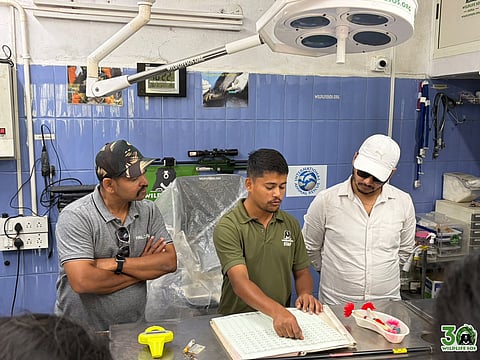
Volunteers are educated about the treatments of our rescued animals Supplied
That distinction has become increasingly important as travellers question experiences marketed as ethical.
Wildlife SOS has also extended its work into advocacy through its “Refuse to Ride” campaign, launched in 2018 to discourage elephant rides and other wildlife attractions that depend on captive animals. The campaign draws attention to phajaan, or the “breaking of the spirit,” a brutal training process in which young elephants are separated from their mothers and subjected to prolonged physical and psychological abuse until they become submissive enough to carry tourists. Alongside its Begging Elephant Campaign, which rescues elephants exploited on streets, in temples, and in wedding processions, Wildlife SOS has partnered with the Responsible Tourism Society of India to encourage travellers to choose experiences that put animal welfare before entertainment.
“The most important distinction is whether animal welfare and conservation outcomes genuinely come before visitor entertainment,” Satyanarayan says. “If animals are being ridden, made to perform, used for constant photo opportunities, or subjected to excessive human interaction, those cannot be seriously deemed as ethical or responsible.”

Miss Great Britain with Refuse to Ride card Supplied
The lesson extends well beyond rescue centres.
Responsible wildlife travel is no longer defined simply by where one goes, but by what one’s presence supports. It may involve spending a morning understanding how abandoned wells are saving leopards, learning why a village chose coexistence over conflict, or watching a rescued elephant recover without asking it to perform for a camera.
Those experiences rarely come with dramatic photographs or viral moments. They leave behind something more lasting: an understanding that conservation is not built on extraordinary encounters with wildlife, but on ordinary people making choices that allow wild animals to remain exactly that.
And perhaps that is the most meaningful journey a wildlife traveller can take.
FAQs
Q1. What is Wildlife SOS?
Wildlife SOS is one of India's largest wildlife conservation organisations. It rescues, rehabilitates and protects elephants, sloth bears, leopards, reptiles and other wildlife while working closely with local communities and forest departments.
Q2. How do local communities contribute to wildlife conservation in India?
Communities play a key role by reporting wildlife emergencies, participating in conflict mitigation programmes, protecting habitats, adopting safer farming practices and developing alternative livelihoods that reduce dependence on wildlife exploitation.
Q3. What is the Elephant Conservation and Care Centre?
Located in Mathura, Uttar Pradesh, the Elephant Conservation and Care Centre is a specialised rescue and rehabilitation facility that provides long-term veterinary treatment, hydrotherapy, physiotherapy and enrichment for rescued elephants.
Q4. What is the Manikdoh Leopard Rescue Centre?
The Manikdoh Leopard Rescue Centre in Maharashtra cares for injured, orphaned and conflict-affected leopards while supporting research, public awareness and community-led coexistence initiatives.
Q5. How can travellers support wildlife conservation in India?
Travellers can support conservation by choosing ethical wildlife experiences, volunteering with recognised conservation organisations, avoiding attractions that exploit animals, and supporting community-led conservation initiatives.
Published At: