Every year, when September gives way to October, I begin looking for signs of Durga Puja in the air. In Siliguri, my hometown, the arrival of the festival is marked by more than the changing season, the first glimpses of pandals taking shape, or the sound of dhaak rehearsals drifting through neighbourhoods. It begins with the scent of shiuli flowers scattered across the ground at dawn, the fragrance of incense curling through prayer rooms, and the promise of steaming khichuri being served at community pandals. Long before I reach an idol of Goddess Durga, these familiar smells tell me that Pujo is almost here.
The Fragrance Of Durga Puja: The Smells That Take Me Home To Siliguri
Durga Puja has a distinctive scent. I revisit the fragrances of shiuli flowers, smoky dhuno, and steaming khichuri through my memories of Siliguri

Advertisement
Having grown up in North Bengal, I have come to associate the festival with a collection of fragrances that return every autumn. Some are delicate, others earthy or smoky, and a few are impossible to separate from the food and festivities. Together, they form a sensory map of my childhood, connecting the changing streets of Siliguri with the traditions that Bengalis carry wherever they go.
Shiuli Flowers And The First Hints Of Autumn
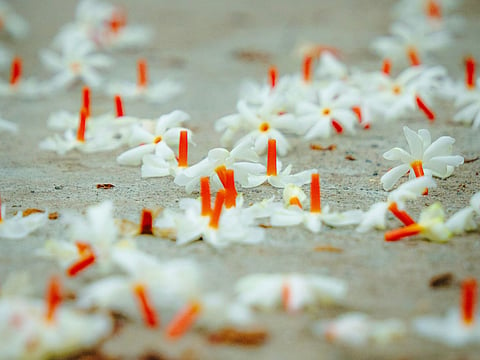
Shiuli flowers, also known as parijat or night-flowering jasmine, are among the first signs of Durga Puja in Bengal Pexels
For me, the scent of Durga Puja begins with shiuli, also known as parijat or night-flowering jasmine. Its small white petals and orange stalks are familiar sights across Bengal during autumn. The flowers bloom at night and fall by morning, often carpeting the ground beneath trees before the day begins. Their delicate, slightly sweet fragrance is among the earliest seasonal reminders that the festivities are approaching.
In Siliguri, the sight of shiuli flowers brings back memories of mornings when the air felt cooler and the neighbourhood seemed to be preparing for something special. The flowers are gathered for worship, placed in offering plates, and used in household rituals. Their association with Durga Puja goes beyond their appearance; they signal the transition from the monsoon to the season Bengalis eagerly anticipate. Before the city is filled with lights, music, and crowds, shiuli offers the first sensory clue that Maa Durga will soon be welcomed home.
Advertisement
The Smoky Fragrance Of Dhuno And Jhuna
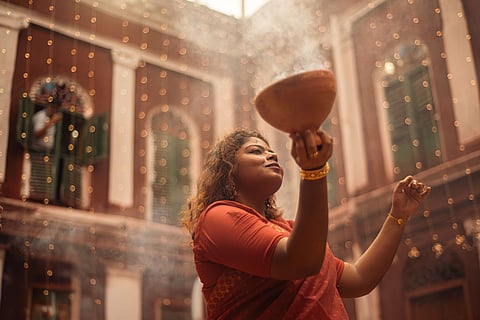
Dhuno and aromatic resins lend Durga Puja pandals their distinctive smoky fragrance during rituals and aarti Pexels
If shiuli marks the beginning of Pujo, the fragrance of dhuno gives it much of its spiritual character. Inside pandals and homes, the burning resin produces a distinctive smoky aroma that mingles with the scent of flowers, the sound of conch shells, and the beats of the dhaak. For me, this is one of the most recognisable smells of the festival, evoking the moments when worshippers gather before the goddess for anjali.
The material traditionally called dhuno in Bengali is often associated with aromatic tree resins, including dammar obtained from trees such as those belonging to the Shorea genus. In Odisha, a related ritual fragrance is known as jhuna. Frankincense, another aromatic resin, is also used in incense traditions, although it comes from Boswellia trees, and is botanically distinct from dammar.
When these resins are heated over charcoal, they release a warm, woody fragrance with hints of sweetness and citrus. The smoke lends the air inside a pandal a distinctive character, particularly during aarti and other rituals. In some parts of Bengal, dhunuchi naach, performed with earthen incense burners, adds movement to the ceremony. In Siliguri, too, the combination of smoke, worship, and percussion is an essential part of how I remember Pujo.
Advertisement
Flowers, Incense, And The Fragrance Of Worship
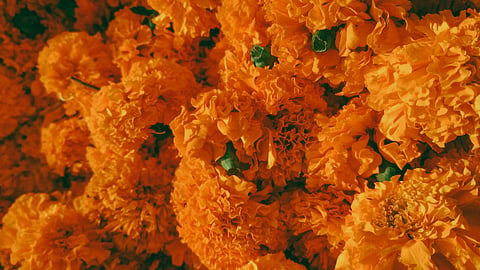
Marigold, hibiscus, jasmine, and sandalwood contribute to the familiar fragrances associated with worship during Durga Puja Pexels
The scent of dhuno rarely exists on its own. Around the Durga idol, garlands of marigold, hibiscus and jasmine bring their own fragrances to the mix. Hibiscus holds particular significance in Hindu worship, while marigolds are widely used to decorate altars and pandals. Their colours brighten the surroundings, and their scent mingles with the incense and the fragrance of fresh offerings.
Sandalwood adds another dimension. Used in religious rituals, including as a paste applied during worship, it has a warm, woody aroma that many associate with prayer and sacred spaces. Depending on the materials used at a particular pandal, the air may carry several fragrances at once, from fresh flowers to burning incense, and the earthy smell of materials used in the decorations.
These smells are part of what makes visiting pandals such a sensory experience for me. Each neighbourhood in Siliguri has its own arrangements, themes, and traditions, but the familiar fragrance of worship connects them. Even when the idols and decorations change from year to year, the combination of flowers, incense, and ritual remains recognisable.
Advertisement
The Irresistible Aroma Of Bhog
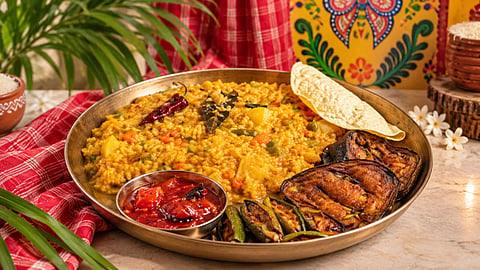
Khichuri, vegetables, chutney, and payesh are among the traditional offerings that make bhog an integral part of Durga Puja Pexels
Durga Puja is also a festival of food, and its fragrances are inseparable from the memories I associate with it. At community pandals, the smell of freshly prepared bhog often travels beyond the cooking area, drawing people towards the rows where meals are served. Khichuri, made with rice, lentils, and spices, is a familiar part of the offering, often accompanied by vegetables, chutney, and payesh.
The aroma comes from the ingredients as much as the cooking: rice and lentils simmering together, spices releasing their fragrance, and ghee adding richness. Once the food is served, the smell of a warm meal blends with the sounds of conversation and the steady movement of people gathering to eat.
Outside the pandals, Siliguri's streets offer their own collection of festival smells. Freshly fried kochuris, jalebis bubbling in syrup, and plates of chaat seasoned with spices and tangy chutneys become part of the pandal-hopping experience. The fragrances are different from those inside the place of worship, but they belong to the same celebration. Pujo moves between devotion and indulgence with ease, and its food is one of the most enduring ways I experience that connection.
Advertisement
The Smell Of Pujo That Stays With Me
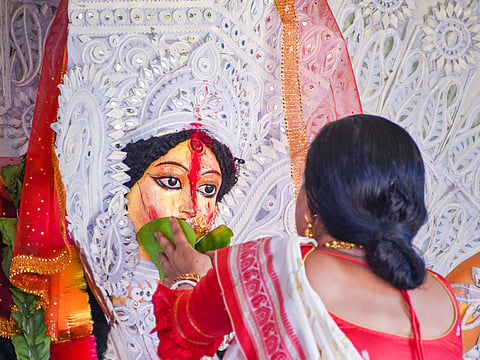
From incense-filled pandals to the aroma of street food, Durga Puja engages the senses and evokes memories of home Pexels
As the festival reaches Dashami, the fragrances that have filled the preceding days begin to acquire a different meaning. The flowers wilt, the pandals prepare to close, and the idols are taken for immersion. In the days that follow, the city returns to its familiar pace, but certain smells continue to bring the celebration back to me.
A faint trace of incense can recall the moments spent before the goddess. The fragrance of shiuli can transport me to an autumn morning in Siliguri, while the aroma of khichuri brings back the warmth of a community meal. These associations are personal, yet they are also part of a wider Bengali experience in which the senses help preserve traditions across generations.
For me, the fragrance of Durga Puja is not one particular scent. It is the combination of shiuli on the ground, dhuno rising through the pandal, sandalwood at the altar, flowers offered to the goddess, and food being prepared for everyone who arrives. Each has its own place in the celebration, and together they mark a season I look forward to every year.
Advertisement
When the festivities end, I carry these smells with me, even after returning to everyday routines. They remind me of home, of Siliguri, and of the anticipation that builds each autumn. The lights may come down and the pandals may disappear, but the fragrances remain in memory, waiting to return with Maa Durga next year.
FAQs
1. What are the most common smells associated with Durga Puja?
Shiuli flowers, dhuno, sandalwood, fresh flower garlands, bhog, and festive street food are among the characteristic fragrances of Durga Puja.
2. Why are shiuli flowers associated with Durga Puja?
Shiuli flowers bloom during autumn and are collected for worship. Their delicate fragrance is closely associated with the arrival of Durga Puja in Bengal.
3. What is dhuno used for during Durga Puja?
Dhuno is an aromatic resin burned during religious rituals. Its distinctive smoke and woody fragrance are characteristic of many Durga Puja pandals.
4. What is the difference between dhuno and frankincense?
Dhuno is commonly associated with aromatic resins such as dammar, while frankincense comes from Boswellia trees. Both are used in incense traditions.
Advertisement
5. What foods are associated with the aroma of Durga Puja?
Khichuri, payesh, chutney, kochuris, jalebis, and chaat are among the foods whose aromas contribute to the festive atmosphere.
Published At: