Bhutan, also called Druk Yul, translates to the “Land of the Thunder Dragon” in Dzongkha, the country’s official language. Tucked between India and China yet fiercely protective of its identity, Bhutan remains one of the few destinations in the world where ancient traditions, pristine nature, and a deeply rooted philosophy of wellbeing coexist effortlessly. As travel trends shift towards meaningful experiences, conscious travel, and connection with nature and culture, Bhutan stands out as a place where journeys feel transformative rather than transactional.
This Himalayan Kingdom Belongs On Your 2026 Bucket List
From Himalayan landscapes to spiritual traditions and its unique Gross National Happiness model, explore why Bhutan should be on your 2026 travel list

Advertisement
If you’re planning your travel wishlist for 2026, here are five compelling reasons Bhutan deserves a top spot.
5 Reasons To Visit Bhutan In 2026
The Spectacular Himalayan Landscapes
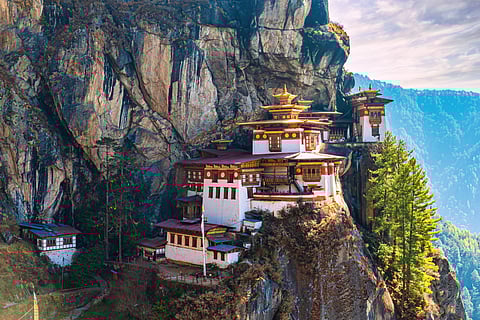
Tiger’s Nest Monastery, Paro, Bhutan Shutterstock
Bhutan’s landscapes feel like they've been carved with intention. The moment you begin ascending towards Paro, layers of emerald valleys, terraced fields, and snow-wrapped Himalayan peaks set the tone for what’s ahead. Over 70 per cent of the country is covered in forests, making the land endlessly lush, broken only by monasteries situated on cliffs, swinging suspension bridges, and rivers that rush through narrow gorges.
Whether you’re trekking along the famed Druk Path, wandering through the villages of Punakha, or catching sunrise over the Black Mountains, Bhutan’s scenery carries an untouched quality. Even its high-altitude wilderness, like the regions around Laya and the Snowman Trek, remains one of the last true frontiers for seasoned trekkers seeking solitude and grandeur.
Home To Some Of The Most Iconic Monasteries
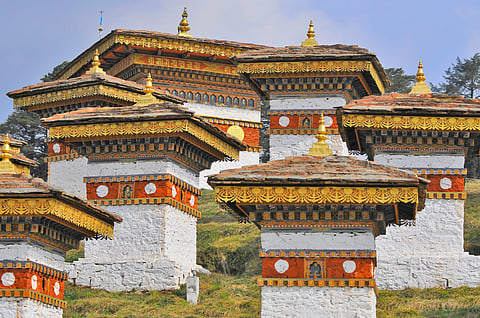
The 108 memorial chortens at Dochula Pass, Bhutan Shutterstock
Bhutan’s monasteries are living, breathing centres of community, spirituality, and identity. The most iconic, of course, is Taktsang Monastery or Tiger’s Nest, perched 3,000 feet above the Paro Valley. The climb up feels like a pilgrimage: winding forest trails, prayer flags fluttering in the wind, and the dramatic reveal of the monastery clinging to a cliffside.
Advertisement
Additionally, the riverside calm of Punakha Dzong, the fortress-like presence of Trongsa Dzong, the cliffside serenity of Gangtey Monastery, and the lesser-visited Choekhor Valley temples each offer different shades of Bhutan’s spiritual heritage. Many monasteries host annual festivals like Tsechus known for masked dances, rituals, and blessings that give travellers an intimate glimpse into Bhutanese beliefs and customs.
Rich Culture And Spiritual Traditions
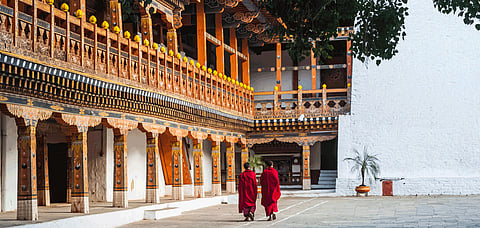
Monks in a monastery in Bhutan Shutterstock
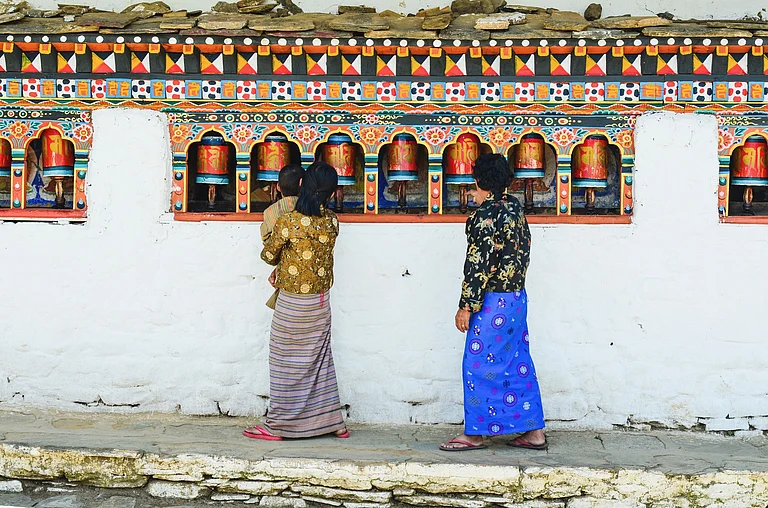
Bhutan remains one of Asia’s strongest cultural preservationists, where ancient belief systems guide everyday life. The country’s Buddhist philosophy is not just practised; it’s lived. You’ll see it in the way locals spin prayer wheels on their morning walk, in the colourful prayer flags strung across mountain passes, in the wooden houses painted with symbolic motifs, and in the warmth with which Bhutanese people share stories of their ancestry and rituals.
Festivals are central to the country’s cultural heartbeat. From the Paro and Thimphu Tsechus to regional celebrations in Haa, Bumthang, or Wangdue, each festival blends spirituality with community celebration. Traditional archery matches, weaving clusters, folk music, and fiery local cuisine, from ema datshi to hot-stone baths, enhance the experience further.
Advertisement
Environmentally Sustainable
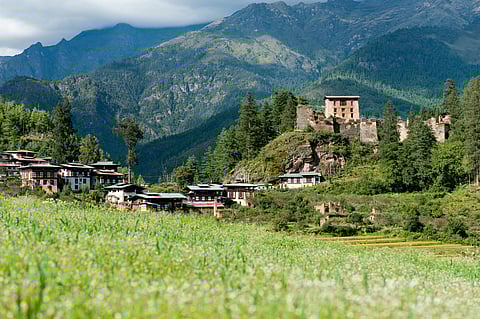
Drukgyel Dzong in Bhutan Shutterstock
Sustainability in Bhutan isn’t a trend; it’s a national mandate. The country is not just carbon neutral but carbon negative, absorbing more carbon than it produces. More than 50 per cent of its land area is legally protected, and the national forest cover is constitutionally required to never drop below 60%.
Bhutan’s “High-Value, Low-Volume” tourism policy ensures its natural and cultural heritage remain unspoiled, favouring mindful, responsible travellers. Trekking routes like the Trans Bhutan Trail have been restored with community involvement, encouraging rural development without compromising ecological balance. In a world grappling with overtourism and ecological decline, Bhutan stands as a model for what sustainable travel can be.
Happiness Is A Policy Here
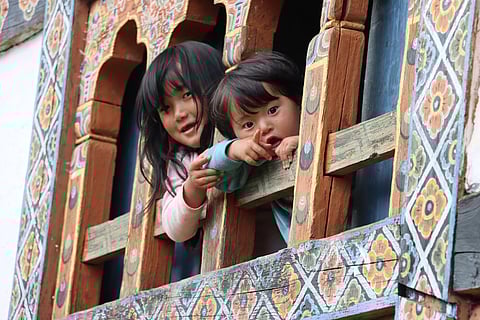
Two curious children peek from a wooden window, capturing the gentle charm of daily life in Paro, Bhutan Shutterstock
The most unique aspect of Bhutan is its philosophy of Gross National Happiness (GNH), which is a governance model rooted in holistic wellbeing rather than material wealth. This outlook permeates daily life: the pace is slower, the priorities clearer, and the societal values centred around compassion, balance, and community.
Advertisement
Travellers often speak of Bhutan’s “quiet magic”; not the kind found in dramatic landscapes alone, but in the feeling of being in a country that measures success through collective happiness. Whether you're sipping butter tea in a farmhouse, chatting with monks, or simply breathing in the mountain air, that sense of calm and clarity is unmistakable.
How To Get There
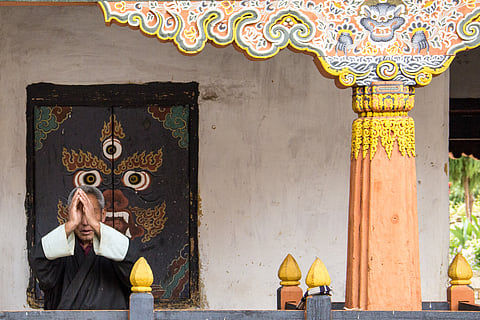
An old man offering his prayers Shutterstock
Travelling to Bhutan from India is convenient and accessible by both air and road. The easiest way is to fly into Paro International Airport, the country’s primary gateway.
For travellers who prefer crossing by land, Bhutan can be entered through three border points shared with India: Phuentsholing, the most popular and well-connected), Gelephu, and Samdrup Jongkhar. These allow smooth overland access from West Bengal and Assam.
Indian citizens do not require a visa to visit Bhutan. However, travellers must carry a valid passport, with at least six months’ validity, or a voter ID card, based on which an entry permit is issued on arrival at the airport or at any land border. A Sustainable Development Fee (SDF) of INR 1,200 per person, per night is applicable and must be paid prior to travel or upon arrival, depending on the mode of entry. Travel insurance is recommended and may be required by tour operators when organising itineraries.
Advertisement
FAQs
1. Why should I visit Bhutan in 2026?
Bhutan offers pristine Himalayan landscapes, iconic monasteries like Tiger’s Nest, rich Buddhist culture, sustainable tourism practices, and the unique philosophy of Gross National Happiness — making it one of the most meaningful destinations for 2026.
2. What is the best time to visit Bhutan in 2026?
The ideal months are March–May and September–November, when the weather is clear, festivals take place, and trekking routes are at their most scenic.
3. Do Indian travellers need a visa to visit Bhutan?
Indian travellers do not need a visa but must carry a valid passport or voter ID to obtain an entry permit. The Sustainable Development Fee (SDF) of INR 1,200 per night applies.
4. What are the top places to visit in Bhutan?
Major highlights include Paro (Tiger’s Nest), Thimphu, Punakha Dzong, Bumthang Valley, Gangtey, Trongsa, and scenic trekking routes like the Druk Path and Trans Bhutan Trail.
Advertisement
5. Is Bhutan a good destination for trekking?
Absolutely. Bhutan offers world-class trekking routes such as the Druk Path, Jomolhari Trek, Snowman Trek, and Laya–Gasa Trail, ranging from moderate to extremely challenging.
Published At: