"The first thing you need to understand about Matakana," Peter, my guide from Auckland & Beyond Tours, told me as we headed north from Auckland, "is that it isn't trying to compete with South New Zealand's famous mountain landscapes."
Matakana: How A Farmers' Market Changed The Tourism Game For An Old Lumber Village
In Matakana, one simple idea transformed an old lumber village into one of New Zealand's most creative and sustainable tourism destinations

Advertisement
Outside the car window, honesty boxes overflowing with citrus swept past.
Matakana's success isn't built on scenery, unlike many of New Zealand's better-known destinations. Instead, it was shaped by a series of small, sustainable decisions that gradually transformed a sleepy rural settlement into one of the country's most successful tourism stories.
From Timber Village to Destination
In many ways, Matakana is a case study in how one good idea can spark another, and then another, until an entire destination reinvents itself.
Back in 1842, Matakana was little more than a timber village clustered around the tidal Matakana River. Farmers, orchardists and gardeners supplied produce to Auckland, while timber from riverside mills was shipped south. People came here to work, trade and move goods. Few could have imagined that, nearly two centuries later, travellers from around the world would be making special trips to visit.
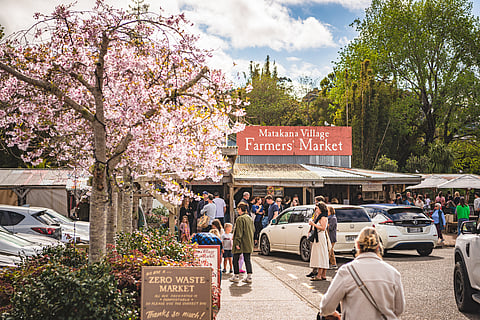
The market is not simply a place to shop. It is the reason Matakana reinvented itself Matakana Village Farmers Market
The turning point arrived in 1992 when local businessman Richard Didsbury purchased the historic mill site overlooking Matakana Wharf. His vision was to create a community hub centred on local producers, artists and entrepreneurs.
Advertisement
From that vision emerged the Matakana Village Farmers’ Market. From the market came almost everything else.
Farmers’ Market as the Catalyst for Change
I arrived on a Saturday morning when the village square was alive with the aromas of fresh bread, roasting coffee and seasonal produce. Stalls overflowed with artisan cheeses, handmade chocolates, organic vegetables, local honey and handcrafted products.
But the market is not simply a place to shop. It is the reason Matakana reinvented itself.
The weekly market became an incubator for local businesses, giving producers a place to test ideas and build loyal followings. As visitors began arriving in larger numbers, cafés, galleries, boutiques, restaurants and wine bars followed. What was once a quiet rural town gradually evolved into one of New Zealand’s most compelling examples of sustainable tourism.
Global Art and Immersive Sculpture Gardens
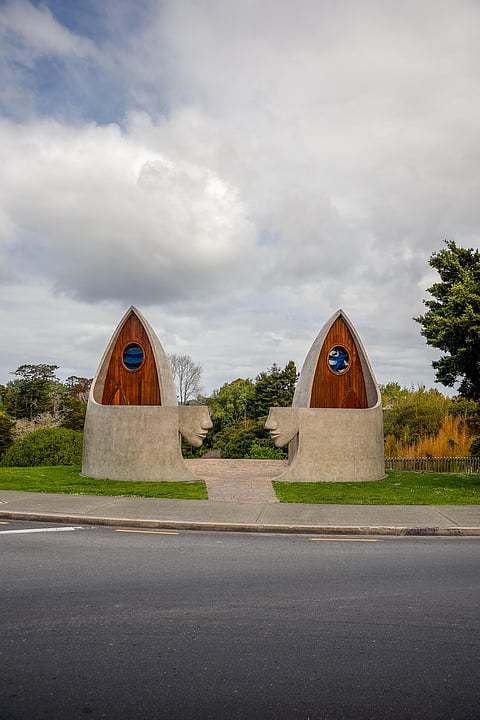
Public toilets in Matakana are more like sculptural art pieces than simple restrooms Noah Barclay
"It sounds strange, but you've got to see the public toilets," Peter laughed.
Advertisement
It was hard to miss them. I had spotted the structure long before realising what it was.
Rising beside the roundabout, it looked like a cluster of weathered fishing boats that had drifted ashore and settled permanently in the village. Curved timber ribs arched skyward, rust-coloured and sculptural. From another angle, they transformed into giant carved wooden faces, as if silently watching passers-by.
Art has become Matakana’s second focal point, after food.
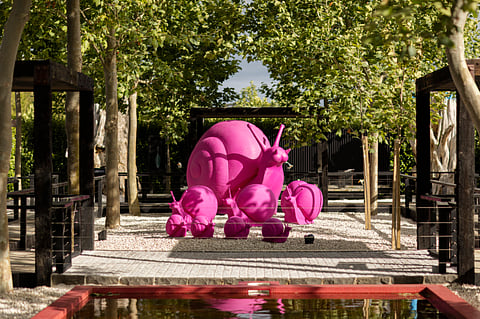
The collection includes pieces by Picasso, Chagall, Rodin, Chihuly and Cézanne Sam Hartnett
And Sculptureum is the perfect place to see why.
Created by Auckland collectors Anthony and Sandra Grant, Sculptureum unfolds across a series of galleries and sculpture gardens containing more than 800 artworks and whimsical installations. Giant pink snails emerge unexpectedly from the landscape. Around another corner, works by some of the world’s most celebrated artists are on display.
The collection includes pieces by Picasso, Chagall, Rodin, Chihuly and Cézanne, alongside contemporary works from across the globe. Outside, 1.4 kilometres of sculpture trails wind through meticulously landscaped gardens. At the centre of the experience sits Rothko Restaurant, where open-fire cooking and globally inspired flavours draw almost as many visitors as the art itself.
Advertisement
If Sculptureum celebrates international art, nearby Brick Bay showcases contemporary New Zealand creativity infused with Māori culture.
Wine, Art and Native Regeneration
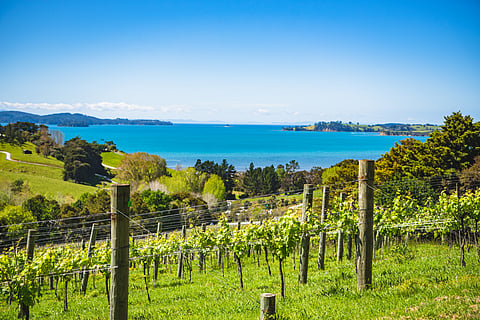
One of the country’s pioneering wineries, Brick Bay was among the first vineyards to plant Pinot Gris in New Zealand Thomas Klockseth
One of the country’s pioneering wineries, Brick Bay was among the first vineyards to plant Pinot Gris in New Zealand back in 1995. Today, however, many visitors arrive for something beyond the wine. Its two-kilometre Sculpture Trail meanders through vineyards, olive groves, lakes and native forest, featuring more than 50 large-scale artworks.
The sculptures are available for purchase, though some of the price tags made me smile nervously.
The trail serves another purpose, too. It has become an important conservation space where native bush thrives among kahikatea, pūriri, nīkau palms and kauri trees. Kererū, tūī, kākā and pīwakawaka dart between the branches.
“Bring back the native,” I realised, has become something of a Matakana buzz phrase, or, as a matter of fact, of New Zealand.
Small Bees, Big Ecological Change
Advertisement
At Beetopia, a honey-tasting experience set amid regenerating forest, founder Grass Esposti proudly showed me what was once bare land.
"Six years ago, there were hardly any trees here," she said.
Today, young mānuka and kānuka forests stretch across the property.
"We planted 10,000 native trees," she told me. "My grandson's job was taking every single plant out of its pot."
As we walked through the growing forest, she gently held up a tiny native bee. "Everyone talks about honeybees," she said. "But for New Zealand's native trees, these little bees are perfect. They're exactly the right size for the tiny flowers of mānuka and kānuka."
That relationship between local ecology and local enterprise seems to underpin much of Matakana’s success.
Matakana’s Creative Ecosystem and Lasting Identity
Creativity flows through the village in countless other ways. At Clay Friends, visitors can try pottery wheel lessons, ceramic painting and hand-building workshops.
Advertisement
The village’s growing popularity has also fuelled a thriving events calendar. During the summer, festivals and concerts bring thousands of visitors to the region. Hidden Valley Festival attracts music lovers from across the country, while events such as Into The Vines blend food, wine and live entertainment into classic Kiwi summer weekends.
Yet despite all its growth, Matakana has never lost sight of what made it special in the first place.
More than three decades after Richard Didsbury imagined a different future for an old mill site, the farmers’ market remains the beating heart of the village.
Everything else—the vineyards, sculpture trails, pottery studios, restaurants, honey experiences, galleries, festivals and conservation projects—grew from that original idea.
As I left Matakana, I found myself thinking about how rare that is. Many destinations spend fortunes trying to create an identity. Matakana’s greatest achievement was never creating one. It simply allowed one to grow.
Advertisement
How To Get There
Air New Zealand offers connections from many major cities across Asia to Auckland. Several tour companies, such as Auckland & Beyond Tours, offer small-group, luxury, guided day trips from Auckland.
FAQs
What is Matakana best known for?
Matakana is best known for its vibrant farmers’ market, creative arts scene, boutique wineries, and strong focus on sustainability and local enterprise.
When did the Matakana Farmers’ Market begin?
The Matakana Village Farmers’ Market emerged in the early 1990s following the redevelopment of a historic mill site into a community hub.
What can you do at Sculptureum?
Sculptureum features extensive sculpture gardens, gallery spaces with international artworks, and landscaped walking trails, alongside dining at Rothko Restaurant.
Is Brick Bay only a winery?
No. While Brick Bay is a working vineyard, it is also known for its Sculpture Trail, conservation areas, and native bush regeneration project.
Why is Matakana considered unique?
Matakana is often seen as unique because its identity grew organically from local producers and artists, rather than being manufactured as a tourism destination.
Advertisement
Published At: