Lacemaking in Eastern Europe is a centuries-old craft recognised by UNESCO as part of the Intangible Cultural Heritage of Humanity. In Croatia, it is not a single tradition but a set of regional practices still maintained in places such as Pag, Lepoglava, and Hvar. Each has its own techniques and motifs, worked in either needle or bobbin lace. Much of it is made in a restrained “white-on-white” style, valued less for variation in colour than for the precision of the stitching and the continuity of knowledge behind it. Hvar’s agave lace is the most unusual example: produced only by Benedictine nuns, it is made from fibres extracted from agave leaves, a method that is both laborious and uncommon elsewhere in Europe.
Croatian Lace: How Regional Craft Traditions Continue Through Handmade Work
Made in small pockets across Croatia, lace remains a hand-crafted tradition rather than a preserved display craft. From Pag’s fine geometric needlework to Hvar’s agave fibre lace, each region maintains its own methods, now recognised by UNESCO

Advertisement
For travellers, these traditions are still visible in specific places rather than abstract heritage displays. Small museums, workshops, and seasonal exhibitions in Pag, Lepoglava, and Hvar offer a closer look at the work, and in some cases the chance to buy directly from makers.
What Defines Croatian Lace
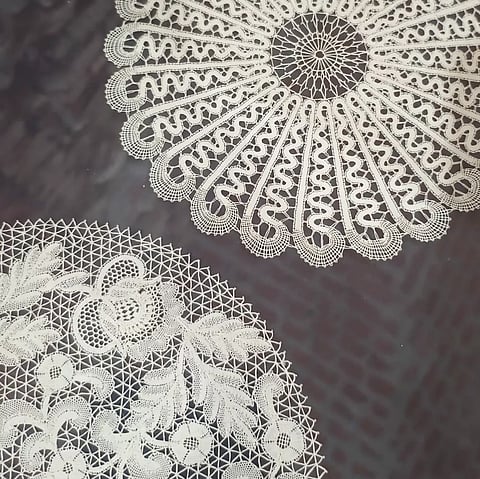
UNESCO listed Croatian lacemaking in 2009 croatian_lace/Instagram
UNESCO listed Croatian lacemaking in 2009, but in practice it isn’t something locked away in heritage displays. In parts of the country where it still exists, it sits alongside everyday life—quietly maintained, mostly in communities where it has long been part of women’s work.
Lacemaking in Croatia was documented from at least the 15th century, though its origins likely lie in oral tradition. It was never taught formally, but instead passed through observation in households and convents. What survives now is uneven rather than uniform—small regional ways of working that never fully disappeared.
A single piece can take weeks or longer, depending on the pattern. Small differences in tension or spacing shift the outcome as it develops, so even when the design is the same, the result never quite repeats.
Advertisement
Styles Of Croatian Lace
There are three distinct, historic, and active centers of lace production in Croatia:
Pag Lace (Paška čipka)
Location: The town of Pag on the island of Pag.
Description: Known as "needle-point" lace, this type is made by older women using a needle to embellish a spider-web pattern with geometric motifs. It is highly durable and can be washed, often used for ecclesiastical garments, tablecloths, and clothing.
Where to find it: The Benedictine Monastery of St. Margarita in Pag is famous for preserving and producing this lace.
Lepoglava Lace
Location: Lepoglava in northern Croatia.
Description: This is a "bobbin" lace made by braiding thread wound on spindles or bobbins. It often features floral and animal motifs.
Where to find it: The International Lace Festival held in Lepoglava every September celebrates this art. The lace is often sold at local village fairs.
Hvar Aloe Lace
Advertisement
Location: The town of Hvar on the island of Hvar.
Description: This unique lace is made exclusively by Benedictine nuns in the town of Hvar. Thin, white threads are obtained from the core of fresh agave leaves.
Where to find it: The Benedictine Monastery in Hvar Town. The lace is sold on the island as a signature souvenir, though the nuns rarely leave the convent walls.
Where To Purchase And See Heritage Lace
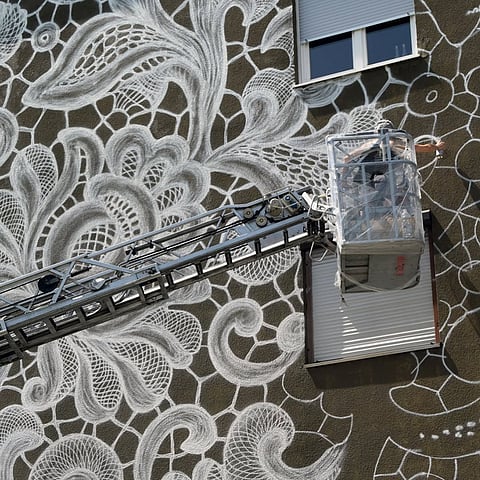
A mural based on Croatia's Lepoglava lace motif, painted for the Sisak Festival in Croatia nes.nespoon/Instagram
Pag Town Shops: Local women sell lace in the narrow streets of the old town of Pag.
Hvar Benedictine Convent: Visitors can see the nuns at work on aloe lace.
Lepoglava Festival: September's lace festival is the best time to see and buy this variety.
Museums and Gift Shops: High-quality lace is sold throughout Croatia in ethnographic museums and specialised handicraft shops, particularly along the Dalmatian Coast.
Advertisement
Galleries: Visit the Pag Lace Gallery in Pag's city centre to see high-quality, authentic examples.
FAQs
What should authentic Pag lace look like?
It uses extremely fine thread and should show tight, precise patterns that hold their structure without looking loose or uneven.
Why is Croatian lace expensive?
Most pieces take weeks or months to make by hand, which limits production and raises the cost.
What does “white gold” mean in relation to lace?
It’s a nickname for Pag lace, referring to its rarity, value, and the labour involved in making it.
How can you tell good-quality lace?
It should lie flat without twisting, with clean, even structure and no distortion in the pattern.
Are there signs that lace might not be authentic?
Very low prices are a warning sign, as genuine handmade pieces are time-intensive and rarely cheap.
Where can you buy or see Croatian lace?
It is commonly sold at summer markets in coastal towns, where local makers often display traditional crafts.
Advertisement
Published At: