The future of exceptional luxury travel will not be measured by what guests see, but by what they no longer have to think about. For decades, luxury travel was defined by abundance. Space, opulence and even excess were the markers of an aspirational trip. Luxury was meant to be visible: large suites, grand lobbies, haute cuisine, generous amenities and an unmistakable display of exclusivity. That definition is changing. The next chapter of distinguished travel will be shaped by something far less conspicuous, yet far more integral to the experience.
The Rise Of Invisible Infrastructure In Travel
As travellers grow more discerning, the next measure of luxury may be the systems guests never notice: artificial intelligence, data and human judgement working quietly in the background

Advertisement
Digital platforms have made it easier than ever to discover unique destinations, and this has produced a growing cohort of discerning travellers. As their options multiply, these travellers will define exceptional travel as something that invites discovery while also reducing decision fatigue and anticipating their personal preferences. This traveller will value experiences that are seamless, both logistically and behaviourally. Such experiences are best supported by a quiet operational ecosystem in which artificial intelligence, data and human judgement work together in the background, so that every interaction feels instinctive, responsive and effortless. The shift began with modular changes to hotel operations. It is now reshaping hospitality from the inside out.
Efficiency The Guest Never Sees

The view from the Tamara Coorg's balcony The Tamara
In my experience of building and operating both luxury and mid-segment properties, I have seen how data-driven water conservation systems can adjust valve and shower pressure, detect micro leaks in real time and track water use across a property to pinpoint waste. Measured against usage baselines, these systems helped us save as much as 10 lakh litres of water per day at a single property.
Advertisement
Much of this comes from simple choices rather than sophisticated technology. At our property in Coorg, rainwater harvesting is the main source of water, and borewell supply is only a backup, accounting for about 2% of consumption in FY 2025–26. Taps are fitted with aerators, public areas use sensor-operated taps, and treated water is reused for gardening. The land is also crossed by four natural streams, two perennial and two seasonal. We leave their flow untouched and keep access open to the local community. We also built invisible waste cycles into our kitchens through data-driven portion control and on-site composting. The compost feeds organic fertiliser back into the property’s landscaping, and the surplus is donated to local farmers.
LED lighting and sensor-activated switches have long been part of our infrastructure, both to conserve energy and to protect light-sensitive wildlife at our nature-centric resorts. These measures are now evolving into more advanced systems. Hotels can use infrared sensors to detect occupancy patterns, energy management software to monitor peak consumption and automated controls to dim lighting in underused areas.
Advertisement
What makes this ecosystem significant is that the guest never perceives it. These systems allow hotels to reduce resource use and identify waste without asking guests to accept a lesser stay. When implemented well, invisible infrastructure improves operational efficiency and guest satisfaction at the same time.
From Reactive To Anticipatory Service
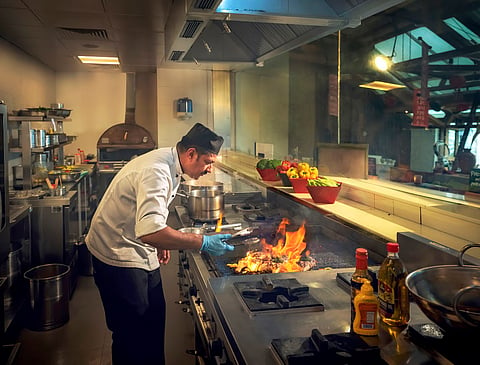
A chef in action at the O by Tamara Trivandrum The Tamara
Intelligent systems can also strengthen the knowledge and skills of hotel teams. For years, hospitality has operated reactively. A guest encounters a problem, raises a complaint and the property puts together a response. This sequence creates several moments of disruption for the guest, and it usually involves multiple team members, which raises the risk of delay or further error. I have seen AI used to analyse reservation and sales calls against service standards set by hotel teams, identifying patterns in conversion, service quality and individual training needs within seconds.
In another recent pilot, an AI reservations agent was introduced to handle routine calls and booking queries after working hours. Its remit was deliberately limited. Standard enquiries were handled immediately, while sensitive, complex or unsupported requests were transferred to a human colleague, and guests could ask for a person at any point. For me, that boundary is essential. Intelligence in hospitality is not only the ability to automate a task. It is also the ability to recognise where automation should stop.
Advertisement
The early results of the pilot illustrate how such systems can improve both guest experience and daily operations. Calls received outside working hours have translated into confirmed reservations, while the agent has also taken on much of the routine work that would ordinarily fall to the reservations team the following morning. Rather than returning every missed call, employees can identify which enquiries require a personal follow-up, with relevant information already captured and administrative tasks completed. We are also seeing encouraging results in the quality of enquiries and booking conversions. The significance of this system lies not only in handling more calls, but in reducing unnecessary work and allowing hotel teams to direct their time and attention to tasks where human judgement is most valuable.
Used this way, intelligent infrastructure becomes a quiet ally to service staff. It removes small points of friction and helps personalise a stay, which eases the pressure of managing many guest interactions at once. Instead of constant firefighting and repetitive coordination, staff are free to focus on the parts of hospitality that technology cannot replicate: warmth, empathy and presence.
Advertisement
Where It Can Go Wrong
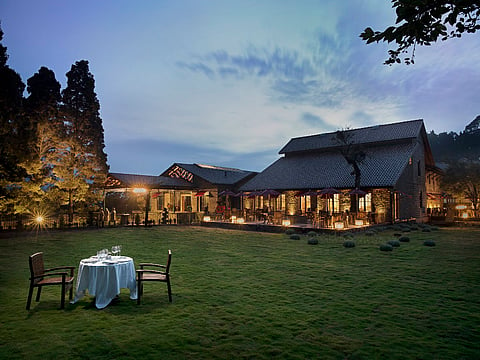
The Tamara Kodai, located in the Nilgiri hills of Kodaikanal, Tamil Nadu The Tamara
This is also where even the most advanced AI systems can fail. A system developed in isolation from the realities of hotel operations may be technically capable and still create more friction than it removes. Guests may be forced to navigate an unfamiliar interface, and employees may end up adapting their work around the system rather than the system supporting their work. Invisible infrastructure cannot simply be installed. It has to be adopted by hotel teams, tested against real guest interactions, operating constraints and brand standards, and continuously refined by the people expected to use it.
Its value also lies in restraint. Digital check-ins, e-bills and paperless feedback remove friction, but they should not become a quiet way of collecting more than a guest has chosen to share. In practice, this comes down to small, unglamorous choices. Feedback surveys are optional, guests can opt out of promotional emails, and anyone speaking to an automated system can ask for a person. The aim is to make service smoother without making every interaction depend on technology, and where a guest wants a human, they should find one.
Advertisement
The Quiet Measure Of Luxury
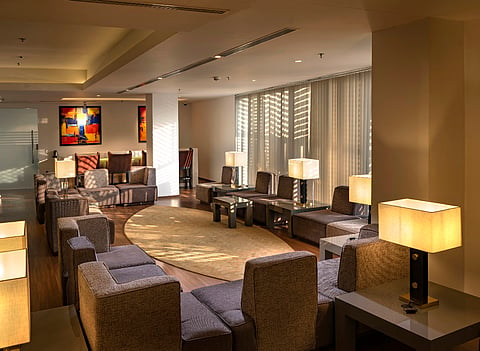
The Business Lounge at O by Tamara Trivandrum The Tamara
It is often said that good design is invisible. Good infrastructure deserves to be measured the same way. The future of discerning travel depends on thoughtfully removing friction, disruption and operational noise across the guest journey, and creating room for travel that feels immersive, intuitive and emotionally effortless.
More than amenities or spectacle, it is the quiet intelligence beneath the visible layer that allows people to truly disconnect from the logistics of travel and remain present in the experience itself. That is the ultimate luxury.
Shruti Shibulal is the Executive Vice Chair of Tamara Leisure Experiences and Director at Anticipatory, a platform-centric AI company.
FAQs
1. What is invisible infrastructure in luxury travel?
Invisible infrastructure refers to the technology, operational systems and processes that work behind the scenes to make travel experiences seamless, personalised and effortless for guests.
2. How is artificial intelligence transforming the hospitality industry?
AI is helping hotels analyse guest preferences, manage reservations, improve service standards, automate routine enquiries and anticipate guest needs, allowing employees to focus on personalised service.
Advertisement
3. How does invisible infrastructure contribute to sustainable hospitality?
Smart systems help hotels monitor water and energy consumption, detect leaks, reduce waste, optimise lighting and improve resource management without compromising guest comfort.
4. Why is human judgement still important in AI-powered hospitality?
While AI can manage routine tasks and improve operational efficiency, human judgement remains essential for handling sensitive requests, understanding guest emotions and delivering empathetic service.
5. What will define the future of luxury travel?
The future of luxury travel will increasingly be defined by seamless experiences, anticipatory service, personalised interactions and sustainable operations, rather than visible displays of opulence.

Published At: