The idea of luxury travel is quietly but decisively shifting. Once defined by what you owned—a yacht, a villa, a coveted address—it is now increasingly shaped by what you can access. In a world grappling with overtourism, the most coveted journeys are no longer about being seen, but about slipping away: into silence, into remoteness, into experiences that feel almost impossible to replicate.
The New Luxury Playbook: Privacy, Personalisation & The Pursuit Of The Extraordinary
The world’s wealthiest travellers are chasing privacy, access and once-in-a-lifetime journeys—from private islands to orbiting Earth

Advertisement
From private jets that circle the globe like flying boutique hotels to expeditions that land you on the Antarctic interior, and even brief flirtations with outer space, travel at the very top end is becoming less about indulgence and more about precision. It is curated, controlled, and deeply personal, designed to make the traveller feel like the only one in the world. The numbers bear this out: the global luxury travel market, valued at USD 1.59 trillion in 2025, is projected to reach USD 3.04 trillion by 2033. The world's ultra-high-net-worth population, those with assets exceeding USD 30 million—now surpasses 625,000 individuals globally, controlling roughly USD 30 trillion in assets and growing at four per cent annually. These are the people reshaping what travel looks like at its outer edge.
Private Jet Journeys
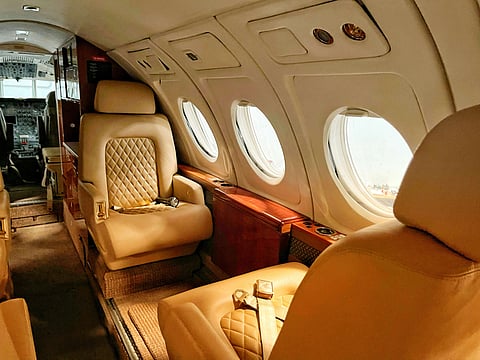
Private aviation and curated itineraries are reshaping how high-net-worth travellers explore the world Unsplash
If commercial flying is about getting somewhere, private jet travel at this level is about everything that happens in between. Fully curated, around-the-world itineraries, particularly those offered by hospitality giants, are redefining what it means to travel seamlessly. These journeys, often spanning three weeks or more, stitch together destinations as varied as the Galápagos Islands, Kyoto, Petra, and the Serengeti into a single, fluid narrative. Four Seasons' private jet world tours, to name one benchmark, start at around USD 219,000 per person.
Advertisement
The aircraft themselves are engineered for intimacy rather than capacity. Configured with under 50 seats, they feel less like planes and more like airborne lounges, complete with flatbed seating, bespoke dining, and dedicated concierge teams that anticipate needs before they arise. The experience extends far beyond the cabin. On the ground, travellers are ushered into private tours, rare cultural encounters, and tailored excursions that would be difficult, if not impossible, to arrange independently.
This surge in demand is mirrored by rapid growth across the private aviation industry. The private jet charter market alone is valued at USD 17.67 billion in 2026 and is on course to reach USD 25.79 billion by 2031. Flight activity is currently running 32 per cent above pre-pandemic levels, with a global fleet of over 24,000 aircraft. The fastest-growing segment is fractional ownership; departures under this model have risen 75 per cent since 2019, driven in part by a generational shift: the average age of fractional jet owners has dropped by a full decade since the pandemic. A younger, wealthier cohort is arriving, and they expect the experience to bend to their lives, not the other way around.
Advertisement
Tellingly, Delta reported in its most recent earnings that by 2026, premium seat revenue is expected to overtake main cabin revenue for the first time, a structural shift, not a cyclical blip, that signals how profoundly travel hierarchies are being redrawn even within commercial aviation.
Islands Of Isolation
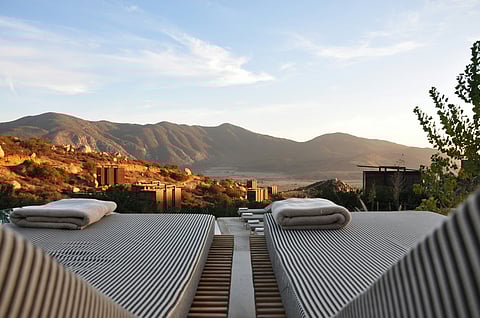
Remote destinations like Antarctica and private islands are seeing growing demand among elite travellers Unsplash
For those who prefer to stay put—albeit in spectacular fashion—renting an entire private island has become the ultimate expression of seclusion. Scattered across the Caribbean, the Maldives, and the South Pacific, these islands offer not just privacy but a sense of complete detachment from the outside world. Full island buyouts, such as those in the Seychelles, can run anywhere from USD 20,000 to over USD 100,000 per night. The Waldorf Astoria Ithaafushi in the Maldives—a 32,000-square-metre exclusive-use island accommodating no more than 24 guests—has become emblematic of a new standard: not just a property, but a private world with dedicated staff, personal chefs, and security so discreet it is almost invisible.
Advertisement
Here, the details are dialled up to an almost cinematic degree. Infinity pools spill into turquoise horizons, menus are crafted entirely around individual preferences, and entire teams—from butlers to wellness experts—operate quietly in the background. Some islands feature private airstrips, allowing guests to arrive without ever encountering a commercial airport.
Experiences are equally tailored. Dinner might be served on a sandbar that disappears with the tide, or beneath a canopy of stars in an open-air cinema. Activities range from water sports and wildlife encounters to curated treasure hunts and immersive wellness programmes. The scale varies, but the underlying promise is the same: absolute privacy, where the only schedule that matters is your own.
This preference is not anecdotal. Seventy-two per cent of luxury travellers now prefer private estates and island properties over traditional hotels, according to 2024 travel data—a shift that has been accelerating year on year. The World Luxury Chamber of Commerce's 2026 Travel Trends Report frames it simply: for high-net-worth individuals, privacy has become a necessity, not a perk.
Advertisement
Beyond The Atmosphere
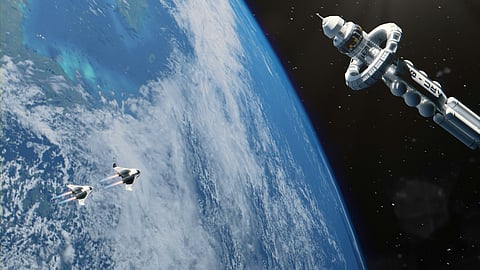
Space tourism is emerging as the newest frontier in high-end, once-in-a-lifetime travel experiences Unsplash
For a growing subset of travellers, even the most remote corners of Earth are no longer enough. Space tourism, once the stuff of science fiction, is steadily entering the realm of high-end travel. The global space tourism market was valued at USD 2.34 billion in 2026 and is forecast to expand to USD 62.1 billion by 2036, a compound annual growth rate of 21.8 per cent that makes it one of the fastest-growing segments in the entire travel industry. A separate projection places the figure even higher, at USD 87.32 billion by 2035, growing at 46.41 per cent annually.
Suborbital flights now offer a brief but extraordinary glimpse of the planet from beyond the Kármán line, complete with moments of weightlessness and sweeping views through oversized windows. These journeys are short, often under two hours, but designed to deliver a lifetime's worth of perspective in minutes. Approximately 60,000 people have already registered interest in commercial space flights, a figure that speaks to the depth of demand waiting behind the price barrier.
Advertisement
For those seeking something more immersive, orbital missions promise multi-day experiences circling Earth. Axiom Space is targeting three private astronaut missions per year, while companies including Blue Origin and Virgin Galactic, which aims to fly at least 1,000 passengers annually—are actively scaling their operations. By 2027 or 2028, the first commercial space stations could begin welcoming private travellers for extended stays. The price of entry remains steep, placing it firmly in the domain of the ultra-wealthy, with ticket prices for orbital experiences currently sitting in the tens of millions. Yet its growing popularity signals something larger: a desire to push the boundaries of what a journey can mean in a world where so much has already been discovered.
Polar Frontiers Beckon
Back on Earth, the polar regions are emerging as one of the last true frontiers of luxury travel. Antarctica, in particular, has seen a surge in interest—not through traditional cruises, but via private jet expeditions that bypass the crowded coastlines and venture deep into the continent's interior. Travellers fly directly from Cape Town to remote camps set against vast ice landscapes, where high-tech pods provide warmth and comfort without compromising on sustainability. The camps are temporary, dismantled after each season to minimise environmental impact—a reflection of a broader expectation among this cohort: over 38 per cent of luxury travellers report a willingness to pay 30 to 50 per cent more for environmentally responsible accommodation and experiences.
Advertisement
Guests can trek through ice tunnels, attempt ice climbing, or stand at the Geographic South Pole, a location few will ever reach. Encounters with emperor penguin colonies, often numbering in the tens of thousands, add a rare wildlife dimension to the journey. The Arctic, too, is being reimagined through ultra-luxury expeditions. Small, meticulously designed ships equipped with helicopters and submarines allow travellers to explore beneath and above the ice, accompanied by experts, marine biologists, historians, and polar guides, who turn each voyage into a floating masterclass.
Running parallel is the enduring appeal of extended, slow travel. Multi-month world cruises, some lasting well over 100 days, are drawing those who prefer depth over speed. These journeys combine all-inclusive ease with the richness of multiple continents, allowing passengers to settle into a rhythm that feels almost like a moving home.
What ties all of this together is a subtle but significant shift in mindset. Luxury is no longer about excess; it is about intention. High-end travellers are, on average, now taking eight leisure trips a year, including three international journeys, and more than half expect to spend more on travel than the year before. The average American luxury traveller spent around USD 16,000 per trip in 2024, with a quarter of the market spending between USD 25,000 and USD 50,000 on a single journey.
Advertisement
But beyond the numbers, what is being purchased is something harder to quantify: the freedom to choose where you go, how you get there, and who, if anyone, you share it with. And perhaps that is the real destination: not a place on the map, but a state of travel where the world, for a brief moment, feels entirely your own.
FAQs
1. What is driving the rise of ultra-luxury travel in 2026?
A shift towards privacy, personalisation and exclusive access, alongside growing ultra-high-net-worth wealth, is reshaping demand.
2. How expensive are private jet world tours?
Fully curated private jet journeys typically start at around USD 219,000 per person and can go significantly higher.
3. Why are private island stays becoming more popular?
They offer complete seclusion, tailored experiences and full control over the environment—key priorities for affluent travellers.
4. Is space tourism actually accessible today?
Yes, with suborbital and orbital options available, though costs range from high six figures to tens of millions of USD.
Advertisement
5. What makes polar expeditions a luxury experience now?
Private jet access, high-end camps, expert-led activities and sustainability-focused operations elevate Antarctic and Arctic travel.
Published At: