Kurseong’s mountain railway has long offered a way to experience the Darjeeling hills beyond their familiar tea gardens and Himalayan viewpoints. Its narrow tracks wind past forested slopes, old settlements, colonial-era structures, and small railway stations where everyday life continues alongside the toy train's passage. This winter, the landscape becomes the setting for a celebration of the region’s layered heritage as the Ghum Winter Festival 2026 begins on November 28.
The Ghum Winter Festival 2026 Opens A Window Into Darjeeling’s Railway And Monastic Heritage
The nine-day festival brings together the Darjeeling Himalayan Railway’s legacy, Kurseong’s Buddhist heritage, local enterprise, and hill culture

Advertisement
Organised by the Darjeeling Himalayan Railway (DHR), the nine-day festival runs until December 6, marking 27 years since the mountain railway received UNESCO World Heritage recognition in December 1999. Centred on Ghum, India's highest railway station at 7,407 feet, the festival brings together railway history, cultural performances, educational initiatives, and opportunities to discover the communities and traditions that have shaped the Darjeeling hills.
The Railway And Its Legacy
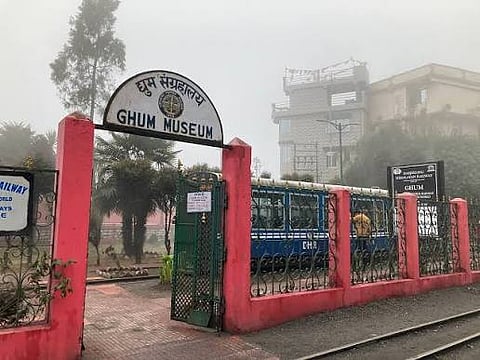
The Ghum Railway Museum was established in 2000 BeyondYatra
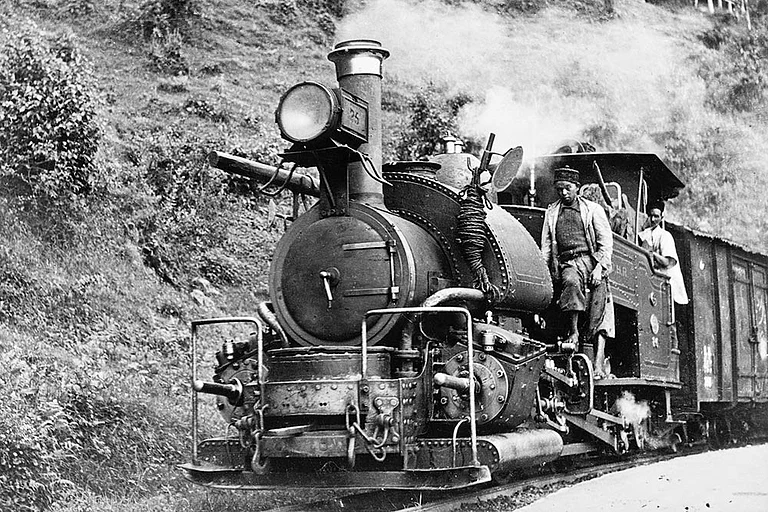
The Darjeeling Himalayan Railway is more than a picturesque mountain journey. Its 88-km narrow-gauge track connects New Jalpaiguri with Darjeeling, negotiating steep gradients through six zigzag reverses and three loops. Opened in 1881, it remains an extraordinary example of engineering adapted to mountainous terrain. UNESCO recognised its contribution to the region's social and economic development, as well as its significance in the history of mountain railways.
A visit to the Ghum Railway Museum offers a closer look at this legacy. Established in 2000, the museum occupies the station premises and combines an indoor collection with an open-air exhibition. Among its notable exhibits is Baby Sivok, an early steam locomotive associated with the railway's formative years. Old passenger coaches, freight wagons, railway equipment, brass signalling bells, uniforms, photographs, and documents help reconstruct the everyday workings of the mountain line. The museum also offers a glimpse into the people and infrastructure behind the railway. Photographs of landslides and earthquakes document the challenges of maintaining a line through an unstable mountain landscape, while old railway furniture, signalling equipment, and operational records preserve details of a working system that has evolved over generations.
Advertisement
The festival extends this engagement with railway heritage beyond the museum. A special segment of the Darjeeling International Film Festival will bring screenings to the Ghum open-air museum on December 2, commemorating the railway's UNESCO inscription. A heritage run alongside a historic steam locomotive and flat-wagon open-air rides are also planned at Kurseong, offering visitors another way to experience the railway outside its conventional passenger compartments.
Inside Kurseong’s Monastic Landscape
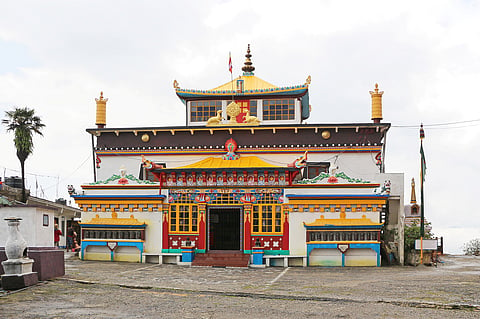
The Yiga Choeling Monastery, popularly known as Old Ghoom Monastery, was founded in 1850 by Lama Sherab Gyatso Wikipedia
The railway is only one part of Kurseong's cultural landscape. Its Buddhist heritage is reflected in neighbourhood monasteries, prayer halls, and sacred sites that have developed alongside the town's diverse communities. One place to seek out is Tashi Samtenling Monastery, also known as Tamang Gumba, on Montiviot Road. Associated with the Tamang Buddhist community, the monastery is among Kurseong's established religious landmarks. Its prayer hall, Buddhist imagery, and quieter surroundings offer a different perspective on the hill town, away from the busier market streets and railway stops. The monastery is also an opportunity to understand how Buddhist traditions remain woven into everyday community life.
Advertisement
Another name worth looking for is Sakya Kunga Shedupling, a Sakya Buddhist monastery listed in Kurseong. Kunsang Choiling Monastery, in Upper Naya Busty, is another local gompa that reflects the presence of Tibetan Buddhist institutions in the area. These smaller religious establishments are particularly interesting for travellers seeking to understand the region beyond its better-known sightseeing circuit. Kurseong's religious history also has connections extending beyond its immediate neighbourhoods. An important chapter concerns Lama Sonam Zangpo, a Bhutanese Buddhist teacher and meditator who established a religious community in the area during the 1960s. A stupa associated with his time in Kurseong remains a physical reminder of this history and the cross-border Buddhist connections that have shaped the Eastern Himalaya.
A short excursion to Ghum adds another significant monastery to the itinerary. The Yiga Choeling Monastery, popularly known as Old Ghoom Monastery, was founded in 1850 by Lama Sherab Gyatso. Its prominent Maitreya Buddha statue, representing the Buddha of the future, is among its best-known features. The monastery's prayer hall, Buddhist murals, and traditional architecture make it an important stop for anyone interested in the region's spiritual heritage.
Advertisement
Heritage Meets New Possibilities
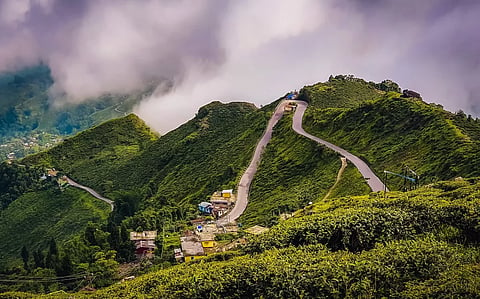
The Ghum Winter Festival 2026 begins on November 28 and goes on till December 6 Ghum India Ghum
While heritage anchors the celebrations, the 2026 edition also makes room for contemporary ideas and local entrepreneurship. A Startup Mela at Ghum Railway Station will showcase hill-based businesses, micro, small, and medium enterprises, self-help groups, and independent artisans. Visitors can expect locally made crafts, handloom products, regional food specialities, and sustainable innovations, giving the festival an economic dimension alongside its cultural programming. The exhibition is scheduled around the November 30–December 4 period.
Younger visitors will find opportunities to engage with technology through a three-day robotics workshop at Sukna railway station, scheduled between November 30 and December 2, in collaboration with the Tinkering Institute for Innovation. On December 3, students will work on artificial intelligence-based ideas inspired by Darjeeling's culture, heritage, and communities aboard a moving heritage train travelling from Kurseong to Darjeeling via Ghum. A literature festival, featuring conversations, poetry readings, and storytelling around the hills and their railway history, will further broaden the programme on December 4.
Advertisement
The celebrations will conclude on December 6 with a cultural event at Chowrasta in Darjeeling. For travellers, the Ghum Winter Festival offers an opportunity to look beyond the familiar postcard views of the Darjeeling hills. Its appeal lies in the different histories that intersect here: a railway that transformed mountain connectivity, monasteries that preserve centuries-old spiritual traditions, and communities whose crafts, knowledge, and enterprises continue to shape the region. The toy train may be the most recognisable symbol of the hills, but the stories along its route are what make the journey worth taking.
FAQs
1. When is the Ghum Winter Festival 2026 being held?
The Ghum Winter Festival 2026 is being held from November 28 to December 6, 2026, with celebrations centred on Ghum and other locations along the Darjeeling Himalayan Railway.
2. What can visitors experience at the Ghum Winter Festival?
Visitors can explore railway heritage exhibitions, cultural performances, a startup mela, robotics workshops, literature events, and special heritage train experiences.
Advertisement
3. What is the Ghum Railway Museum known for?
Located at Ghum Railway Station, the museum showcases the history of the Darjeeling Himalayan Railway through historic locomotives, railway equipment, photographs, documents, and other archival exhibits.
4. Which monasteries can travellers visit in and around Kurseong?
Travellers can visit Tashi Samtenling Monastery, Sakya Kunga Shedupling, and Kunsang Choiling Monastery in Kurseong. The Yiga Choeling Monastery at Ghum is another significant Buddhist site nearby.
5. Why is the Darjeeling Himalayan Railway a UNESCO World Heritage Site?
The Darjeeling Himalayan Railway was recognised by UNESCO in 1999 for its outstanding engineering achievement, innovative adaptation to mountainous terrain, and contribution to the development of the Darjeeling hills.
Published At: