On Thursday, March 5, drones launched by Iran crossed into Azerbaijani territory, striking the Nakhchivan International Airport in the autonomous exclave of Nakhchivan. The strike left two civilians injured, as per officials, marking a significant escalation as the wider US–Israel war with Iran expands beyond the Middle East.
Iranian Drones Strike Nakhchivan Airport In Azerbaijan; Two Injured Amid US–Israel–Iran War
Two civilians were injured after Iranian drones struck Nakhchivan International Airport in Azerbaijan’s exclave, escalating tensions as the widening US–Israel–Iran conflict spills into the South Caucasus

Advertisement
Drone Strikes Hit Civilian Infrastructure
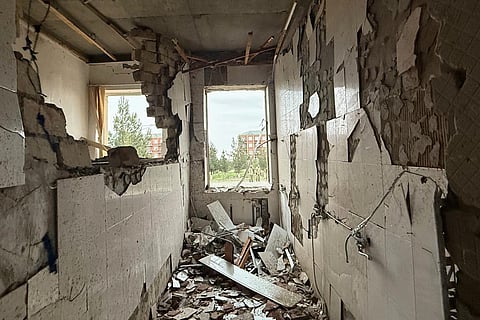
Damages of a school in Julfa following, what Azerbaijan's Foreign Ministry says was a drone attack carried out by Iran, on its exclave of Nakhchivan, Azerbaijan AP
According to an official statement from the Ministry of Foreign Affairs of Azerbaijan, at around midday local time, at least two drones launched from the territory of the Islamic Republic of Iran impacted areas in the Nakhchivan exclave. One drone struck the terminal building of Nakhchivan International Airport, located about 10 km from the Iranian border, damaging the facility and leaving a plume of black smoke behind. Video footage from the scene showed damage to the airport and fire crews responding. Another drone crashed near a school building in the village of Shekerabad, injuring a second civilian.
Further reports from local outlets indicated that debris from the drone impacts also damaged sections of the airport’s runway surface, compounding disruption to the facility.
Baku Lodges Diplomatic Protest
The Azerbaijani government swiftly condemned the strikes as a breach of international norms and a dangerous escalation of regional tensions. The Foreign Ministry summoned the Iranian Ambassador to Azerbaijan, Mojtaba Demirchilou, to convey a strong protest and present a formal note of protest. Azerbaijan demanded a prompt explanation from Tehran, urgent investigation, and immediate steps to prevent future incidents.
Advertisement
In its statement, Baku stressed that such acts constituted a violation of international law and added that Azerbaijan “reserves the right to take appropriate response measures,” signalling that diplomatic pressure or further action could follow.
Context: Wider Regional Conflict And Escalation
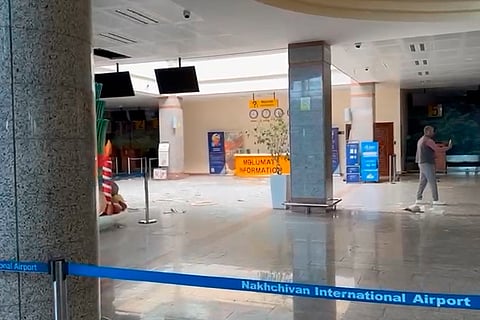
Damages at the Nakhchivan International Airport following what Azerbaijan's Foreign Ministry said was a drone attack carried out by Iran on its exclave of Nakhchivan, Azerbaijan AP
The drone strike on Nakhchivan comes amid a rapidly widening conflict that began with US and Israeli military operations against Iranian targets earlier last week, triggering broad Iranian retaliation. The war — now in its sixth day — has seen missile and drone strikes launched by Tehran against multiple countries and interests across the Middle East region.
While Azerbaijan has maintained a largely neutral official stance in the US–Iran–Israel conflict, its closer defence cooperation with Israel and growing strategic ties have long been viewed with suspicion in Tehran, raising the risk of spill-over incidents. Nakhchivan — an Azerbaijani exclave separated from the rest of the country by Armenia — shares a direct border with Iran, making it particularly susceptible to cross-border strikes.
Advertisement
Civilians Injured, Airport Impacted
Officials have confirmed that two civilians were injured in the strikes — one at the airport site and another near the village school — though there were no immediate reports of fatalities. Emergency responders were on the ground managing fire and assessing structural damage.
The incident has disrupted operations at Nakhchivan International Airport, a key transport link for the landlocked exclave. Flights were temporarily halted as authorities assessed safety and structural integrity following the strike.
International And Regional Reactions
International reaction to the attack has been cautious, with global calls for de-escalation growing amid fears of broader regional destabilisation. Nations with strategic interests in the Caucasus and Middle East have urged restraint, even as the war’s effects ripple into global energy markets and diplomatic channels.
Azerbaijan’s response underscores the delicate balance Ankara, Baku and other regional capitals face — seeking to avoid direct military confrontation with Tehran while protecting sovereign territory and responding to acts they deem aggression.
Advertisement
What Happens Next?
As investigations continue into the exact nature and origin of the drones, Azerbaijan’s government reiterated its determination to uphold territorial integrity. While official statements have stopped short of declaring military retaliation, the language of “appropriate response measures” indicates that Baku reserves options ranging from diplomatic pressure to bolstering defensive capabilities in Nakhchivan.
Analysts say the attack marks a worrying precedent in which conflicts centred on the Middle East can directly affect neighbouring regions like the South Caucasus, potentially involving new actors and complicating efforts to contain the war.
Published At:
Tags