A quiet, forest-lined railway stretch in Gujarat could soon find itself in the spotlight. Western Railway is considering opening up the century-old Bilimora-Waghai narrow-gauge line for film shoots, tapping into its visual appeal to boost non-fare revenue.
Filmmakers May Soon Shoot On This Hidden Gujarat Toy Train Route
Western Railway plans to open Gujarat’s scenic Bilimora-Waghai narrow-gauge line for film shoots to boost revenue. The heritage route, popular with tourists and locals, may soon attract Bollywood projects

Advertisement
Eyeing higher non-fare revenue, the Western Railway (WR) is exploring the option of allowing film shooting on the over century-old, scenic Bilimora-Waghai narrow-gauge line in Gujarat, officials said on Wednesday.
The 63 km-long route between Bilimora and Waghai towns, known for its lush greenery, river crossings and forested stretches in south Gujarat’s Navsari and Dang districts, offers picturesque locations that could attract filmmakers, particularly from Bollywood, given its proximity to Mumbai.
At present, only four passenger services are operated by WR on the narrow-gauge route.
Railway officials said the initiative is part of a broader strategy to boost non-fare revenue by monetising assets without affecting passenger services.
"The Bilimora-Waghai section has strong visual appeal and remains relatively underutilised commercially. Film shooting is one of the options being examined (to generate non-fare revenue)," said Vineet Abhishek, Chief Public Relations Officer (CPRO), WR.
Mumbai-headquartered WR has already seen steady growth in revenue from film shooting.
Advertisement
According to the officials, the zone earned a record INR 1.72 crore revenue from such activities in 2025-26 (till mid-February), marking an increase of about 25 per cent over the previous year and among the highest in the country.
Various stations, trains and Railway premises are regularly made available for films, web series and advertisements, with a streamlined single-window clearance system in place to facilitate production houses.
Abhishek said the Bilimora-Waghai route is among the few of the last surviving narrow-gauge Railway lines in the country, which include Neral-Matheran in Raigad district of Maharashtra and Kalka-Shimla toy trains across Haryana and Himachal Pradesh.
A Lifeline For Locals With A Rich History
The narrow-gauge line in Gujarat passes through tribal belts, dense forests and hilly terrain, making it visually distinctive. A large number of tourists use the line to visit nearby shrines and picnic spots, apart from locals, the CPRO informed.
Advertisement
During the monsoon and winter seasons, the toy train operating on the route, usually running with four general and one or two AC coaches, witnesses heavy tourist footfall.
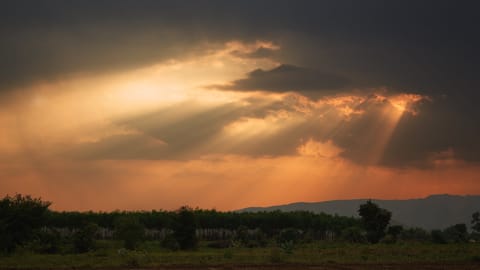
The sun breaks through the clouds at twilight in the Polo Forest (representational image) Kishan Kumar Chauhan/Shutterstock
According to the officials, the line traces its origins to the Gaekwar’s Baroda State Railway functioning under the erstwhile princely state ruled by the Gaekwad dynasty.
It was developed in phases in the early 1900s and extended up to Waghai around 1913 to improve connectivity to the forested Dang region.
Initially laid to transport timber, forest produce and agricultural goods, the route also played a key role in opening up remote tribal areas that had limited road connectivity.
The officials said that until a few decades ago, it was the primary mode of transport for people in the Dang region.
After Independence, the line was integrated into Indian Railways and is now operated by WR.
Despite the growth of road transport, the narrow-gauge line continues to serve as an important link for tribal communities, students and small traders, while also attracting railway enthusiasts for its heritage value.
Advertisement
Passengers said that despite faster transport options in recent decades, the narrow-gauge train remains a preferred choice due to its low fares and comfortable journey.
Lata G, a central government employee, said she has been using the service for over two decades after purchasing a small piece of land in the region. Though she can afford road travel, she prefers the train and has seen its transition from coal-powered engines to diesel.
"I have been travelling since the days of coal engines. I have also seen people travelling with animals like goats, cows and buffaloes on board," she said, adding that the service has improved over the years.
"This narrow gauge train is the lifeline of people here," said Thakurbhai, a resident of Gandevi village, which has one of the 11 stations on the route.
Lataben Ahir, a resident of Navsari district, travelling with her family for darshan at Unai Mata temple, said the WR should improve coaches, safety measures and introduce more services.
Advertisement
(With inputs from PTI.)
FAQs
1. Which Gujarat train route may open for film shoot?
The Bilimora-Waghai narrow gauge railway line is being considered for film shoots.
2. Why is Western Railway allowing film shooting?
Western Railway aims to boost non-fare revenue by monetising scenic and underutilised railway assets.
3. How long is the Bilimora-Waghai route?
The route stretches approximately 63 km through forested and hilly regions of south Gujarat.
4. Are film shoots already allowed on Indian Railways?
Yes, Indian Railways permits filming on trains and stations through a single-window clearance system.
5. What makes this route attractive for filmmakers?
Its lush forests, river crossings, and heritage charm make it visually ideal for cinematic storytelling.

Published At: