Delhi’s late winter has a habit of revealing its softer side just when the city most needs it. As the smog thins and the light turns gentler, one of the capital’s most cherished seasonal rituals returns: the opening of Amrit Udyan at Rashtrapati Bhavan. Formerly known as the Mughal Gardens, this 15-acre expanse at the heart of the President’s Estate opens to the public for its 2026 season from February 3 to March 31, offering a rare chance to walk through one of India’s most carefully tended landscapes.
Delhi’s Amrit Udyan Is Back: Here’s Everything You Need To Know
Open for a limited season, Amrit Udyan at Rashtrapati Bhavan offers curated gardens, peaceful walks and a fresh reason to step outdoors

Advertisement
For many Delhiites, a visit to Amrit Udyan is not just a garden outing but an annual marker of time—proof that winter is loosening its grip and spring is quietly arriving. With a mix of old and new, this year's opening puts visitors first, so it's worth making plans for the 2026 season.
The Tale Of A Garden
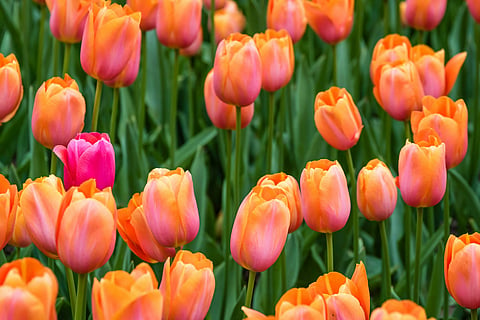
Winter flowers, tulips, and roses will brighten the lawns at this year's Amrit Udyan Unsplash
Amrit Udyan has always been the focal point of Rashtrapati Bhavan. It started as a set of gardens planned with balance in mind, featuring the East Lawn, Central Lawn, Long Garden, and Circular Garden. Over time, it has grown beyond its original Mughal style to be more inviting and focussed on well-being.
Past Presidents Dr. A.P.J. Abdul Kalam and Ram Nath Kovind added themed gardens to the area. These include the Herbal Garden, Tactile Garden, Bonsai Garden, and Arogya Vanam. Each one lets people do more than just look, which shows a change in how we see public gardens now—as spots for learning, feeling, and quietly thinking.
Advertisement
In 2026, when you visit, the gardens will be at their best. Winter flowers, tulips, and roses will brighten the lawns, and the paths will lead you through different feels, smells, and views. It’s all designed to create a peaceful break from the busy city.
What's Different This Year

Open six days a week, Amrit Udyan remains one of Delhi’s most anticipated seasonal experiences Official website: Press Information Bureau
The best new thing for 2026 is the Babbling Brook, a winding water feature that adds motion and sound to the garden. It has water spouts, small waterfalls, stepping stones, and a pool that reflects the surroundings, making a calm place to stop as you walk.
Inviting visitors to slow down and engage more mindfully with the space, the Babbling Brook also integrates reflexology pathways. The Banyan Garden alongside adds another contemplative layer, while existing favourites like the Bonsai Garden and Circular Garden continue to draw crowds.
For families visiting with children, the Bal Vatika will be especially engaging. This curated garden for younger visitors includes a treehouse, nature-based learning spaces and a narrative built around a 225-year-old sheesham tree, turning the visit into an experience that is both playful and educational. A food court and exhibition spaces along the route ensure that visitors can comfortably spend several hours exploring the grounds.
Advertisement
Plan Your Visit
Amrit Udyan is open to the public from Tuesday to Sunday, between 10 am and 6 pm, with the last entry permitted at 5 pm. The gardens remain closed on Mondays for maintenance and will also be closed on March 4, 2026, on account of Holi.
In keeping with recent years, select dates in March are reserved exclusively for specific groups to ensure wider access. Defence personnel can visit on March 3, senior citizens on March 5, women and tribal women’s Self-Help Groups on March 10, and differently-abled visitors on March 13.
Entry to Amrit Udyan is free, but online booking is mandatory. Tickets must be booked through the official Rashtrapati Bhavan portal, and there is no on-the-spot or offline booking facility. Booking for any given day closes at 10 am on the previous day, and entry is organised through hourly slots from 10 am to 4 pm. Each ticket can accommodate up to six visitors, while group bookings for school children allow up to 50 students per ticket.
Advertisement
Visitors enter and exit through Gate No. 35 on North Avenue Road. To ease access, a shuttle bus service operates every 30 minutes from Central Secretariat Metro Station between 9:30 am and 6 pm. Mobile phones and small personal items are permitted, but cameras, backpacks and food are not allowed inside the gardens.
Briefly open, meticulously planned and deeply restorative, Amrit Udyan remains one of Delhi’s most rewarding seasonal experiences. In a city that rarely pauses, this annual opening is an invitation to slow down, look closely, and let spring do what it does best.
For more information visit: https://visit.rashtrapatibhavan.gov.in
FAQs
1. When is Amrit Udyan open in 2026?
Amrit Udyan is open to the public from February 3 to March 31, 2026, and remains closed on Mondays and on March 4 for Holi.
2. What are the visiting hours?
The gardens are open from 10 am to 6 pm, with the last entry permitted at 5 pm.
Advertisement
3. Is there any entry fee?
No, entry to Amrit Udyan is completely free, but advance online booking is mandatory.
4. How can visitors book tickets?
Tickets can be booked only online at visit.rashtrapatibhavan.gov.in, with bookings closing at 10 am on the previous day.
5. What is new at Amrit Udyan this year?
The 2026 season introduces the Babbling Brook, a landscaped water feature with cascades, stepping stones and reflexology pathways.

Published At: