Travel rarely changes overnight. It shifts gently—through better roads, lighter paperwork, faster trains, and the quiet confidence that a journey will be worth the effort. India’s Union Budget 2026 belongs firmly to that category. It doesn’t shout about tourism, but it re-engineers how Indians will plan, afford, and experience travel over the next decade.
Look closely, and you’ll find a Budget that treats travel not as indulgence, but as infrastructure—woven into mobility, employment, wellness, and cultural preservation. For travellers, the impact will be felt in subtler but far more meaningful ways.
When The World Feels Closer

For years, international travel from India carried a hidden friction—large sums of money blocked upfront due to Tax Collected at Source on overseas tour packages. Budget 2026 quietly removes that pressure. By reducing TCS to a flat 2 percent with no minimum threshold, the government has eased one of the biggest psychological and financial barriers to booking foreign holidays.
The change doesn’t make trips cheaper in the long run, but it dramatically improves cash flow at the moment of booking. Families planning summer holidays, couples booking honeymoons, and seniors travelling abroad will find the process smoother and less intimidating. That hesitation—should we postpone this another year?—just got a little quieter.
In practical terms, this means international travel becomes less about financial gymnastics and more about actual planning. And when outbound travel feels easier, it often sparks something else: confidence to travel more thoughtfully at home too.
Speed Becomes The New Luxury
Domestically, Budget 2026 signals a decisive shift toward faster, more seamless movement across India. The announcement of seven high-speed rail corridors—connecting routes such as Mumbai–Pune, Delhi–Varanasi, Hyderabad–Bengaluru, and Chennai–Bengaluru—reframes how distance is perceived.
Weekend travel will no longer be limited by exhaustion. Multi-city itineraries become realistic. Places once dismissed as “too far for a short break” move firmly into the planning conversation. This isn’t just about shaving hours off journeys, it’s about giving travellers more time at destinations rather than en route.
Beyond rail, the expansion of national waterways and support for seaplane connectivity introduces an entirely different travel rhythm—especially for coastal regions, riverine towns, islands, and remote landscapes. The idea is clear: travel in India should not be linear or congested, but layered, flexible, and accessible.
A Shift From Seeing To Experiencing
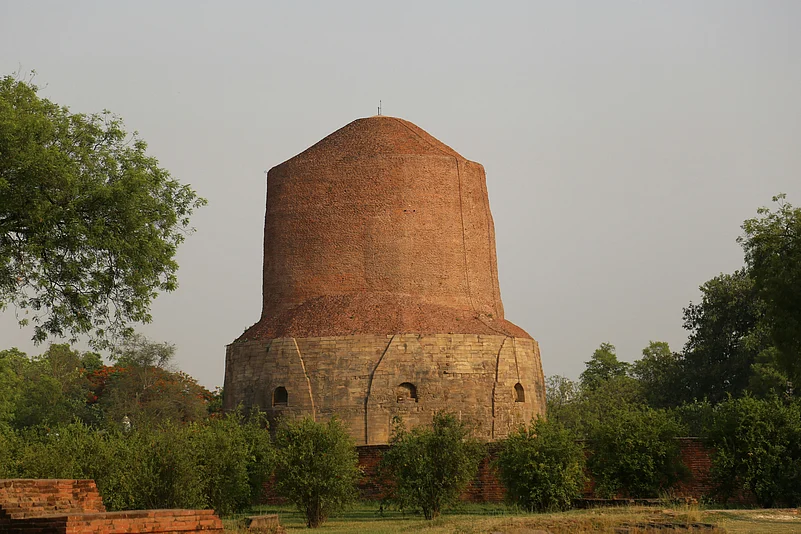
Perhaps the most defining change lies in what Indians will travel for. Budget 2026 marks a clear pivot from sightseeing to experience-led journeys. Fifteen archaeological sites are set to be developed as immersive cultural destinations—places where history is interpreted, not merely observed.
Instead of fenced ruins and hurried photo stops, travellers can expect curated walkways, storytelling, and deeper engagement with civilisations that shaped the subcontinent. Sites like Dholavira, Lothal, and Sarnath are no longer just heritage footnotes—they’re becoming anchors for slower, more meaningful travel.
While enhancement of tourist experience at these ancient sites is remarkable, paraplegic Sminu Jindal, Founder-Chairperson of Svayam and MD, Jindal SAW Ltd., observed "proper accessibility integration in the tourism and travel sector is a must for the country." Backing her observation with data, she illustrated that India can gain approximately USD 214.17 billion USD if tourism and travel were accessible. "Nearly 34 percent of India’s population (approximately 486.27 million people) are directly impacted by reduced mobility, a figure that rises up to 50 percent (715 million individuals) being indirectly affected," Jindal noted. In her views, recognising accessibility as an economic and social enabler can help people with reduced mobility to participate equally as skilled workforce. "We look forward to future budgets strengthening investments in accessible infrastructure, transport, digital platforms and training to ensure equal participation for all."
Nature tourism receives a similar rethink. Ecologically sensitive mountain trails across the Himalayas and the Ghats, along with coastal turtle-nesting routes, point to a future where conservation and travel coexist. These initiatives invite travellers to engage responsibly—with landscapes, wildlife, and local communities—rather than simply pass through.
All in all, what "stands out most, however, is the shift from volume-led tourism to experience-led growth, through rural stays, heritage activation, and skills development. This could be a strong Budget for infrastructure, service quality, and traveller expectations into a sustainable long-term tourism model," said Sandeep Arora, Director, Brightsun Travel.
The Rise Of Regional Discovery
For decades, Indian tourism revolved around familiar circuits. Budget 2026 deliberately nudges travellers eastward and inward. Five major tourism hubs are planned across the Purvodaya states—Bihar, Jharkhand, West Bengal, Odisha, and Andhra Pradesh—supported by better transport and cleaner mobility through e-buses.
The intention is not to manufacture new hotspots, but to unlock regions rich in culture, craft, cuisine, and history that have long remained on the margins of mainstream itineraries. For travellers, this means fresher narratives and less crowded experiences. For local economies, it means sustained engagement rather than seasonal footfall.
As connectivity improves and storytelling deepens, travel will feel less repetitive. India begins to reveal itself in chapters, not highlights.
On this subject, Manoj Bhat, Managing Director & CEO of Mahindra Holidays & Resorts India Ltd, noted how "focus on destination development beyond metros, improved physical connectivity, and a sharper push on spiritual and heritage circuits reflects a recognition that tourism growth must be geographically distributed and locally rooted."
Wellness Steps Into The Itinerary

One of the Budget’s quieter but most consequential moves is the formal recognition of medical and wellness travel. Five regional medical tourism hubs are proposed—integrating hospitals, rehabilitation, AYUSH therapies, and wellness infrastructure.
This matters not just for international visitors, but for Indians too. Travel combined with recovery, prevention, or wellbeing will become more structured and credible. Think longer stays, slower pacing, and destinations chosen as much for care as for scenery.
Alongside this, upgraded Ayurveda institutes, trained caregivers, and globally benchmarked facilities signal a future where wellness travel is not niche or indulgent—but integrated into how Indians plan restorative breaks.
Better Travel, Better People
None of this works without people. Budget 2026 acknowledges that by investing heavily in skilling. The upgrade of the hospitality council into a National Institute of Hospitality and the training of 10,000 tourist guides across iconic sites may sound administrative—but travellers will feel the difference.
Better-informed guides, improved service standards, and stronger destination knowledge translate directly into smoother, richer experiences. Travel becomes less transactional, more intuitive.
A New Travel Mindset

Asked what he thinks of Budget 2026 overall, Director Arora said "From an industry standpoint, this Budget addresses three structural gaps that have held Indian tourism back for years, capital access, traveller friction, and product depth." He observed "infrastructure status for hotels changes the economics of hospitality expansion, especially in under-served leisure and pilgrimage circuits where demand already exists but quality inventory has lagged."
Taken together, Budget 2026 doesn’t just change where Indians will travel—it changes how they think about travel. Journeys become shorter but more frequent. Destinations become deeper, not just popular. Experiences carry meaning, not just memories.
Travel is no longer positioned as leisure on the sidelines of life, but as a catalyst—for learning, healing, employment, and connection. And in that shift lies its quiet power.
India isn’t asking travellers to go farther. It’s inviting them to travel better.
FAQs
1. How does Budget 2026 affect international travel for Indians?
Budget 2026 reduces TCS on overseas tour packages to a flat 2 per cent, easing upfront cash outflow and making foreign travel easier to plan.
2. Will domestic travel become faster after Budget 2026?
Yes. Seven high-speed rail corridors, new waterways, and improved regional connectivity aim to significantly cut travel time across key routes.
3. What new travel experiences does the Budget focus on?
The Budget prioritises experience-led tourism, including immersive heritage sites, eco-friendly mountain trails, and conservation-linked coastal routes.
4. Which regions will benefit most from new tourism development?
The Purvodaya states—Bihar, Jharkhand, West Bengal, Odisha and Andhra Pradesh—will see major tourism hubs and improved transport access.
5. Does Budget 2026 support wellness and medical travel?
Yes. It proposes regional medical tourism hubs and upgraded AYUSH infrastructure, strengthening India’s wellness and healthcare travel ecosystem.