Delhi woke up on Monday wrapped in a thick, disorienting hush. The kind that slows traffic to a crawl and turns runways into guessing games. By evening, the India Meteorological Department had escalated its warning from orange to red, flagging dense fog conditions severe enough to disrupt air, road, and rail movement across the capital and large swathes of north India. The alert remains in place until Tuesday afternoon, with visibility expected to stay dangerously low through the late morning hours.
Delhi Under Red Alert As Fog And Pollution Cloud Year-End Travel
Dense fog grips Delhi, grounding flights, delaying travel, and pushing air quality into the ‘severe’ zone as winter disruption deepens

Advertisement
At the heart of the disruption was Indira Gandhi International Airport, where visibility dropped to as low as 50 metres in the early hours of the day, improving only marginally as the morning progressed. The consequences were immediate and widespread: over 128 flights cancelled, several diverted, and close to 200 delayed. For travellers, it was one of those winter days where schedules became suggestions rather than promises.
Flights In Fog
Airlines across the board moved quickly to issue advisories, urging passengers to check flight statuses before heading to the airport. Carriers operating in and out of Delhi, including those with onward connections across north and north-eastern India, warned of knock-on delays and possible cancellations as fog conditions remained persistent. Airport authorities echoed the advisory, asking passengers to stay in touch with airlines and allow for extra time, acknowledging that even with upgraded landing systems, dense fog of this scale significantly constrains operations.
Advertisement
The disruption was not limited to Delhi alone. Satellite imagery showed a thick band of fog and low cloud cover stretching across Punjab, Haryana, Rajasthan, Uttarakhand, Uttar Pradesh, Bihar, Jharkhand, parts of eastern India, and into the northeastern states. The sheer geographical spread of the fog system underscored why delays and diversions were likely to ripple through the network over the next couple of days.
Weather Across North
Meteorologically, this fog episode is classic north Indian winter, intensified by calm winds and moisture trapped close to the surface. Delhi recorded a minimum temperature of 8.3 degrees Celsius, slightly above the seasonal average, while the daytime high touched 22.5 degrees. The relatively warmer temperatures, combined with stagnant air, created ideal conditions for fog to thicken and linger well into the day.
Road commuters across Delhi-NCR also felt the impact, with reduced visibility slowing traffic on arterial roads and expressways, particularly during the early morning commute. Rail services across north India reported delays as well, adding to the sense of a city and region moving at half speed.
Advertisement
Air Turns Severe
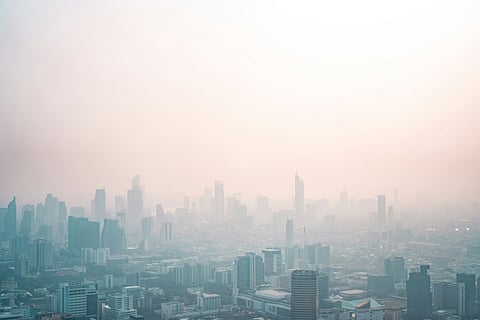
Winter fog and stagnant air worsen visibility and air quality in the capital Unsplash
As if poor visibility wasn’t challenge enough, the fog has coincided with a sharp deterioration in air quality. Delhi’s 24-hour Air Quality Index slipped into the ‘severe’ category, crossing the 400 mark. Several monitoring stations across the city reported readings well above safe limits, with industrial areas such as Wazirpur among the worst affected.
Pollution experts point out that fog and air pollution often go hand in hand during winter. The same atmospheric conditions that trap moisture also trap pollutants close to the ground. Transport emissions remain the single largest contributor to Delhi’s pollution load, followed by industrial activity in and around the National Capital Region. Neighbouring districts such as Jhajjar, Rohtak and Sonipat continue to play a significant role in the overall pollution mix, highlighting the regional nature of the problem.
Looking ahead, the outlook offers little immediate relief. Air quality is expected to hover in the ‘very poor’ range over the next couple of days, with a strong likelihood of slipping back into ‘severe’ territory around New Year’s Day. Fog conditions are also expected to persist, particularly during night and early morning hours, keeping travel disruptions firmly on the table as the year draws to a close.
Advertisement
For now, authorities are advising caution: limit outdoor exposure where possible, plan journeys with buffer time, and keep expectations flexible. Winter in Delhi has always demanded patience. This week, it’s asking for a little extra.
(With inputs from various sources.)
FAQs
1. What does a red alert for dense fog in Delhi mean?
A red alert indicates extremely low visibility conditions that can severely disrupt air, road and rail traffic and pose safety risks.
2. How has dense fog affected flight operations in Delhi?
Poor visibility has led to multiple flight cancellations, delays and diversions at Delhi’s airport, with airlines issuing travel advisories.
3. Which regions are affected by the fog spell?
Apart from Delhi-NCR, dense fog has spread across parts of Punjab, Haryana, Rajasthan, Uttar Pradesh, Bihar, eastern India and the Northeast.
4. Why does fog worsen air quality in winter?
Calm winds and low temperatures trap pollutants close to the ground, preventing dispersion and pushing air quality into ‘very poor’ or ‘severe’ categories.
Advertisement
5. How long are foggy conditions and poor air quality expected to last?
Fog is likely to persist during night and early morning hours over the next few days, while air quality may remain ‘very poor’ to ‘severe’ through the New Year.
Published At:
Tags