Maharashtra's Konkan coastline has earned international recognition for its environmental standards, with three of its beaches receiving the prestigious Blue Flag certification for the 2026-27 season. Ladghar and Guhagar in Ratnagiri district and Shrivardhan in Raigad district are the first beaches in Maharashtra to receive the distinction. The announcement brings the total number of Blue Flag-certified beaches in India to 22, strengthening the country's efforts to promote environmentally responsible coastal tourism.
3 Konkan Beaches Get Blue Flag Certification: India Now Has 22
Ladghar, Guhagar, and Shrivardhan in Maharashtra have received the prestigious Blue Flag certification for the 2026-27 season, taking the number of recognised beaches in India to 22 and marking the state's first entry into the international programme

Advertisement
Three Konkan Beaches Make It To The International List
The International Blue Flag jury has selected Ladghar, Guhagar, and Shrivardhan beaches for the 2026-27 season. The recognition marks a first for Maharashtra, which has been working to secure international certification for several beaches along its coastline.
According to the state government, the three beaches met the required standards for beach cleanliness, seawater quality, biodiversity conservation, tourist safety, infrastructure, and sustainable tourism management.
Ladghar and Guhagar are located in Ratnagiri district, while Shrivardhan is in Raigad district. Their inclusion brings the Konkan region into India's growing list of internationally recognised coastal destinations.

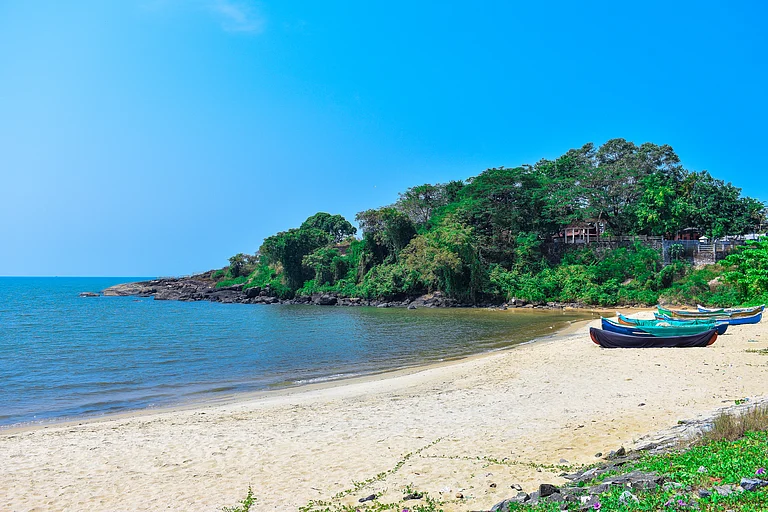
Sunset over Ladghar beach Vardhanjp/Wiki Commons
The Blue Flag season for the three newly recognised beaches will begin on November 15, 2026. The official flags are being brought from the Netherlands for a formal handover to the state government, followed by flag-hoisting ceremonies.
What Is The Blue Flag Certification?
The Blue Flag is an internationally recognised eco-label awarded to beaches, marinas and sustainable tourism boats that meet stringent environmental, safety, educational and accessibility standards. The programme is administered by the Denmark-based Foundation for Environmental Education (FEE) and operates in more than 50 countries.
Advertisement
To qualify, a beach must meet a set of criteria covering six key areas:
Water quality: Regular monitoring to ensure that bathing water meets prescribed standards.
Environmental management: Proper waste disposal, beach cleanliness and pollution control.
Biodiversity conservation: Protection of local ecosystems and sensitive coastal habitats.
Environmental education: Information boards and awareness initiatives to educate visitors about the surrounding environment.
Safety and services: Lifeguards, first-aid facilities, and appropriate visitor amenities.
Accessibility: Facilities that make beaches accessible to people with different mobility requirements.
The certification is not a permanent title. Beaches must continue meeting the prescribed criteria throughout the award period to retain their Blue Flag status. The programme also encourages responsible tourism and greater community participation in coastal conservation.

Shrivardhan Beach, Maharashtra Deposit Photos
How Many Indian Beaches Have Blue Flag Certification?
With the latest additions, 22 beaches across India have received Blue Flag recognition for the 2026-27 season. Of these, 13 have retained their previous certifications, while nine have received the distinction for the first time.
Advertisement
The three Konkan beaches account for one-third of the new additions. Maharashtra's entry also expands the geographical spread of the programme along India's coastline.

Kovalam Beach is setting the benchmark for Indian beaches aerial_holic/Instagram
India began its Blue Flag beach initiative in 2018 in collaboration with the Ministry of Environment, Forest and Climate Change and coastal states and Union Territories. The initiative aims to improve beach infrastructure, environmental management, water quality and visitor safety while promoting sustainable tourism.
The latest recognition is expected to bring greater attention to Maharashtra's Konkan coastline. The state government has indicated that it intends to work towards bringing more eligible beaches up to international standards, with the aim of strengthening coastal tourism while protecting the region's natural environment.
FAQs
1. Which three Konkan beaches have received Blue Flag certification for 2026-27?
Ladghar and Guhagar beaches in Ratnagiri district and Shrivardhan Beach in Raigad district have received Blue Flag certification for the 2026-27 season. They are the first beaches in Maharashtra to earn the international recognition.
Advertisement
2. How many Blue Flag-certified beaches are there in India in 2026-27?
India has 22 Blue Flag-certified beaches for the 2026-27 season, following the latest additions. Of these, 13 have retained their previous certifications, while nine have received the distinction for the first time.
3. What is the Blue Flag certification?
The Blue Flag is an internationally recognised eco-label awarded to beaches, marinas and sustainable tourism boats that meet stringent standards for water quality, environmental management, biodiversity conservation, safety, accessibility and environmental education. It is administered by the Foundation for Environmental Education (FEE).
4. When will the Blue Flag season begin at Ladghar, Guhagar and Shrivardhan beaches?
The Blue Flag season at the three newly certified Konkan beaches will begin on November 15, 2026. Formal flag-hoisting ceremonies will follow the handover of the official flags.
5. What are the criteria for a beach to receive Blue Flag certification?
A beach must meet international standards covering water quality, waste management, environmental conservation, visitor safety, accessibility and environmental education. Certification is reviewed annually, and beaches must continue meeting the prescribed criteria to retain their status.
Advertisement
Published At:
Tags