The UNESCO World Heritage Committee recently concluded its 48th session in Busan, Republic of Korea, with the inscription of 25 new sites on the World Heritage List. 19 cultural sites, five natural sites, and one mixed site were added to the list. The total number now stands at 1,273 sites across 173 countries.
25 New UNESCO World Heritage Sites You Need To Know About In 2026
The 2026 UNESCO World Heritage List goes beyond 25 new inscriptions, highlighting how conservation is increasingly shaped by conflict, climate change, and global representation

Advertisement
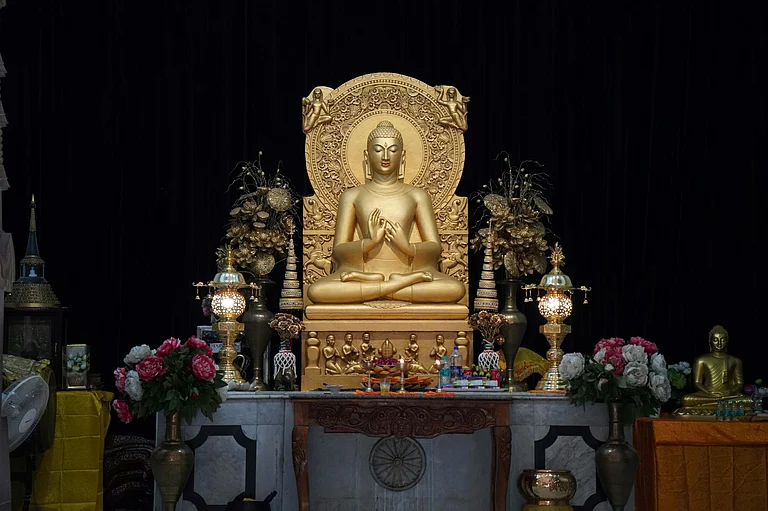
India's Ancient Buddhist Site of Sarnath joined the list alongside destinations as varied as Jordan's Aqaba Marine Reserve, Finland's Aalto Works, South Sudan's Boma-Badingilo Migratory Landscape and France's D-Day landing beaches.
Yet, the significance of this year's inscriptions extends well beyond the numbers. Alongside celebrating new additions, UNESCO also placed six sites on its List of World Heritage in Danger, welcomed the first-ever World Heritage inscriptions for Comoros, São Tomé and Príncipe, and South Sudan, and adopted a new strategy to support Small Island Developing States. Together, these decisions reveal a World Heritage programme that is increasingly responding to conflict, climate change, and long-standing questions about who gets represented on one of the world's most influential cultural lists.
Heritage On The Frontline Of Conflict
Six sites were placed on the List of World Heritage in Danger, with three newly inscribed properties - Mount Amel Castles in Lebanon, Sebastia in the State of Palestine and South Sudan's Boma-Badingilo Migratory Landscape. Existing World Heritage Sites in Suriname, Ukraine and Lebanon were also added owing to escalating threats.
Advertisement
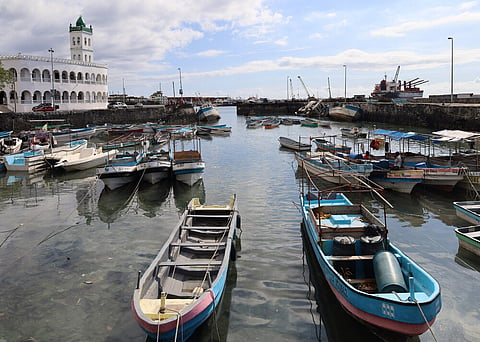
The Friday Mosque, Moroni, Ngazidja, Comoros UNESCO (RC Heritage)
UNESCO describes the danger list as a mechanism to mobilise international cooperation. Sites on the list become eligible for technical expertise, financial assistance and coordinated conservation efforts. Rather than signalling failure, inclusion is intended to draw global attention before irreversible damage occurs.
Mount Amel's medieval fortifications have suffered damage amid conflict in southern Lebanon. Sebastia, an archaeological landscape preserving more than two millennia of history, now exists within one of the world's most contested political regions. Ukraine's Ancient City of Tauric Chersonese faces threats linked to the ongoing occupation of Crimea, while South Sudan's vast migratory landscape is increasingly vulnerable to insecurity, poaching and infrastructure pressures.
UNESCO's recognition of the Beaches of the D-Day Landings in Normandy further reflects this changing understanding of heritage. As one of the organisation's recognised "sites of memory", Normandy commemorates the Allied landings of June 1944, illustrating that World Heritage status today is as much about preserving collective memory as it is about protecting monuments and archaeological remains.
Advertisement
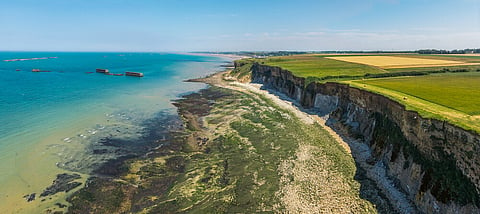
Mulberry B and the cliffs of Tracy-sur-Mer, France's D-Day landing beaches UNESCO (Michel Dehaye)
Rethinking Who Gets Represented
The Busan session also marks a more geographically representative World Heritage list. For the first time, Comoros, São Tomé and Príncipe, and South Sudan secured places on the list. UNESCO described these inscriptions as part of its commitment to ensuring that the World Heritage List better reflects the diversity of the world's cultural and natural heritage. The adoption of the World Heritage Strategy for Small Island Developing States (SIDS) 2026–2034, supported by a budget of USD 13 million, further reinforces this objective by strengthening the capacity of island nations to identify, conserve, and manage their heritage.
The diversity of this year's inscriptions reflects an expanding understanding of heritage itself. Alongside archaeological sites and historic cities are coral reef ecosystems, plantation landscapes, modernist architecture, industrial heritage, wildlife migrations, and living religious sites. Together, they suggest that heritage is no longer defined solely by monumental architecture or imperial history, but increasingly by cultural diversity, ecological significance and living traditions.
Advertisement
Which Are The 25 New Sites?
During its 48th session in Busan, Republic of Korea, the UNESCO World Heritage Committee inscribed 25 new sites spanning ancient civilisations, sacred landscapes, biodiversity hotspots, and modern cultural heritage.
The new additions are Sarnath (India), Aalto Works (Finland), Amazonian Theatres (Brazil), Archaeological Landscape of the Royal Court of Tiébélé (Burkina Faso), Archaeological Site of Niah National Park's Caves Complex (Malaysia), Asuka–Fujiwara: Archaeological Sites of Japan's Ancient Capitals (Japan), Bijagós Archipelago – Omatí Minhô (Guinea-Bissau), Boma–Badingilo Migratory Landscape (South Sudan), Comorian Coastline: Historic Towns of the Sultanate of Shirazi (Comoros), D-Day Landing Beaches, Normandy (France), Jingdezhen Imperial Kiln Sites (China), and Khuttal of Badakhshan (Tajikistan).
The remaining inscriptions include the Marine Reserve of Aqaba (Jordan), Memorials of the Cambodian Genocide: From Centres of Repression to Places of Peace and Reflection (Cambodia), Minoan Palatial Centres (Greece), Mount Mulanje Cultural Landscape (Malawi), Mount Olympus (Greece), Møns Klint (Denmark), Okefenokee National Wildlife Refuge (United States), Palaces of King Ludwig II of Bavaria (Germany), Royal Fortresses of Languedoc (France), Sidi Bou Saïd (Tunisia), The Xiongnu Elite Necropolis (Mongolia), The Xixia Imperial Tombs (China), and Wat Phra Mahathat Woramahawihan (Thailand).
Advertisement
Together, these inscriptions reflect UNESCO's continued efforts to recognise a wider range of cultural traditions, archaeological discoveries and natural ecosystems while improving the geographical representation of the World Heritage List.
FAQs
1. How many new sites were added to the UNESCO World Heritage List in 2026?
The UNESCO World Heritage Committee inscribed 25 new sites during its 48th session in Busan, Republic of Korea. These include 19 cultural sites, five natural sites and one mixed site, bringing the total number of World Heritage Sites to 1,273 across 173 countries.
2. Which Indian site was added to the UNESCO World Heritage List in 2026?
India's Ancient Buddhist Site of Sarnath was inscribed on the UNESCO World Heritage List during the 48th session, recognising its outstanding historical, cultural and religious significance.
3. What is the UNESCO List of World Heritage in Danger?
The List of World Heritage in Danger identifies sites facing serious threats such as armed conflict, climate change, natural disasters or uncontrolled development. Inclusion helps mobilise international funding, technical expertise and conservation support to protect these sites.
Advertisement
4. Which countries received their first-ever UNESCO World Heritage Site in 2026?
Comoros, São Tomé and Príncipe, and South Sudan each received their first UNESCO World Heritage inscription during the 2026 World Heritage Committee session, marking an important step towards greater global representation.
5. Why is UNESCO's 2026 World Heritage List considered significant?
Beyond adding new sites, the 2026 inscriptions highlight UNESCO's growing focus on protecting heritage affected by conflict and climate change, improving geographical representation, and recognising a wider range of heritage—from modern architecture and industrial landscapes to biodiversity-rich ecosystems and living cultural traditions.
Published At: