In the morning of February 1, 2026, Finance Minister Nirmala Sitharaman presented the Union Budget 2026-27 in the Parliament, her ninth consecutive budget and free India’s eightieth. The budget outlined the Government of India’s economic and development strategy for the year ahead. Among the several sectoral priorities, the Budget placed tourism and hospitality within an integrated fold of infrastructure development, regional growth, cultural heritage, sustainability, skills and services. The Budget proposed initiatives ranging from destination development to connectivity enhancement, heritage tourism, medical value tourism, Buddhist circuits and, crucially, institutional skilling.
Tourism And Hospitality In Budget 2026
The Finance Minister emphasised that tourism has “the potential to play a large role in employment generation, foreign exchange earnings and expanding the local economy.” To put this into action, several institutional and capacity-building measures were proposed.
In a matter of firsts, a National Institute of Hospitality is proposed to be set up by upgrading the National Council for Hotel Management and Catering Technology. The new institute is set to act as the boon between academia, industry and government in order to strengthen professional standards in hospitality.
Within the same vein, a pilot scheme to upskill 10,000 guides across 20 iconic tourist sites was announced. The programme will consist of a 12-week standardised training course to be delivered in hybrid mode, developed in collaboration with an Indian Institute of Management (IIM).
In addition, the Budget also proposed a National Destination Digital Knowledge Grid for the digital documentation of places of cultural, spiritual and heritage value. It will be in sync with an ecosystem expected to trigger roles for local researchers, historians and content managers.
These initiatives, said Navneet Sharma, CEO and MD, Lion Group, show how “the central government has worked over the foundation of tourism.” The grassroots approach and “training key players, who are directly dealing with the tourists on ground will make for a better experience,” he said. “India has a great potential for tourism around offbeat temples and heritage places. The plan of digital knowledge will also bring more in-depth knowledge for local historians and researchers, which will eventually help project our tourism worldwide.”
On the subject of setting up the National Institute of Hospitality, however, Sanjay Sharma, Sustainable Tourism Curator, Aramya Hospitality, takes a different view. “They should change the curriculum now (of preexisting institutes), because the change is huge in the practical exposure and what is being taught in the institute,” he said.
Further, on the scheme of setting up 10,000 guides, he expressed doubt as the job could very well be done by AI (artificial intelligence). “I think in the scenario of AI, there won’t be any jobs left for the guides,” he said. “The association of guides in India has also been looking for a budget for the past 2-3 years but they haven’t gotten anything. I think it’s pure eyewash.”
Railways, Roadways And Destination Connectivity In Budget 2026


In order for the measures announced for tourism to be successfully realised, an undergirding support system of connectivity was also announced in the Budget.
Among these, seven High-Speed Rail corridors were proposed as environmentally sustainable inter-city connectors. These corridors entail Mumbai-Pune, Pune-Hyderabad, Hyderabad-Bengaluru, Hyderabad-Chennai, Chennai-Bengaluru, Delhi-Varansi and Varanasi-Siliguri. All of these are aimed at the improvement of accessibility between major eastern and southern growth nodes.
The government has also announced a plan to build 20 new national waterways over a span of 5 years to boost inland navigation and support eco-tourism in water-linked regions, alongside potential incentives for seaplane manufacturing to improve last-mile connectivity at remote destinations.
Focus On Purvodaya States And The North-Eastern Region
Earlier, Budget 2026 prominently included provisions for regional tourism development under the Purvodaya and North-East frameworks.
The Budget 2027, under Mission Purvodaya, proposed the development of an integrated East Coast Industrial Corridor with a well-connected node at Durgapur, West Bengal. Further within the Purvodaya States (Bihar, Jharkhand, West Bengal, Odisha and Andhra Pradesh), five dedicated tourism destinations are proposed to be created. As a crutch to support this strategy, provisions for 4,000 electric buses were also announced for the enhancement of urban and regional mobility in eastern states.
Importantly, in the North-Eastern region, a Scheme for Development of Buddhist Circuits was also proposed. It will seek to cover Arunachal Pradesh, Sikkim, Assam, Manipur, Mizoram and Tripura, focusing on the preservation of temples and monasteries, improvement of connectivity, pilgrim interpretation centres and pilgrim amenities. While rolling out this plan, the region was described as the ‘confluence of Theravada and Mahayana/Vajrayana Buddhist traditions.’
Such deeply regional tourism initiatives are being posited as part of a broader intention for the infrastructure and cultural development strategy for historically under-served areas.
Nikhil Sharma, Managing Director and COO, South Asia, Radisson Hotel Group, welcomed the initiative. “Focus on sustainable and experiential tourism, including the development of Himalayan trails, the continued push for Buddhist circuits, and the strong policy thrust on the Northeast, will support the growth of diverse tourism segments while enabling more balanced regional development,” he said. “These measures are expected to encourage longer stays, wider travel dispersal, and stronger demand for quality accommodation and services across tier-2 and tier-3 markets.”
Heritage Sites And Cultural Tourism In Budget 2026
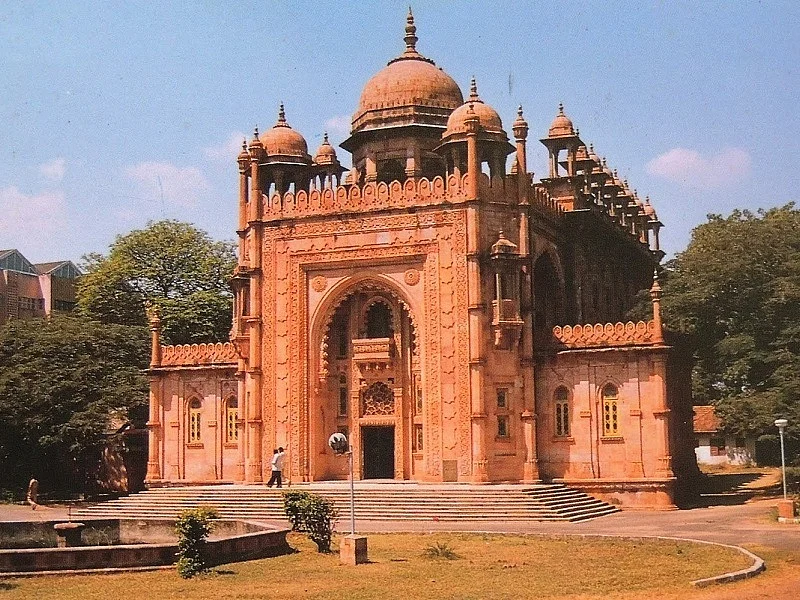
As a step to make heritage and culture significant agents of tourism, the Budget also outlined plans to develop 15 archaeological sites within experiential cultural destinations. Among these sites are names like Lothal, Dholavira, Rakhigarhi, Adichanallur, Sarnath, Hastinapur and Leh Palace. The proposals envision opening excavated landscapes to the general public with curated walkways, interpretation centres, conservation labs and immersive storytelling technologies.
The initiative aims to tap on the potential of ancient history and link heritage conservation with experiential tourism across diverse contexts.
Sustainability And Responsible Tourism In Budget 2026
On the front of sustainable and responsible tourism—ever so important within the scope of tourism and hospitality—the Budget seemed to gear up, especially in nature-centric travel experiences. Ecologically sustainable trails are set to be developed across a range of natural landscapes including mountain trails in Himachal Pradesh, Uttarakhand and Jammu and Kashmir. Araku Valley in the Eastern Ghats as well as Podhigai Malai in the Western Ghats are also in the list.
Furthermore, turtle trails at key nesting sites in Odisha, Karnataka and Kerala are also being focused. Bird-watching trails around Pulicat Lake in Andhra Pradesh and Tamil Nadu will also see some enhancement.
These initiatives are designed with the intention of expanding eco-tourism opportunities while maintaining environmental safeguards.
AYUSH And Wellness Tourism In Budget 2026
While not framed solely as tourism policy, the Budget did emphasise on steps to boost global recognition for yoga and Ayurveda. It linked the expert of quality Ayurvedic products to expanded economic opportunities for farmers and youth engaged in the procession and value addition, connecting wellness ecosystems with tourism and foreign demand.
It was angled in as the Finance Minister stressed how Ayurveda gained global acceptance and recognition after COVID-19 pandemic. “Ancient Indian yoga, already respected in several parts of the world, was given a mass global recognition when the prime minister took it to the UN,” the minister said.
To meet the growing global demand, Sitharaman proposed setting up of three new All India Institutes of Ayurveda, upgrading AYUSH pharmacies and drug testing labs to higher standards for the certification ecosystem and making more skilled personnel available.
She also called for upgrading the WHO Global Traditional Medicine Centre in Jamnagar to bolster evidence-based research, training and awareness for traditional medicine.
Inbound And Medical Tourism
Announcing the measures for enhancing India’s attractiveness as a destination for medical value tourism in Parliament, Finance Minister Nirmala Sitharaman said, “I propose to launch a scheme to support states in establishing five regional medical hubs,” noting that these will function as integrated healthcare complexes combining medical services, education and research. On the biopharma initiative, Sitharaman said, “I propose the Biopharma Shakti with an outlay of INR 10,000 crore over the next five years; this will build the ecosystem for domestic production of biologics and biosimilars.” She added that the plan includes three new National Institutes of Pharmaceutical Education and Research, upgrades to seven existing ones, a network of 1,000 accredited clinical trial sites, and steps to strengthen the Central Drugs Standard Control Organisation to meet global standards.
Asked whether these initiatives of medical tourism and Ayurveda would have a big pay-off, Abhilash Kalathil Ramesh, Executive Director of Kairali Ayurvedic Group, found it debatable. However, is it “going to help the general public and the common man? For sure — by setting up clinics, upskilling centres, training centres, etcetera, and creating AYUSH centres. But will that help international tourism? I’m not so sure,” he said.
Though one thing Ramesh admitted to keeping an eye on, as a person involved in wellness, was “the medical hub initiative. We’ll see how that really helps AYUSH. Since they want private partners involved as well, maybe setting up Ayurvedic centres, clinics or hospitals, or supplying medical and Ayurvedic products through these centres, could be something of interest for us as a group.”
Outbound Travel And F&B In Budget 2026

A notable change in fiscal policy affecting outbound tourism was the uniform reduction of Tax Collected at Source (TCS) on overseas tour packages to 2 per cent, removing earlier tiered rates and minimum thresholds. This applies under the Liberalised Remittance Scheme for travel-related expenditures.
The TCS rate on remittances for education and medical purposes was similarly lowered, enabling more cost-effective overseas remittances for these categories.
“The rationalisation of TCS on overseas tour packages is a welcome step that addresses upfront liquidity impact on Indian outbound travellers. The government’s infrastructure-led investments have played an important role in supporting the growth of domestic tourism, and it is encouraging to see this momentum being sustained,” said Rajesh Magow, Chair, FICCI Tourism Committee and Co-founder & Group CEO, MakeMyTrip.
Though there were no sector-specific tax changes for GST or direct fiscal incentives in hospitality, the structural measures proposed — such as the National Institute of Hospitality and guide training — are designed to strengthen skill capacity within hotels, restaurants and service economies linked to travel and leisure.
These steps reflect a focus on human capital and industry readiness, rather than fiscal stimulus to the sector.
Workforce And Skill Development
Workforce development was a recurring theme across tourism and hospitality proposals. Beyond guide training and hospitality education reform, the Budget’s integrated schemes — including digital documentation, heritage interpretation and medical tourism hubs — suggest new roles for trained professionals across research, interpretation, logistics, conservation, hospitality services and allied health sectors.
Overall, while Union Budget 2026 articulated several visions in which tourism is woven into broader agendas of infrastructure growth, sustainability, heritage conservation, healthcare and skills, it will be a matter of time to observe how well these schemes translate to practicality. If executed with any merit, the linkage of tourism development with regional corridors, cultural circuits, eco-trails, medical tourism hubs and institutional skilling that the Budget 2026 proposed will have an emboldening impact on the role of tourism within the country as far as employment, connectivity and economic advancement is concerned.