

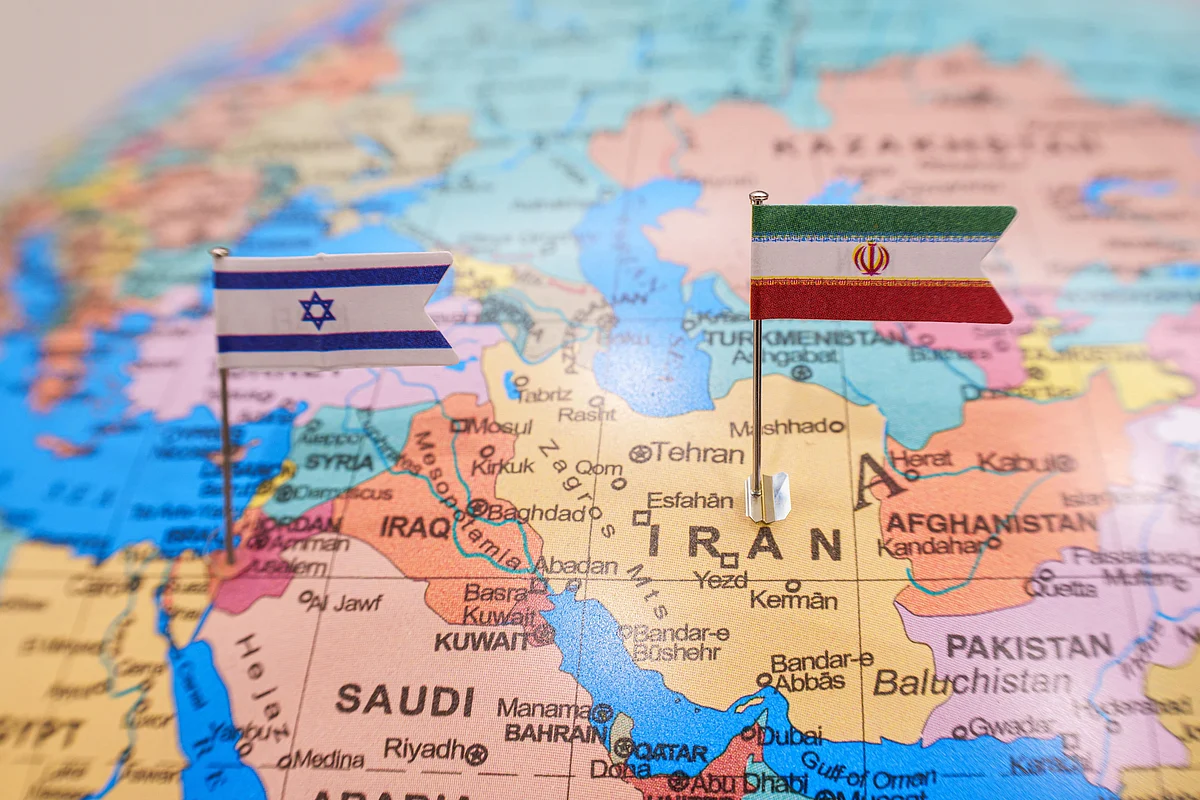
The Middle East has entered one of its most volatile phases in recent years as military actions between Israel and Iran escalated following coordinated strikes by the United States and Israel. The conflict has rapidly expanded beyond the immediate borders of both countries, unsettling regional stability and prompting a series of travel advisories and curbs. Most notably, air travel across the Middle East and beyond has been severely disrupted by airspace closures, flight cancellations, and route diversions. Governments and airlines worldwide are issuing guidance to travellers while attempting to safeguard civilians and aviation operations. The crisis is not only a geopolitical flashpoint but also a major logistical and economic shock to global mobility.
Middle East Airspace Closures Disrupt Global Aviation
Tensions escalated quickly after Israel and the United States struck targets inside Iran, triggering a rapid response from Tehran and fuelling fears that the situation could spiral into a wider conflict. As the uncertainty deepened, governments across the region, including Iran, Israel, Iraq, Kuwait, Bahrain and the United Arab Emirates, acted fast to close or limit their civilian airspace. Officials said the move was necessary to protect commercial flights from potential missile threats and active military operations. The impact showed almost immediately, with some of the world’s busiest flight paths grinding to a halt as airlines cancelled services, diverted aircraft or kept planes on the ground.


Major global flight tracking data shows that tens of thousands of flights have been delayed, and thousands more have been cancelled or rerouted as airlines adjust to dynamically changing airspace availability. Some aviation hubs that are normally among the busiest in the world, including Dubai International Airport and Hamad International Airport in Doha, have seen massive flight disruptions. Airlines such as Emirates, Qatar Airways, and Etihad suspended operations at times when airspace restrictions were most stringent.
Indian carriers have also been directly affected. Air India, IndiGo, Air India Express, and Akasa Air have suspended flights to many destinations across the Middle East. Flights to the United Arab Emirates, Saudi Arabia, Qatar, Kuwait, and Israel have been postponed or cancelled as airlines prioritise passenger and crew safety amid the volatile situation. The Directorate General of Civil Aviation in India advised carriers to avoid flying through the airspace of 11 Middle Eastern nations, including Iran and the UAE, at least until early March, forcing airlines to revise schedules and seek alternative routes.
Travel Advisories, Air Travel Curbs, And Passenger Support Measures
Official travel advisories have proliferated as governments respond to the security threat. Many countries have updated warnings for their citizens against travel to the Middle East, particularly to Israel, Iran, and neighbouring states directly involved in the conflict. Governments urge citizens in the region to stay in secure locations, register with embassies, and avoid non-essential travel.
Airlines have issued special advisories for affected passengers. IndiGo said that scheduled services may experience more adjustments and advised travellers to stay updated about their flight status. Also, airport authorities in the UAE have issued urgent notifications to passengers flying through major hubs, warning of potential flight disruptions and recommending that travellers check departure and arrival information frequently.
To mitigate inconvenience, many airlines have relaxed booking policies. Airlines have offered full refunds, rebooking options, or waivers for changes on flights to and from affected regions. These accommodations are typically available for bookings made before the crisis escalated, and travellers are encouraged to contact carriers directly for details on rescheduling or claims.
Some national authorities are preparing evacuation assistance for citizens in the region. Countries with large expatriate populations in the Middle East are coordinating with airlines and foreign missions to ensure safe repatriation options or to provide shelter while the crisis abates.
Broader Impact On Global Travel And Mobility
Air travel has suffered greatly from closed airspace. Airlines are left with no option but to find longer, more costly routes. The detour can add many hours to the journey while raising the cost of air travel because more fuel is burned, crews work extended hours, and the flight planners have to adapt their plans to accommodate the continuously changing restrictions. Aircraft now fly well south over the Arabian Sea or well north over Turkey in order to avoid the troubled airspace.

The ripple effects stretch well outside the region. Gulf airports sit at the heart of global aviation, linking Europe, Asia, Africa and the Americas through tightly timed connections.
The economic fallout is also mounting. Tourism operators throughout the Middle East are experiencing increasing financial losses because consumers have opted to cancel vacations or defer their travel plans. Hotels in the region are experiencing a decline in their occupancy levels. Similarly, businesses have reduced their level of corporate travel, resulting in the need for businesses to consider alternatives to their planned trade shows, conferences, and investment meetings.
Security has tightened globally due to the ongoing conflict between Israel and Iran. Airports and aviation regulatory authorities are assessing flight paths/risk levels to help ensure that commercial aircraft are not placed in unsafe environments.
These measures may bring some level of confidence; however, they also add additional inspections, modify procedures and extend processing times.
Economic Fallout: Oil Prices Surge Amid Strait of Hormuz Concerns
As the conflict between Israel, the United States and Iran deepens, oil markets have reacted almost instantly. Brent crude has climbed past 80 dollars per barrel, while West Texas Intermediate has touched levels not seen in months. The biggest concern is the Strait of Hormuz, the narrow but crucial route between Iran and the Gulf that carries about a fifth of the world’s oil. Even the possibility of disruption there has been enough to push prices up. Traders are building in a risk premium, fearing that tanker traffic could be hit or shipping lanes blocked. Some market watchers warn that if the conflict intensifies, oil could climb to 90 dollars a barrel or even move past the 100 dollar mark. OPEC+ producers may step in with higher output to try and steady prices, but more barrels alone may not ease nerves if key shipping lanes remain vulnerable. As long as there is uncertainty around transport routes, traders are likely to keep pricing in that risk.
The effects are no longer limited to energy markets. Countries that depend heavily on imported crude, including India, are bracing for larger oil bills that can strain trade balances and push up inflation. When crude prices rise, fuel costs usually follow, making transportation more expensive and gradually increasing the price of daily essentials. Companies absorb some of the shock, but much of it filters down to consumers. Higher costs can dampen spending and slow growth. Stock markets have already reacted cautiously as energy prices climb. If tensions continue, sustained high oil prices could put real pressure on household budgets and make economic decisions tougher for governments and central banks worldwide.
(With inputs from various sources.)
FAQs
1. Why are flights being cancelled due to the Israel–Iran conflict?
Flights have been cancelled or rerouted after escalating tensions between Israel and Iran led multiple regional governments to close or restrict civilian airspace for safety reasons.
2. Which countries have restricted their airspace?
Airspace controls have been reported across Iran, Israel, Iraq, Kuwait, Bahrain and the United Arab Emirates.
3. Which airlines are affected?
Major global and Indian carriers including Emirates, Qatar Airways, Etihad Airways, Air India and IndiGo have suspended, delayed or rerouted services.
4. Why are oil prices rising amid the conflict?
Oil prices have surged amid concerns that instability could disrupt shipments through the Strait of Hormuz, a key global energy corridor. Benchmarks like Brent Crude have climbed as traders factor in geopolitical risk.
5. How could this affect India and global economies?
Countries dependent on crude imports, including India, may face higher fuel costs and inflation if oil prices remain elevated. Prolonged disruption could impact trade balances, consumer spending and airline operating costs worldwide.