

You have finally arrived at the destination you’ve dreamed about for years. The flights are booked, there’s a wonderful view from the hotel, and the city swears everything you’ve imagined. But before stepping out, you pause. Should you hold your partner’s hand in public? Should you change the way you dress? Should you avoid mentioning who you are?
A new survey finds that nearly half of Indian LGBTQ+ travellers are willing to conceal their identity to visit a dream destination. As Pride flags flutter across cities this June, celebrating visibility, for many queer travellers, crossing borders can still mean stepping back into the closet.
A new report by Booking.com has revealed that 46 per cent of Indian LGBTQ+ travellers are willing to hide their identity in order to visit a bucket-list destination. Only 31 per cent say they are “out” while travelling.
The survey, conducted among more than 13,000 LGBTQ+ travellers across 19 countries, found that safety concerns continue to shape decisions long before a journey begins. From choosing destinations and accommodation to deciding how openly they can express affection in public, many respondents reported making calculations that heterosexual travellers rarely have to consider.
For filmmaker and ad director Gaurav Gupta, those calculations begin with the destination itself.
Whenever he plans a trip, he researches how LGBTQ+ people are treated in a country before considering anything else. Safety and the ability to live openly, he says, matter more than any landmark or attraction.
“A holiday is a time when I want to be myself and enjoy the culture, people, food and experiences freely, without fear of judgment,” Gupta tells Outlook Traveller.
PR professional Abhishek Ghosh approaches travel in much the same way. Before considering hotels, attractions or local experiences, he researches local laws, social attitudes, and accounts from other queer travellers.
“The first thing I look at is how safe and welcoming a destination is for LGBTQ+ people,” Ghosh tells Outlook Traveller. “Travel is supposed to be liberating, and constantly having to monitor my behaviour, avoid public displays of affection, or conceal my identity takes away from that experience.”
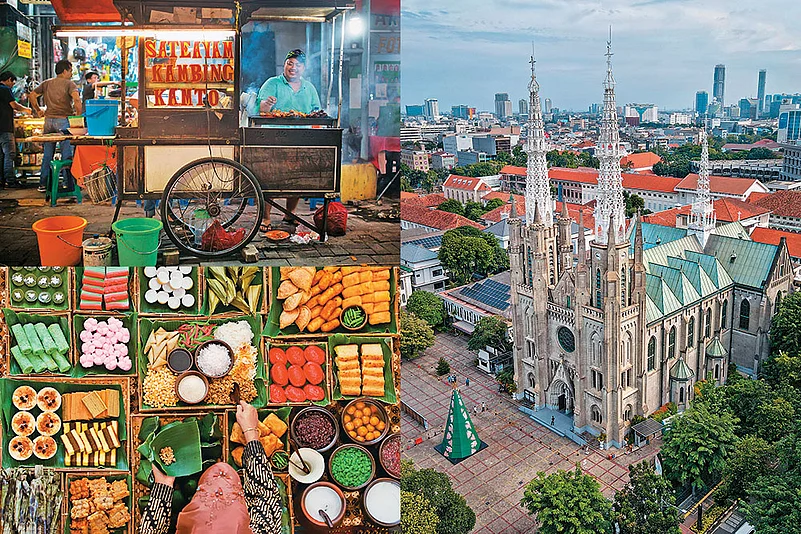

That, for Gaurav Gupta, has meant avoiding several destinations he would otherwise like to visit. While he has travelled to Indonesia for work and leisure, a conversation with a queer friend there left a lasting impression. The warning was straightforward: be careful, and do not reveal too much about yourself.
The experience, Gupta recalls, felt like “going back into the closet.”
The Hidden Cost Of Travel
The findings arrive during Pride Month, whose origins lie in a very different struggle for visibility.
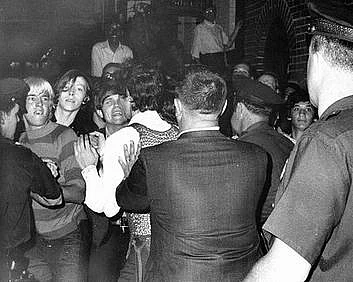
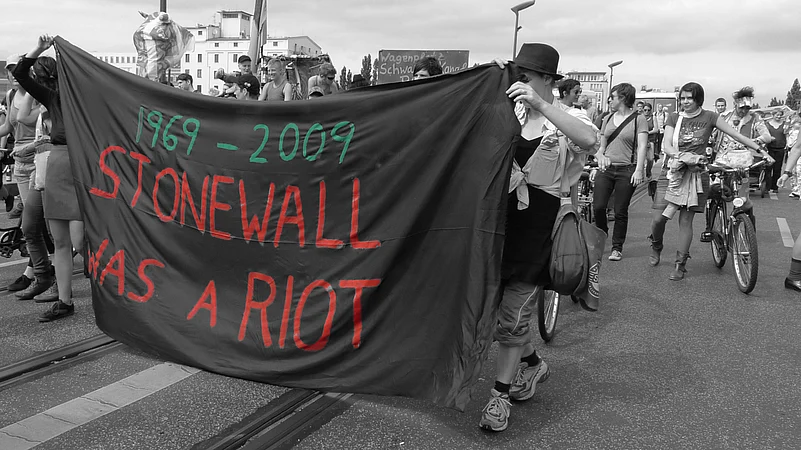
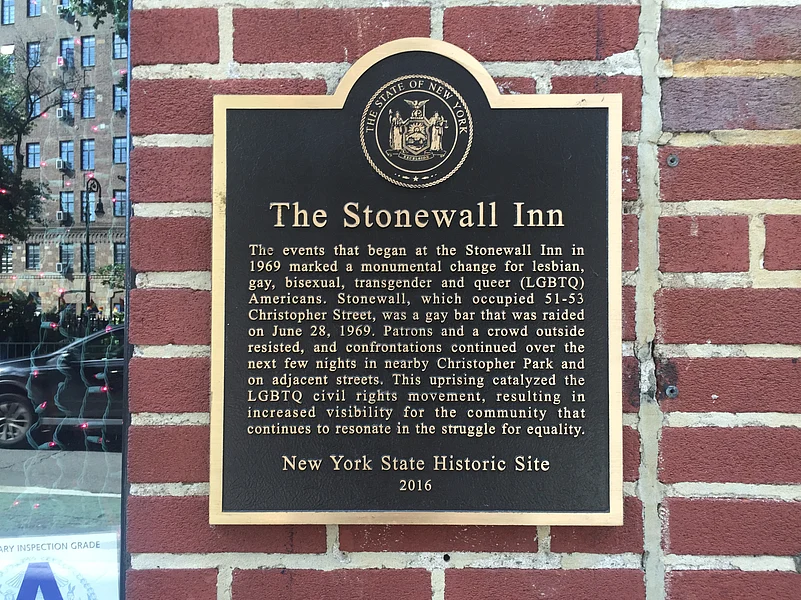
Modern Pride traces its roots to the 1969 Stonewall uprising in New York City, when members of the LGBTQ+ community resisted police raids at the Stonewall Inn, a gay bar in Greenwich Village. The protests became a turning point in the global LGBTQ+ rights movement, and Pride marches emerged as public affirmations of identity and resistance.
More than five decades later, visibility remains central to the conversation. Yet the Booking.com data suggests that visibility often comes with trade-offs.
Among Indian respondents, 66 per cent say they now take more precautions while travelling than they did a few years ago. Many share live locations with trusted contacts, use VPNs, delete dating apps before crossing borders, or carry secondary phones to protect their privacy.
More than half say they scan their surroundings before showing affection towards a partner in public.
For Ghosh, that vigilance feels familiar.
“While travelling, there have been moments when I’ve instinctively hesitated before mentioning my partner or clarifying that I’m in a same-sex relationship,” he says. “In some destinations, you become very conscious of your surroundings and start editing your conversations to avoid drawing attention.”
These precautions are not necessarily signs of paranoia. They are responses to a world where legal protections, social attitudes and cultural acceptance vary dramatically across borders.
The survey’s most striking finding may be that travellers who are not openly LGBTQ+ report fewer negative travel experiences than those who are. On paper, they appear safer. In reality, the data reveals a more uncomfortable truth: safety often comes from concealment.
The absence of discrimination is achieved not because prejudice has disappeared, but because identity has been hidden.
Reading A Room Before Entering It
Many queer travellers become experts at assessing risk.
Gupta says this vigilance extends beyond international travel. Even while working across India as a film director, he sometimes alters aspects of his appearance depending on the location.
When shooting in remote areas, he occasionally removes jewellery or accessories to avoid attracting attention.
“It’s a small adjustment, but it comes from a place of caution,” he says.
He is not alone. The survey found that anxiety remains particularly high among transgender travellers, who often face greater scrutiny and discrimination. They were the only demographic group in the study whose travel-related anxiety had increased more than their confidence in recent years.
Stories shared within the community frequently shape travel decisions as much as official advisories do. Gupta recalls a friend facing hostile comments while travelling in Malaysia because of their gender expression. Such incidents reinforce the idea that queer travellers are often evaluating not only destinations but also how visible they can afford to be once they arrive.

Publicist Ghosh says many travellers encounter subtler forms of exclusion that rarely make headlines but leave a lasting impact.
He recalls hearing from friends who were questioned while checking into hotels, asked to explain why they wanted a room with one bed, or made to feel uncomfortable expressing affection in public spaces.
“Even when there is no direct discrimination, the fear of a negative reaction can be emotionally exhausting,” he says.
Yet travel experiences are not uniformly negative.
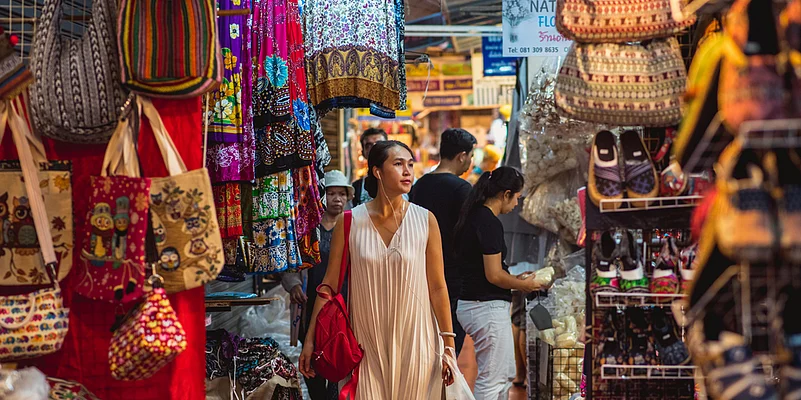
Director Gupta remembers encounters in Bangkok where strangers complimented his style rather than mocked it. Those moments stand out because they offer something many travellers seek but do not always find: the feeling of being unremarkably accepted.
“You feel seen rather than judged,” he says.
Can Technology Fill The Information Gap?
As travellers search for safer ways to navigate unfamiliar places, many are increasingly turning to technology.
According to the survey, 88 per cent of Indian LGBTQ+ travellers used artificial intelligence tools to help plan a trip over the past year. Nearly half said they trust AI to provide objective and non-judgmental advice related to their identity, while 49 per cent reported feeling safer asking AI sensitive questions about local LGBTQ+ culture than asking another person.
The finding reflects a broader shift in how travellers gather information. Traditional guidebooks rarely explain whether a neighbourhood is welcoming to same-sex couples. Search engines can offer fragmented answers. AI tools, meanwhile, allow users to ask direct questions without fear of embarrassment or judgment.
For some travellers, technology has become part of a personal safety toolkit, alongside community forums, travel groups and recommendations from other LGBTQ+ travellers.
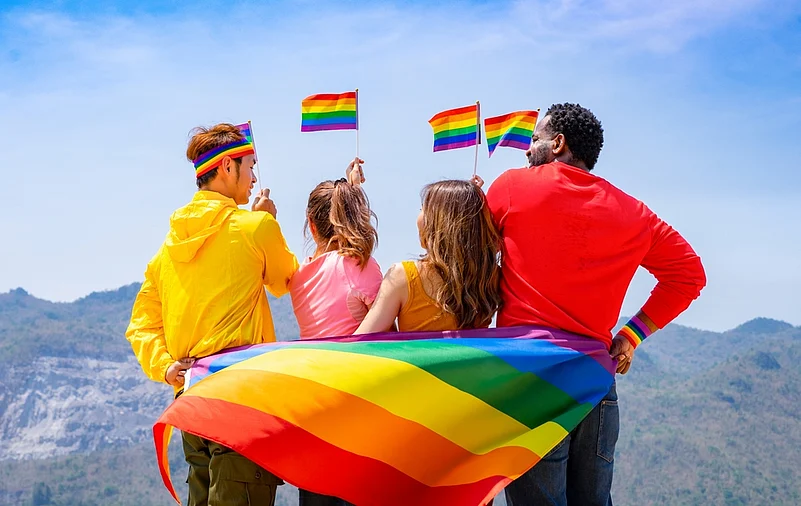
The travel industry is also responding. The Booking.com report notes that visible signs of inclusion—from staff using correct pronouns to gender-neutral facilities and LGBTQ+ representation among employees—continue to influence traveller confidence.
Encouragingly, 94 per cent of Indian respondents reported at least one positive experience related to their identity while travelling during the past year, and nearly three-quarters believe acceptance has improved in recent years.
Those numbers suggest progress. But they also exist alongside a reality in which many travellers still feel compelled to hide parts of themselves to access the world.
For Gupta, that contradiction captures the moment.
He points to stories of queer people facing abuse even in cities often regarded as progressive. Friends who moved abroad seeking greater freedom, he says, sometimes discover that acceptance remains conditional.
“We have made progress,” he says. “But true acceptance is still a long way off.”
Ghosh agrees that legal victories alone do not guarantee inclusion.
“If LGBTQ+ people still feel compelled to hide who they are in 2026, it shows that legal progress alone is not enough,” he says. “True inclusion is not just about rights on paper; it's about creating environments where people can live openly without fear.”
At the same time, he remains hopeful. Conversations around diversity, representation, and equality have become increasingly mainstream, he notes, even if social attitudes do not always evolve at the same pace as legislation.
“The goal should be a future where nobody has to choose between their safety and being themselves.”
Travel has long been associated with possibility—the promise of seeing the world differently and, perhaps, seeing ourselves differently too. For many LGBTQ+ travellers, that promise remains intact. What has not disappeared is the question that continues to accompany every itinerary:
Not where to go next, but whether they will be allowed to be themselves when they get there.
FAQs
1. What does the latest LGBTQ+ travel survey reveal?
The survey found that 46% of Indian LGBTQ+ travellers are willing to conceal their identity to visit a dream destination, while only 31% say they are openly LGBTQ+ when travelling.
2. Why do LGBTQ+ travellers research destinations before travelling?
Many LGBTQ+ travellers evaluate local laws, cultural attitudes, safety conditions, and experiences shared by other queer travellers before deciding where to visit.
3. What precautions do LGBTQ+ travellers commonly take?
Common precautions include sharing live locations, using VPNs, avoiding public displays of affection, deleting dating apps before travel, and researching LGBTQ-friendly spaces.
4. How is AI helping LGBTQ+ travellers?
AI tools are increasingly being used to research local LGBTQ+ culture, safety concerns, inclusive neighbourhoods, and destination-specific advice without fear of judgment.
5. What makes a destination LGBTQ-friendly?
Factors include legal protections, social acceptance, inclusive accommodation policies, gender-neutral facilities, staff training, and visible support for LGBTQ+ communities.