
Travel across Asia is entering a new phase where intention matters more than indulgence. The latest 2026 outlook from Agoda reveals a traveller mindset shaped by authenticity, price sensitivity, cultural curiosity, and increasing dependence on AI. The result is a clear shift: people want to travel smart rather than travel far. Experiences that feel personal, accessible, convenient, and rooted in local culture are now more desirable than postcard moments. The data offers a comprehensive view of this transformation, capturing how value, technology, and rediscovery are becoming the real drivers of tomorrow’s journeys.
Domestic Travel Becomes The New Aspiration
Asia is experiencing a powerful return to homegrown exploration. More than one-third of travellers, or 35 per cent, say they plan to travel within their own country in 2026. This is a dramatic rise from 15 per cent the year before and signals a preference for familiarity that still feels new. Japan and Thailand illustrate this shift most strongly, where 67 per cent and 66 per cent of respondents, respectively, intend to prioritise domestic travel. Travellers are not simply revisiting popular places but seeking lesser-known regions that offer cultural diversity, nature experiences, and quieter environments. Search behaviour also shows that hidden gems are gaining traction fast, with many of these alternative destinations beginning to match or even surpass traditional hotspots.


Value Shapes Decision Making At Every Step
Across Asia, value has become a universal motivator. A significant 40 per cent of travellers plan to spend only 6 to 10 per cent of their income on travel. Price is the single most influential factor when selecting accommodation, ahead of location and reviews. Nearly 73 per cent of travellers prefer stays under 100 USD per night, and markets such as Malaysia, Vietnam, and Indonesia show particularly strong preferences for options under 50 USD. The pursuit of affordable stays is enabling people to take more trips without increasing their overall budgets. This trend directly feeds into growing demand for local destinations, shorter getaways, and off-peak travel patterns.
Secondary Destinations Become Asia’s New Travel Powerhouses
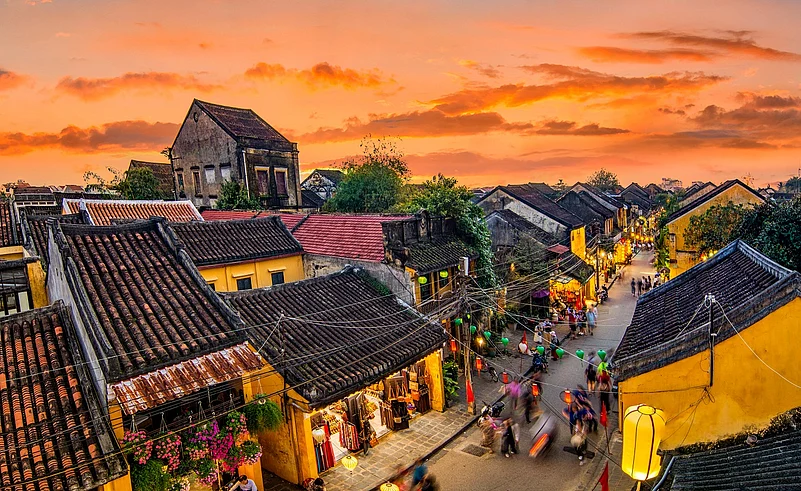
Secondary destinations are now absorbing the spotlight once reserved for major cities. Over the last two years, accommodation searches for these emerging regions grew 15 per cent faster than primary tourism hubs. By the first half of 2025, they accounted for 34 per cent of all regional accommodation searches. Value is the leading reason for this shift, with 43 per cent of travellers motivated by lower costs. But cultural richness, outdoor experiences, and targeted promotions are also drawing attention. Government campaigns such as Thailand’s Grand Discovery, Indonesia’s Tourism 5.0, Japan’s regional tourism initiatives, Malaysia’s VM2026 program, and India’s UDAN connectivity expansion have opened pathways to more diversified travel across the region. Japan alone has recorded a 74 per cent increase in interest for secondary cities, with destinations like Takamatsu and Matsuyama showing strong year-on-year growth.
Culinary, Cultural, And Event-Driven Travel Takes Centre Stage
Experiential travel has become mainstream. Relaxation remains the top motivation at 62 per cent, but culinary exploration has surged into second place at 31 per cent, rising from sixth position last year. Food is especially influential among travellers from Taiwan, Vietnam, and South Korea. Culinary experiences now rank among the top-searched activities on digital travel platforms. Cultural events and mega concerts are also changing regional travel patterns. Lady Gaga’s Singapore shows triggered a 358 per cent spike in accommodation searches from markets such as Taiwan and Indonesia. BLACKPINK’s Bangkok concerts resulted in a 266 per cent jump in searches from Vietnam and a 107 per cent rise from Malaysia. Spiritual travel is also growing rapidly. India saw a 25 per cent rise in domestic accommodation searches during Holi and an extraordinary 233 per cent surge in Prayagraj (formerly, Allahabad) during the Mahakumbh Mela.

Microtravel And Family Trips Redefine Itineraries
Short trips are becoming a lifestyle across Asia. 35 per cent of travellers plan to take four to six trips in 2026, while half say their ideal family holiday lasts between four and seven days. Microtravel is rising too, with 32 per cent planning one to three-day getaways. Japan and Thailand are leading this trend, where a majority of travellers prefer short, frequent escapes instead of long annual vacations. These compact itineraries allow families and couples to travel more often without sacrificing work schedules or budgets.
The Era Of Frictionless Travel Arrives
Asia is rapidly removing barriers to cross-border travel. Air capacity is expanding at a record pace, with airlines in the region expected to take delivery of around 615 new aircraft in 2026. Passenger flows already reflect this growth, with mainland China reporting nearly a 26 per cent year-on-year rise in air traffic within APAC in early 2025. Visa waivers are having an immediate impact. When Malaysia and Thailand removed visa requirements for Indian travellers, searches jumped almost instantly. Survey data shows that 35 per cent of travellers consider visa rules a key factor in their planning, and 61 per cent say they would visit new destinations if visa requirements were relaxed. China recorded 20 million visa-free inbound trips in 2024, doubling from the previous year, while Vietnam’s extended visa policies helped it achieve the world’s fastest tourism growth rate in early 2025.
AI Becomes The Traveller’s Most Powerful Planning Tool
Artificial intelligence is now a mainstream travel companion in Asia. 63 per cent of travellers say they are likely to use AI to plan their next trip. Trust is improving, with 44 per cent of respondents stating they somewhat or fully trust AI-generated information, while another 46 per cent feel neutral rather than distrustful. Travellers want AI to simplify their decision-making. The most requested uses include recommendations for local attractions, personalised itineraries, and destination suggestions. The industry is also moving beyond basic AI and entering the age of agentic AI. These systems can monitor weather, flight delays, and reservations, then autonomously rearrange elements of the itinerary. Early examples are already appearing through digital wallet integrations that allow travellers to plan directly through conversational tools.

Connected Trips And Smart Infrastructure Shape The Future
The shift toward integrated travel is accelerating as travellers expect a single platform to manage flights, stays, activities, and transport. Large travel platforms now conduct trillions of price checks daily to power personalisation at scale and streamline search results. With over 300,000 experiences bookable online, the lines between dreaming, planning, and booking are merging into one continuous journey. The infrastructure behind this transformation also depends on advancements in payment technology. Cross-border QR payments across ASEAN and instant payment linkages like PayNow-PromptPay allow travellers to pay overseas using their home bank apps, simplifying the last-mile friction that previously complicated international trips.
The travel landscape of 2026 reflects a decisive shift from spectacle to substance. Asian travellers are choosing meaningful and budget-smart journeys anchored in domestic discovery, cultural depth, culinary adventures, and seamless planning. With secondary cities rising, visa barriers falling, air travel expanding, and AI accelerating decision-making, the region is poised for a more connected and intentional era of travel. The story of the year ahead is simple. People want trips that feel personal, local, easy, and worthwhile, proving that meaning is now the new magic.
FAQs
1. What are the biggest travel trends predicted for 2026?
Travellers in Asia are prioritising domestic exploration, value-driven stays, secondary destinations, cultural and culinary experiences, and seamless travel supported by AI.
2. Why is domestic travel becoming more popular in Asia?
Travellers want familiar yet fresh experiences, lower costs, and easier planning, making homegrown destinations more appealing than long-haul international trips.
3. How are secondary cities becoming major travel hotspots?
Government initiatives, cultural richness, better connectivity, and lower costs are pushing travellers toward emerging destinations that offer high value.
4. What role will AI play in travel planning in 2026?
AI will help travellers create personalised itineraries, manage bookings, handle disruptions, and streamline decisions through agentic systems that automate planning.
5. Why is culinary travel gaining importance?
Food experiences offer authenticity and cultural connection, and travellers increasingly evaluate destinations based on local cuisine, festivals, and speciality dishes.