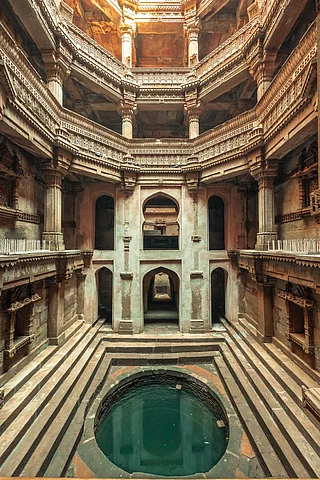


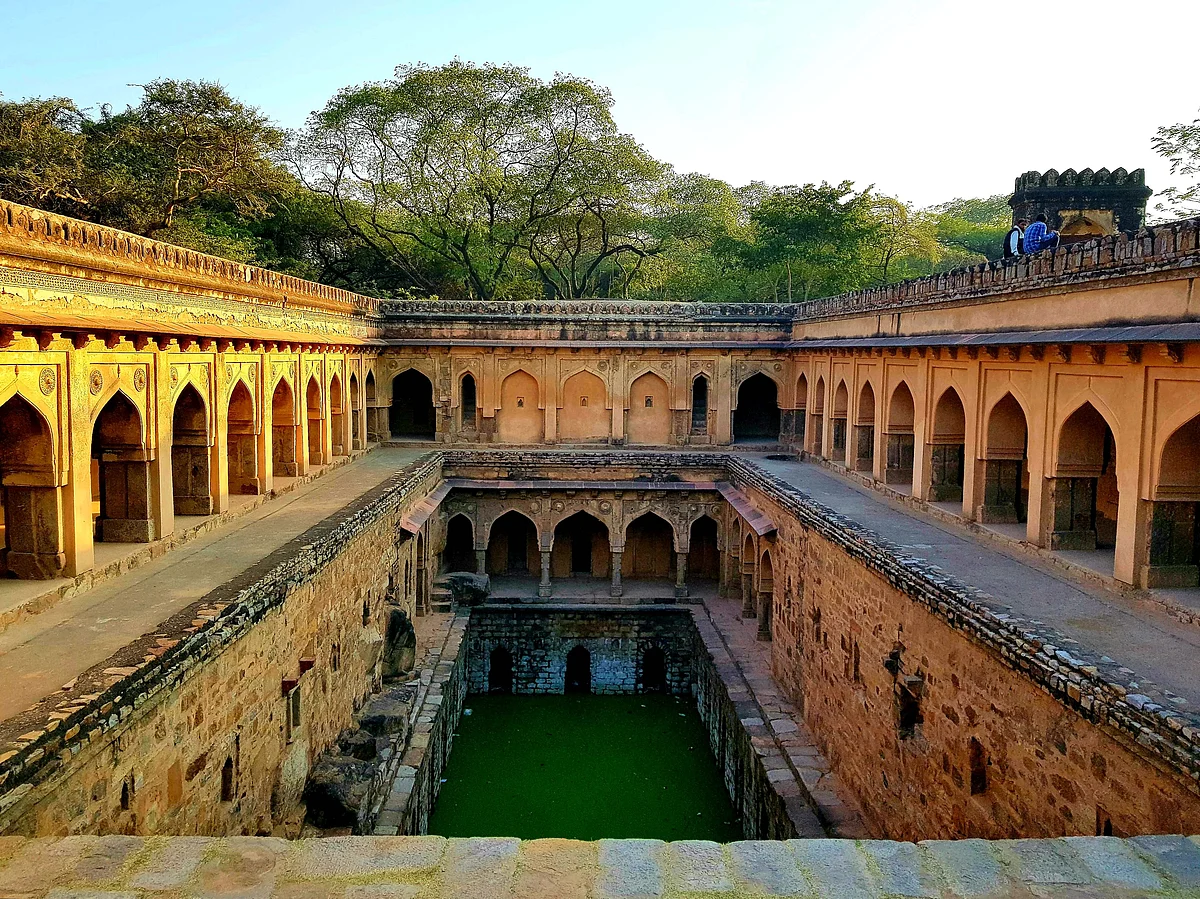
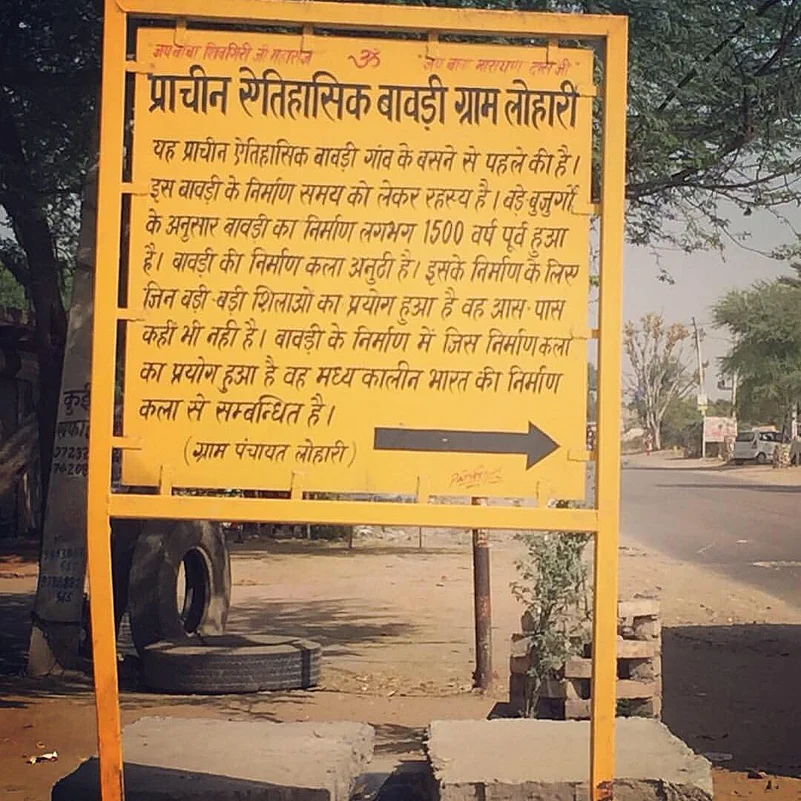
The Haryana government has declared the 14th–15th-century Luhari Baoli, also known as Mughlaai Baoli, in Luhari village near Pataudi, a protected monument and archaeological site. Located in Jhajjar district, about 8 km northwest of Pataudi on State Highway 132, the stepwell was notified as protected on August 14 by Amit Kumar Agrawal, Commissioner and Secretary of the Heritage and Tourism Department, under Section 4(3) of the Haryana Ancient and Historical Monuments and Archaeological Sites and Remains Act, 1964. Built during the Tughlaq period, the three-storey structure has six niches on either side, two stair bays at every level and a large pointed arch at the entrance. Its octagonal well descends to a depth of around 40 feet, while the stone-block construction reflects both the engineering and architectural traditions of its time.
The designation is significant for bringing a relatively little-known medieval water structure under formal state protection, as well as adding another baoli to Haryana’s protected heritage landscape. Luhari Baoli is currently privately owned by a village resident, Bhim Singh, and the state can enter into an agreement with him under Section 6 of the Act to take the structure into government custody or regulate its use. If the monument’s land or adjoining land is offered for sale, the owner must notify the state, which retains the right to purchase the land or a specified portion of it at market value. The move places the baoli within a legal framework intended to safeguard its architecture and ensure that a structure built as a medieval water reservoir survives as a record of Haryana’s history.
Why Luhari Baoli Matters
Baolis were more than reservoirs in medieval Haryana. The state’s semi-arid geography, hot summers, and highly seasonal rainfall made dependable water storage particularly important. Deep, subterranean stepwells offered an advantage over exposed ponds because their shaded construction reduced evaporation. Their lower levels also remained considerably cooler than the surface, making them useful not just for drawing water but as places where people could escape the heat.
Haryana’s position as a historic gateway between Delhi, Rajasthan, and Punjab also contributed to the spread of such structures. Trade and military routes crossed the region, and baolis could serve as watering points and resting places for travellers, traders, soldiers, and caravans. Their construction was also supported by rulers, local chiefs, wealthy merchants, and officials, for whom commissioning a water structure could carry both social and philanthropic significance.
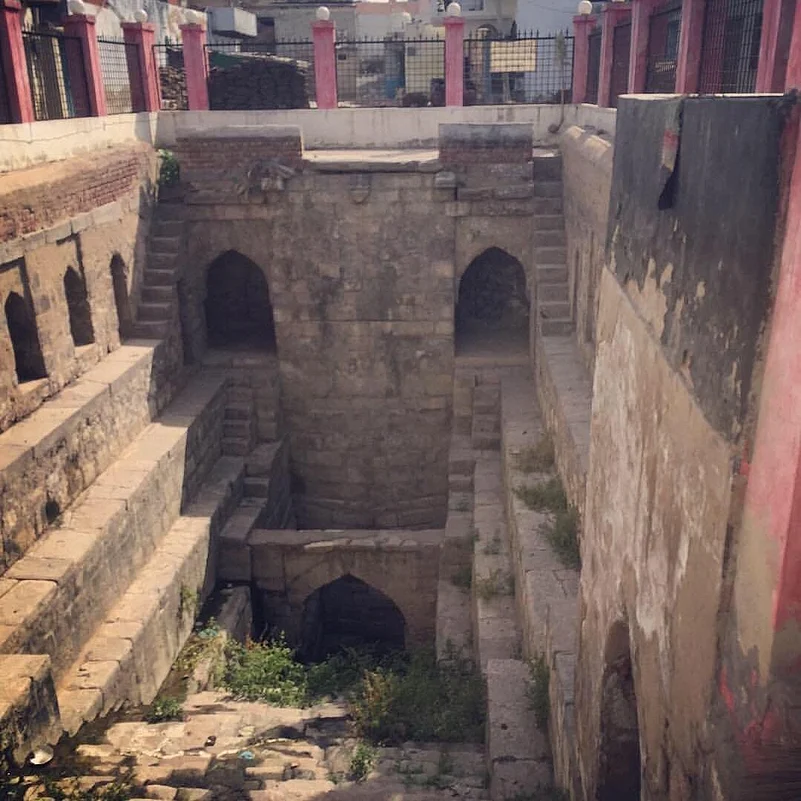

The Luhari structure is particularly notable for its Tughlaq-era architectural style. Its three levels, repeated niches, stair bays, pointed entrance arch and octagonal well demonstrate how a utilitarian structure could also embody the architectural preferences and craftsmanship of its period.
What Does Protected Monument Status Mean?
Under the Haryana Ancient and Historical Monuments and Archaeological Sites and Remains Act, 1964, the state can officially designate an ancient, historical or archaeological structure as a protected monument and take measures to prevent its deterioration or misuse. The Department of Archaeology and Museums, Haryana, is responsible for managing protected sites, including conservation and preservation work.
The notification does not necessarily mean that Luhari Baoli automatically becomes government-owned. Since the structure is presently private property, Section 6 allows the government to enter into an agreement with its owner. Such an agreement can place the monument in government custody and regulate or restrict how the owner uses it.
Luhari Baoli therefore joins Haryana’s existing protected heritage inventory, which currently includes 73 monuments and sites. That list spans a wide chronological range, from Harappan and Indus-Saraswati archaeological remains to Sultanate and Mughal structures, forts, gateways and colonial-era buildings. Its protection gives the baoli a formal legal status that can help shield both the structure and its setting from neglect, inappropriate alterations or development, while creating a framework for its long-term conservation.
A Wider Tradition Of Baolis In Haryana
Luhari Baoli is part of a larger network of historic stepwells scattered across Haryana. Among the better-known examples is Shahjahan ki Baoli in Meham, also called Choron ki Baoli. Built in 1658–59 by Saidu Kala, a royal servant or chobdar of Emperor Shah Jahan, it has 101 steps and was constructed with bricks and kankar blocks. Local tradition also associates it with a thief who reportedly used the structure as a hideout.
Other examples include Baoli Ghaus Ali Shah in Farrukhnagar, which reflects late-Mughal or regional Nawabi architectural traditions; the three-storey, octagonal Narnaul Baoli, dating to the 17th century and currently undergoing state conservation; and Bhai ki Baoli in Kaithal, an older three-storey brick structure built with lakhauri bricks and lime-surkhi and topped by a domical roof over the well shaft.
FAQs
1. What is Luhari Baoli?
Luhari Baoli, also known as Mughlaai Baoli, is a 14th–15th-century stepwell in Luhari village in Haryana’s Jhajjar district. Built during the Tughlaq period, it is a three-storey structure with an approximately 40-foot-deep octagonal well.
2. Where is Luhari Baoli located?
Luhari Baoli is located in Luhari village, around 8 km northwest of Pataudi on State Highway 132 in Jhajjar district, Haryana.
3. Why has Luhari Baoli been declared a protected monument?
The Haryana government has recognised the baoli for its historical, architectural and archaeological significance, particularly its Tughlaq-era design and importance as a medieval water-management structure.
4. What does protected monument status mean for Luhari Baoli?
The designation gives the state a legal framework to protect and conserve the structure. Since the baoli is privately owned, the government can enter into an agreement with its owner to take it into government custody or regulate its use.
What are some other historic baolis in Haryana?
Other notable stepwells include Shahjahan ki Baoli, also known as Choron ki Baoli, in Meham; Baoli Ghaus Ali Shah in Farrukhnagar; Narnaul Baoli; and Bhai ki Baoli in Kaithal.