


Jamaica may first bring to mind reggae, cricket, and beaches, but the Caribbean island is making a case for Indian travellers to look deeper. As the country marks its 64th Independence anniversary, High Commissioner of Jamaica to India, Jason Keats Matthew Hall, tells Outlook Traveller why Jamaica’s history, Indian connections, mountains, food, and music could be its biggest draw for Indian visitors.
Jamaica’s 64th Independence Day, observed on August 6, 2026, was marked across the island with flag-raising ceremonies, parades and the Grand Gala at the National Stadium in St Andrew. The anniversary also forms part of the country’s annual “Emancipendence” period, stretching from Emancipation Day on August 1 to Independence Day. This year’s celebrations reflected on Jamaica’s journey since its independence in 1962.
In New Delhi, the Jamaican High Commission commemorated the occasion with an evening of Jamaican food, music, Blue Mountain Coffee, and culture. But beyond the celebrations, there is a more practical question for Indian travellers: how easy is it to get to Jamaica, and what awaits them once they arrive?


Jamaica Is Visa-Free For Indian Travellers, But Getting There Takes Planning
According to His Excellency Jason KM Hall, the current volume of travel between India and Jamaica is estimated at between 5,000 and 7,000 visitors a year, although the figure is difficult to establish because some travellers are Jamaican or North American OCI holders travelling on non-Indian passports.
“The figure has remained relatively unchanged with a small increase over the past few years,” he said, adding that cricket tours and Indian business missions can cause spikes. There are also Indian nationals working across sectors on the island.
One major change has made Jamaica more accessible. Indian passport holders can enter Jamaica without a visa, with the High Commission of India in Kingston currently stating that they can stay for up to 90 days.
The more complicated part is getting there.
“Given the distance between the two countries, it is outside of a commercial flight radius, +19.5 hours,” Hall said. Travellers therefore need to transit through a third country, and the visa requirements of the transit point can become an important part of trip planning.
“The most expedient route to Jamaica is via the US,” he says. However, Hall pointed out that there are alternatives that can avoid a transit visa, including routes through Dubai, Amsterdam, Zurich, and Istanbul.
Jamaica is also looking at ways to make the journey easier. “India is very much a priority, and a number of initiatives are underway to improve and enhance connectivity,” Hall said. The country is seeking to conclude an Air Services Agreement and is also exploring Joint Destination Agreements with neighbouring countries.
For now, travellers have a choice of hundreds of international flight connections into Jamaica, with Hall noting that more than 400 international flights arrive in the country each week from multiple origins.
From Indian Heritage To Reggae, Jamaica Wants Travellers To Stay Curious
For Indian visitors, Jamaica’s appeal may begin with a surprisingly familiar thread.
The historical connection between the two countries goes back almost two centuries, with generations of Indians arriving in Jamaica and becoming part of its social and cultural fabric. Indian-origin Jamaicans have contributed to the country’s business, professional, and cultural life, while Indian associations and religious communities continue to operate in places including Kingston, Ocho Rios, and Montego Bay. India’s Ministry of External Affairs estimates the wider Indian diaspora in Jamaica at around 70,000.
Hall believes this history offers more than a diaspora story. “It is therefore less a matter of ‘building on connections’ as it is bridging the awareness gap that obtains here in India about Jamaica and the Wider Caribbean,” he said.
The High Commission, he added, will continue to encourage cultural exchanges through “music, film, fashion, food, and sport”. Cricket, unsurprisingly, remains an important bridge.
But Hall wants Indian travellers to move beyond the familiar associations. “As far as destinations go, few pack such an array of diversity, catering to every single passion point, whether you are seeking culture, heritage, romance, adventure, wellness, or just to chill.”
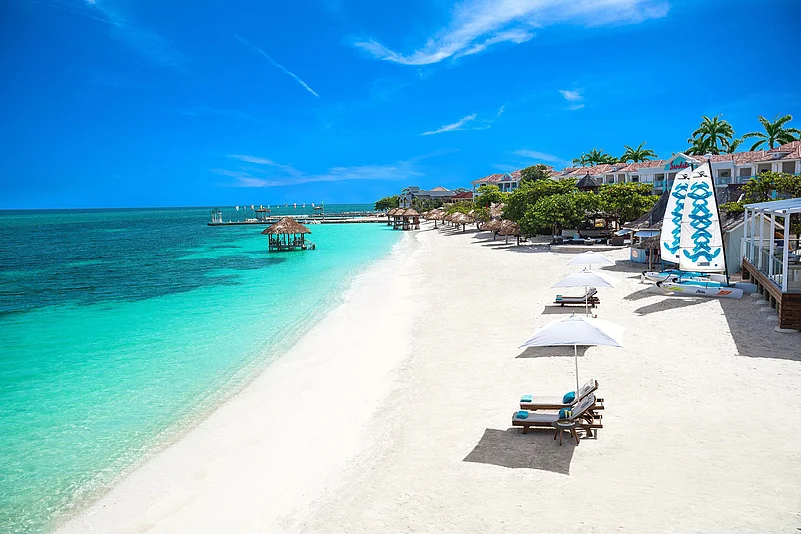
That diversity is evident in Jamaica’s geography. Kingston offers the island’s urban and cultural side, while Montego Bay is known for its beaches and resorts. Negril brings long stretches of sand and famous sunsets, while Ocho Rios is a base for waterfalls and outdoor adventures. Port Antonio and the South Coast offer a different pace and landscapes.
Blue Mountains, Jamaican Food, And A Different Kind Of Caribbean Holiday
For travellers willing to leave the resort behind, Jamaica’s landscape changes quickly from coast to mountain.
The Blue Mountains, a UNESCO World Heritage site, rise inland from Kingston, with hiking trails, cloud forests and coffee plantations. Jamaican Blue Mountain Coffee is grown in this high-altitude region, making a coffee plantation visit a natural addition to an itinerary.
Water is another recurring feature of the Jamaican landscape. Travellers can climb the terraced cascades of Dunn’s River Falls near Ocho Rios, explore rivers and waterfalls, or visit the Luminous Lagoon, where microorganisms create a glowing effect in the water after dark.
Then there is food, another unexpected connection with India.

“Indian food elements were incorporated into our gastronomy over time; ‘curried goat & roti’ being a direct example,” Hall said. Jamaican cuisine also includes jerk chicken and pork, ackee and saltfish, patties, and a range of seafood and street food.
Music, meanwhile, remains inseparable from the Jamaican experience. Hall pointed to the country’s output across more than 14 genres and its unusually high concentration of people working in the music industry. Kingston’s Bob Marley Museum and the Jamaica Music Museum offer visitors an entry point into this musical history.
Jamaica’s sporting identity is equally expansive. Cricket is a major draw for Indian visitors, but Hall signalled to the island’s extraordinary record in sprinting and its association with athletes such as Usain Bolt and Shelly-Ann Fraser-Pryce. Jamaica also famously became the first tropical country to compete at the Winter Olympics through its bobsleigh team.
Ultimately, Hall sees Jamaica as a destination where the journey is as much about participation as sightseeing. “Every square metre of Jamaica has a unique experience to be had, an opportunity to immerse oneself in our culture and experience the true meaning of ‘One love’,” he said.
For Indian travellers, that could mean swapping a checklist of Caribbean attractions for a more immersive holiday: coffee in the mountains, music in Kingston, cricket in a local setting, roti and curried goat at the dinner table, and a sunset on the coast. Jamaica, Hall suggests, is best understood not simply as a place to visit, but as a way of life to experience.
FAQs
1. Is Jamaica visa-free for Indian citizens?
Yes. Indian passport holders can enter Jamaica without a visa and stay for up to 90 days.
2. How can Indians travel to Jamaica?
There are no direct commercial flights from India. Travellers need to transit through another country, with routes available via the US, Dubai, Amsterdam, Zurich and Istanbul.
3. What are the best places to visit in Jamaica?
Popular destinations include Kingston, Montego Bay, Negril, Ocho Rios, Port Antonio and the South Coast, each offering different experiences from beaches and waterfalls to culture and outdoor activities.
4. What are the top things to do in Jamaica?
Travellers can explore the Blue Mountains, visit coffee plantations, see Dunn’s River Falls, experience the Luminous Lagoon, explore Kingston’s music heritage and enjoy Jamaica’s beaches and food.
5. What is Jamaica famous for?
Jamaica is known for reggae and its wider music culture, beaches, Blue Mountain Coffee, jerk cuisine, cricket, athletics and its rich cultural heritage.


