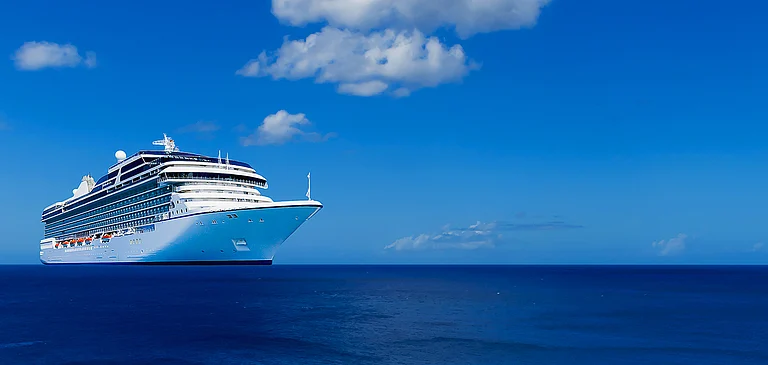
The luxury expedition cruise ship MV Hondius, which became the centre of a rare Andes hantavirus outbreak, departed Tenerife on Monday after the last six passengers and several crew members were evacuated, bringing a complex emergency operation to a close. The vessel briefly docked at Granadilla de Abona on the Spanish island of Tenerife, where six remaining passengers, four Australians, one British resident of Australia and one New Zealander, disembarked along with 19 crew members and two doctors.
After the transfer, the ship resumed its journey to the Netherlands carrying 32 crew members, a doctor and a nurse. The evacuated passengers and crew were taken to Tenerife airport and flown first to the Netherlands, then onward to their home countries.
Spanish health minister Monica Garcia described the mission as a success. “Mission accomplished; we’ve just wrapped up the operation, and the ship has just set sail,” she said
In total, 94 passengers and crew have now been repatriated to their countries of residence, ending a dramatic 41-day voyage that began in southern Argentina.
Nine Cases Linked To Outbreak, Including Three Deaths


According to the World Health Organization (WHO), nine cases have been linked to the ship, including seven laboratory-confirmed infections and two probable or suspected cases.
The fatalities include three deaths connected to the voyage. Official tracking shows that one Dutch passenger died onboard, his wife later fell ill and died in a hospital in Johannesburg, and a third passenger, a German national, also died during the outbreak.
Health authorities in Spain also said one quarantined Spanish citizen tested provisionally positive after arriving at a military hospital in Madrid, though the patient remained asymptomatic and additional tests were carried out. Meanwhile, the US Department of Health and Human Services confirmed that one American passenger tested mildly positive for the Andes strain while being repatriated to Nebraska aboard a specialised bio-containment aircraft.
The outbreak was first reported to the WHO on May 2, after a British passenger disembarked at St Helena, travelled to South Africa, and was later treated by health officials in Johannesburg. By that point, several passengers had already left the vessel at various Atlantic islands.
WHO Praises Spain’s Response And Calls For 42-Day Quarantine
WHO Director-General Tedros Adhanom Ghebreyesus, who travelled to Tenerife to oversee the response, praised Spanish authorities and international partners for executing the repatriation “in style and as planned.”
“This is the triumph of solidarity,” Tedros said, thanking Spain, the European Union, the European Centre for Disease Prevention and Control (ECDC), and governments involved in the operation.
WHO has recommended that all passengers and crew complete a strict 42-day quarantine beginning from May 10, either at home or in designated facilities. The lengthy isolation period reflects the unusually long incubation period of Andes hantavirus, during which symptoms may appear weeks after exposure.
Tedros stressed that no passengers travelled on commercial flights, reducing the risk to the wider public. “The guidance is clear. It’s 42 days of isolation,” he said.
Countries receiving returning citizens have been asked to submit weekly health updates through the International Health Regulations platform to ensure coordinated monitoring.
Mental Health Concerns Influenced Evacuation Decision
WHO officials said the decision to evacuate passengers rather than keep them quarantined on board was influenced not only by infection-control concerns but also by the psychological strain of prolonged isolation at sea.
“There was even a mental breakdown for some of the passengers,” Tedros said during a press conference in Tenerife. “It’s very difficult to stay for weeks in a small container. This was the best and the only option we had.”
Captain Jan Dobrogowski thanked passengers and crew for their discipline and resilience during the crisis. “I could not imagine sailing through these circumstances with a better group of people,” he said in a video shared by Oceanwide Expeditions, the ship’s operator.
WHO epidemiology chief Olivier Le Polain said the outbreak appears “well confined for now,” though additional cases could still emerge because symptoms may develop long after exposure.
Experts Say Risk To General Public Remains Low
Despite the unusual nature of the outbreak, health officials have stressed that Andes hantavirus does not spread easily between people and poses little risk to the general public. The virus is typically transmitted through contact with infected rodent droppings, urine or saliva. However, the Andes strain, found primarily in South America, is one of the few hantaviruses known to spread between humans through prolonged close contact.
Symptoms can initially resemble flu, including fever, fatigue and muscle aches, but severe cases may progress rapidly to hantavirus pulmonary syndrome, a life-threatening respiratory illness. “This is not another COVID,” Tedros said, urging governments and citizens to remain calm.
ECDC emergency lead Gianfranco Spiteri echoed that message, saying authorities understand the virus and have effective measures to prevent onward transmission. For now, the focus shifts from emergency evacuation to six weeks of careful monitoring, as health authorities around the world work together to ensure the outbreak remains contained.
(With inputs from various sources)
FAQs
1. What happened on the MV Hondius?
The luxury expedition cruise ship MV Hondius experienced a rare outbreak of Andes hantavirus, leading to a large-scale international repatriation coordinated by WHO.
2. How many people were affected by the outbreak?
Nine cases were linked to the outbreak, including seven laboratory-confirmed infections and two probable or suspected cases. Three deaths were associated with the voyage.
3. What is Andes hantavirus?
Andes hantavirus is a rare virus found primarily in South America. It can cause hantavirus pulmonary syndrome and is one of the few hantaviruses known to spread between humans through prolonged close contact.
4. Why are passengers required to quarantine for 42 days?
WHO recommends a 42-day quarantine because Andes hantavirus has a long incubation period, and symptoms may develop several weeks after exposure.
5. Is the virus a risk to the general public?
Health officials say the risk to the wider public remains low because the virus does not spread easily and all passengers were transported under strict health protocols.